Amit Shah in Bhuj: Zero-tolerance on border encroachments, demographic shifts flagged
Synopsis
Home Minister Amit Shah's Bhuj review went well beyond routine border management — he flagged demographic shifts as the single gravest threat to Gujarat's frontier districts, ordered sweeping financial crime surveillance, and mandated district-level SOPs targeting drones, narcotics, and hawala networks. The meeting signals a sharper, multi-agency approach to India's western border ahead of evolving security challenges.
Key Takeaways
Amit Shah chaired a high-level border security review in Bhuj on 30 May 2025 , covering Gujarat's border and coastal districts.
He ordered removal of all unauthorised encroachments within the 0–15 km belt along the international border with a zero-tolerance mandate.
Shah described demographic changes in border districts as 'the most serious challenge' and directed regular monitoring by District Magistrates.
Security Coordination Groups comprising BSF, Coast Guard, Income Tax, ED, and Lead Bank Manager are to be set up in every district.
Stringent surveillance ordered on hawala transactions , mule bank accounts, shell companies, and suspicious GST activity in border areas.
Border villages to receive 100 per cent saturation of Central and state welfare schemes alongside the Vibrant Villages initiative.
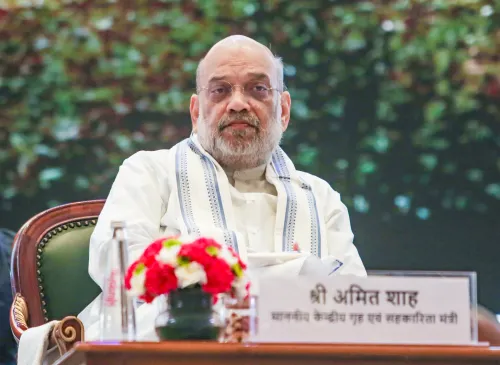
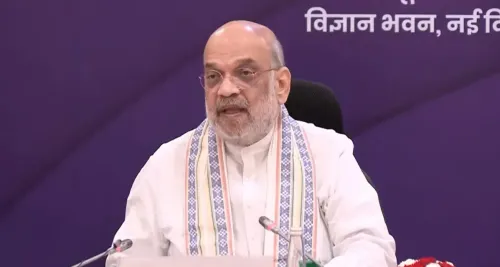
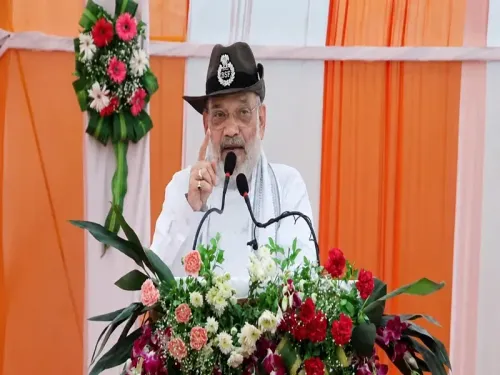
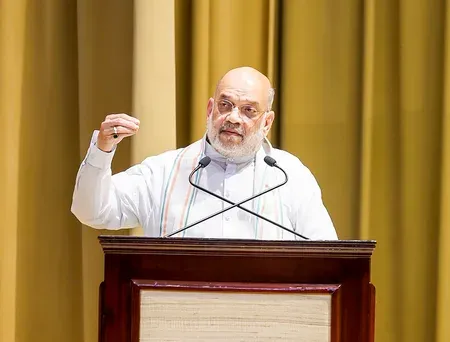
Union Home Minister Amit Shah on Saturday, 30 May chaired a high-level security review meeting in Bhuj, directing authorities across Gujarat's border and coastal districts to adopt a zero-tolerance stance on unauthorised encroachments, crack down on illegal infiltration and financial crime networks, and closely monitor demographic changes — which he described as 'the most serious challenge' facing border regions.
Key Directives Issued
Shah instructed officials to clear all unauthorised encroachments within the 0–15 kilometre belt along the international border and ordered the establishment of Security Coordination Groups in every district. These groups will bring together representatives from the Border Security Force (BSF), the Indian Coast Guard, the Income Tax Department, the Enforcement Directorate (ED), and the Lead Bank Manager.
He also called for district-specific standard operating procedures (SOPs) to address local threats, including drone incursions and narcotics trafficking. 'Everyone, from police station to patwari, should work in unison to ensure deportation of already settled illegal infiltrators,' Shah said.
Demographic Shifts and Radicalisation Concerns
Shah singled out demographic changes in border districts as the foremost security concern, directing District Magistrates to ensure strict monitoring and regular reporting. He also instructed authorities to maintain close surveillance on centres of radicalisation operating in the border belt.
At the same time, he acknowledged the reverse migration observed in some border areas following the establishment of industrial units, describing it as 'a welcome development.'
Financial Crime and Coastal Security
On the financial crime front, Shah stressed the need for stringent monitoring of hawala transactions, mule bank accounts, shell companies, suspicious vehicle movements, and GST-related activities. 'Strict vigil must be maintained in border districts for hawala transactions, financial dealings, mule accounts, shell companies, suspicious vehicles and GST collections,' he said.
He directed the Income Tax Department, in coordination with the Reserve Bank of India (RBI), to conduct extensive survey campaigns. Responsibility for enforcing Income Tax, anti-money laundering, and Customs laws was assigned to the District Magistrate, Superintendent of Police, and Inspector General of the Border Range.
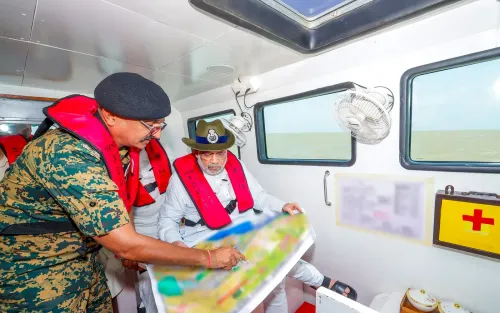
Referring to Gujarat's extended coastline and proximity to the International Maritime Boundary Line with Pakistan, Shah underscored that coastal security must remain a priority, calling for stronger coordination with the Indian Coast Guard.
What the Government Said on Security Progress
Shah credited border fencing, maritime security measures, and state government resolve for what he termed a 'significant transformation' in Gujarat's security landscape, asserting that these steps had led to 'the complete cessation of infiltration in the state and smuggling on the border.'
He also directed that border villages receive full coverage under both Central and state welfare programmes, including 100 per cent saturation of every scheme alongside the Vibrant Villages initiative.
Who Attended the Review
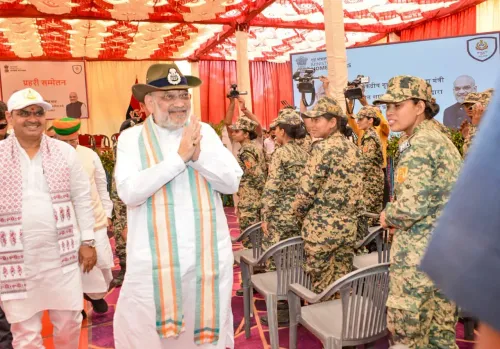
The meeting was attended by Gujarat Chief Minister Bhupendra Patel, Deputy Chief Minister Harsh Sanghavi, Chief Secretary Manoj Kumar Das, and Director General of Police K.L.N. Rao, along with senior officials and the District Magistrates and Superintendents of Police of Kutch, Vav-Tharad, and Patan.
The Bhuj review is part of the Centre's broader effort to reinforce comprehensive border management along India's western frontier, with further district-level SOPs and inter-agency coordination measures expected to follow.
Point of View
A politically charged characterisation that will draw scrutiny from civil liberties groups and opposition parties. The multi-agency financial surveillance framework he outlined, stretching from hawala networks to GST collections, is operationally ambitious but hinges on coordination between departments that have historically worked in silos. Gujarat's border districts have long been a testing ground for Centre-state security integration; whether district-level SOPs translate into measurable outcomes, or remain paper exercises, will be the real measure of this review's impact.
NationPress
13 Oct 2026
Frequently Asked Questions
What did Amit Shah direct at the Bhuj border security review?
Shah directed authorities to adopt a zero-tolerance approach to unauthorised encroachments within the 0–15 km international border belt, deport settled illegal infiltrators, monitor demographic changes, and establish Security Coordination Groups in every district. He also called for strict financial crime surveillance covering hawala transactions, mule accounts, and shell companies.
Why did Amit Shah flag demographic changes as the biggest threat?
Shah described demographic changes in Gujarat's border districts as 'the most serious challenge,' directing District Magistrates to monitor and report such shifts regularly. He did not elaborate on specific data but linked the concern to broader border security and infiltration issues.
Which agencies will be part of the new Security Coordination Groups?
The groups will include the Border Security Force, the Indian Coast Guard, the Income Tax Department, the Enforcement Directorate, and the Lead Bank Manager. They are to be constituted in every border district as part of enhanced inter-agency coordination.
What financial crimes is the Centre targeting in Gujarat's border districts?
Shah ordered surveillance of hawala transactions, suspicious financial dealings, mule bank accounts, shell companies, suspicious vehicle movements, and GST-related activities. The Income Tax Department, in coordination with the RBI, is to conduct extensive survey campaigns in the region.
What welfare measures were announced for Gujarat's border villages?
Shah directed that every border village receive full benefits of Central and state government welfare programmes, with 100 per cent saturation of every scheme mandated alongside the ongoing Vibrant Villages initiative.