Amit Shah announces High-Level Committee on Demographic Change
Synopsis
Union Home Minister Amit Shah confirmed on 26 May 2026 that the government has constituted the High-Level Committee on Demographic Change, announced by PM Modi on Independence Day 2025. Chaired by retired Justice Prakash Prabhakar Navalkar, the panel will assess illegal migration and abnormal population shifts across India.
Key Takeaways
The High-Level Committee on Demographic Change has been formally constituted by the central government as of 26 May 2026 .
The committee was first announced by Prime Minister Narendra Modi on 15 August 2025 .
It will be chaired by Justice Prakash Prabhakar Navalkar (Retd.) and includes the Census Commissioner, a retired IAS officer, a retired IPS officer, and economist Dr.
The panel's mandate covers a comprehensive assessment of demographic changes due to illegal migration, analysis of population patterns at the religious and social community level, and recommending time-bound solutions.
The Joint Secretary (Foreigners-I), Ministry of Home Affairs will serve as Member Secretary.
The committee's work is framed around concerns of sovereignty, national security, law and order, and protection of tribal communities.
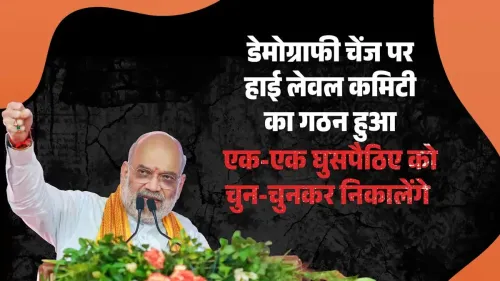
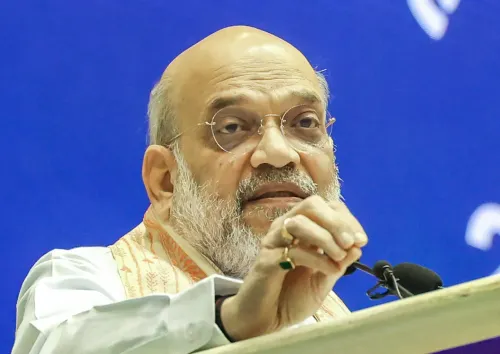
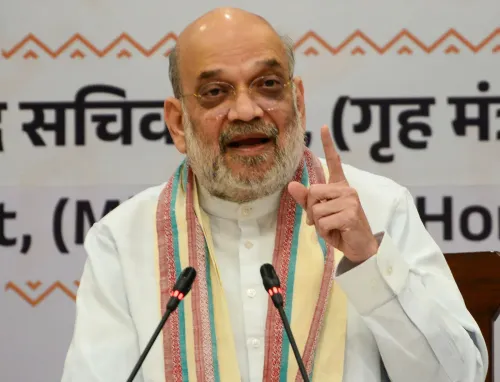
Union Home Minister Amit Shah announced on Tuesday, 26 May 2026 that the central government has formally constituted the High-Level Committee on Demographic Change, first announced by Prime Minister Narendra Modi on 15 August 2025 from the ramparts of the Red Fort. Shah described the formation of the committee as a step toward addressing what he called one of the gravest challenges to India's sovereignty and national security.
Context
In his post, Shah wrote: 'घुसपैठ और अन्य कारणों से Unnatural Demographic Change किसी भी राष्ट्र के वर्तमान व भविष्य के लिए एक बहुत बड़ी चुनौती है' — ('Unnatural demographic change caused by infiltration and other reasons is a very serious challenge for the present and future of any nation'). He confirmed the government had acted on the Prime Minister's Independence Day announcement by formally notifying the committee's composition.
The committee will be chaired by Justice Prakash Prabhakar Navalkar (Retd.), a retired judge. Its members include the Census Commissioner of India, Shri Durga Shankar Mishra (Retd. IAS), Shri Balaji Srivastava (Retd. IPS), and Dr. Shamika Ravi. The Joint Secretary (Foreigners-I), Ministry of Home Affairs, will serve as Member Secretary.
Policy Backdrop
The committee is the latest in a series of policy measures pursued by the BJP-led central government on cross-border migration and citizenship. The Citizenship Amendment Act, 2019 created a pathway to citizenship for persecuted minorities from three neighbouring countries, while the National Register of Citizens (NRC) exercise in Assam — completed in 2019 — sought to identify undocumented immigrants under the framework of the Assam Accord.
Concerns over demographic shifts in border states, particularly in Assam and the northeastern states, have driven Indian policy debates since the anti-foreigners agitation of the 1980s. Enhanced border fencing along the India-Bangladesh frontier has also been a parallel track under the Ministry of Home Affairs.
Mandate and Scope
According to Shah's post, the committee's mandate is broad. It will conduct a 'comprehensive assessment of demographic changes occurring across India due to illegal migration and other unnatural causes.' It will also analyse patterns of 'abnormal population changes at the level of religious and social communities' and propose 'planned and time-bound solutions.'
Shah explicitly linked the committee's work to multiple national concerns: sovereignty, national security, law and order, changes in social structure, and the 'जनजातीय समाज के संरक्षण' ('protection of tribal society'). The inclusion of a retired IPS officer and a senior economist alongside a retired judge signals a multi-disciplinary approach spanning security, administration, and data analysis.
Stakeholders and Impact
Indigenous and tribal communities in border states are identified as primary stakeholders, given longstanding concerns about demographic pressure on land rights and cultural identity. State governments in the Northeast, West Bengal, and other border regions are expected to be consulted as the committee begins its work.
Civil society groups and opposition parties are likely to scrutinise the committee's terms of reference closely, particularly the mandate to analyse population changes at the level of 'religious and social communities,' a framing that has historically drawn both support and criticism across India's political spectrum.
What's Next
The committee's timeline for submitting its report has not yet been made public. Its recommendations could form the basis for fresh parliamentary legislation, amendments to existing foreigners and citizenship laws, or state-level implementation directives. The composition of the panel — combining judicial, administrative, security and economic expertise — suggests the government intends its findings to carry institutional weight when they are eventually tabled.
Point of View
Moving from legislative instruments like the CAA and the Assam NRC to a standing investigative body with a national remit. By anchoring the committee's mandate in sovereignty, tribal protection, and religious-community-level analysis, the government is broadening the political and legal vocabulary around immigration beyond the northeast. The multi-disciplinary composition — judicial, bureaucratic, security, and economic — is designed to lend the eventual report cross-domain credibility that could withstand legal and parliamentary scrutiny. How the committee defines 'unnatural demographic change' in its methodology will be the most consequential detail to watch, as it will determine both the scope of recommendations and the intensity of political contestation that follows.
NationPress
9 Oct 2026
Frequently Asked Questions
What is the High-Level Committee on Demographic Change in India?
It is a government-constituted panel announced by Home Minister Amit Shah on 26 May 2026 to assess illegal migration and abnormal population changes across India. It was first announced by Prime Minister Narendra Modi on Independence Day, 15 August 2025.
Who is the chairman of the Demographic Change Committee?
Retired Justice Prakash Prabhakar Navalkar chairs the committee. Other members include the Census Commissioner, retired IAS officer Durga Shankar Mishra, retired IPS officer Balaji Srivastava, and economist Dr. Shamika Ravi.
What will the Demographic Change Committee do?
The committee will conduct a comprehensive assessment of demographic changes caused by illegal migration across India, analyse population-change patterns at the level of religious and social communities, and recommend planned, time-bound solutions.
Is the Demographic Change Committee related to NRC or CAA?
The new committee is a separate body, but it continues the same policy thread as the National Register of Citizens exercise in Assam and the Citizenship Amendment Act of 2019, all of which address cross-border migration and citizenship under the BJP-led government.
Which states will the Demographic Change Committee focus on?
The committee's mandate covers the whole of India, though border states such as Assam and other northeastern states — where demographic concerns linked to migration from Bangladesh have been debated since the 1980s — are expected to receive particular attention.