Rijiju Backs High-Level Panel on Demographic Change

Synopsis
Union Minister Kiren Rijiju on 26 May 2026 welcomed the government's formation of a High-Level Committee on Demographic Change, chaired by Justice Prakash Prabhakar Navalkar, tracing it to PM Modi's Independence Day 2025 announcement of a High Powered Demography Mission to address illegal migration and demographic shifts.
Key Takeaways
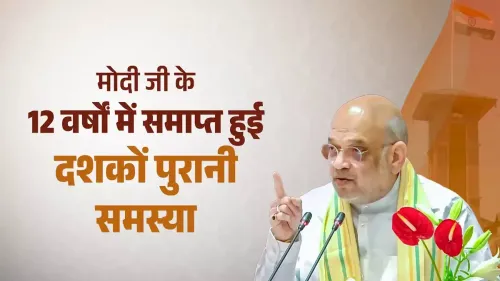
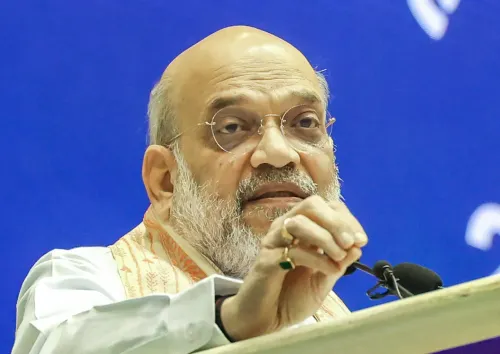
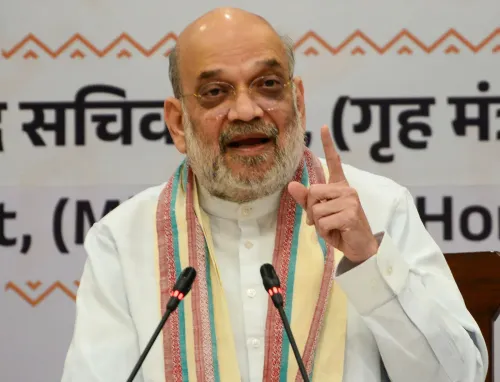
Union Home Minister Amit Shah announced the formation of a High-Level Committee on Demographic Change on 26 May 2026 .
The committee is chaired by Justice Prakash Prabhakar Navalkar (Retired) and includes a Census Commissioner, two retired senior bureaucrats, and economist Dr Shamika Ravi .
The panel's mandate covers studying demographic changes due to illegal migration and their effects on national security, social structure, law and order, and tribal communities.
PM Narendra Modi had announced the High Powered Demography Mission from the Red Fort on 15 August 2025 .
The committee is expected to deliver 'planned and time-bound solutions'; no formal deadline has been publicly disclosed.
The initiative follows earlier demographic policy measures including the NRC in Assam (2019) and the Citizenship Amendment Act, 2019 .
Union Parliamentary Affairs Minister Kiren Rijiju on Tuesday, 26 May 2026 publicly endorsed the formation of a High-Level Committee on Demographic Change, announced by Union Home Minister Amit Shah, describing the panel as a critical step toward protecting India's national security, social fabric and tribal communities from migration-driven demographic shifts.
Context
Rijiju's post, written in Hindi, states: 'जनसांख्यिकीय संतुलन का संरक्षण, राष्ट्र की एकता, संप्रभुता और सुरक्षित भविष्य की नींव है' — ('Preserving demographic balance is the foundation of national unity, sovereignty and a secure future'). He traces the committee's origin to Prime Minister Narendra Modi's address from the ramparts of Red Fort on 15 August 2025, during which a 'High Powered Demography Mission' was announced to counter what the government described as conspiracies to alter India's demographic composition.
The formal announcement of the committee was made by Home Minister Amit Shah on 26 May 2026, with Rijiju amplifying and welcoming the development on social media.
Policy Backdrop
The committee is chaired by Justice Prakash Prabhakar Navalkar (Retired) and includes the Census Commissioner, Durga Shankar Mishra (Retd IAS), Balaji Srivastava (Retd IPS), and Dr Shamika Ravi as members. The Joint Secretary (Foreigners-I) of the Ministry of Home Affairs will serve as Member Secretary.
India has previously addressed concerns over demographic change in border and northeastern states through measures such as the National Register of Citizens (NRC), finalised in Assam in 2019, and the Citizenship Amendment Act, 2019. The present committee continues that policy lineage with a broader, evidence-based national mandate.
Stakeholders and Impact
Rijiju specifically mentioned the committee's mandate to study demographic changes caused by illegal migration and other 'abnormal factors' across the country, and to analyse their effects on national security, social structure, law and order, and tribal communities. Tribal and border-region populations — particularly in the Northeast — have long been at the centre of such policy debates, given concerns over cultural preservation and resource competition.
Civil society groups and opposition parties have historically contested the framing of demographic exercises, raising concerns about their potential impact on minority communities and migrant workers. The composition of this committee — drawing on retired judiciary, civil service, police and economic expertise — signals an intent to ground findings in multi-disciplinary analysis.
What's Next
Rijiju expressed confidence that the committee will produce 'planned and time-bound solutions' after a comprehensive study. The government has not yet disclosed a formal deadline for the panel's report or the legislative or executive actions that may follow its recommendations. The timeline for the committee's findings and any subsequent policy action will be closely watched by stakeholders across the political spectrum, tribal advocacy groups, and border-state administrations.
Point of View
The government is framing demographic concerns as a mainstream national-security issue rather than a regional one. The inclusion of a retired Supreme Court judge alongside retired IAS and IPS officers and a technocratic economist suggests the government is building a report with administrative, legal and data-driven credibility. The committee's findings — and the government's response to them — are likely to become a defining political flashpoint ahead of any future electoral cycle.
NationPress
11 Oct 2026
Frequently Asked Questions
What is the High-Level Committee on Demographic Change in India?
It is a government-appointed panel chaired by Justice Prakash Prabhakar Navalkar (Retired) to study demographic changes caused by illegal migration and other factors, and their impact on national security, social structure, law and order, and tribal communities across India.
Who announced the High-Level Committee on Demographic Change?
Union Home Minister Amit Shah announced the formation of the committee on 26 May 2026. Union Minister Kiren Rijiju also publicly endorsed the move on the same day.
What is the High Powered Demography Mission announced by PM Modi?
Prime Minister Narendra Modi announced the High Powered Demography Mission from the Red Fort on 15 August 2025, describing it as a step to counter conspiracies aimed at altering India's demographic composition.
Who are the members of the demographic change committee?
The committee includes Justice Prakash Prabhakar Navalkar (Retired) as chairperson, the Census Commissioner, Durga Shankar Mishra (Retd IAS), Balaji Srivastava (Retd IPS), Dr Shamika Ravi as members, and the Joint Secretary (Foreigners-I) of the Ministry of Home Affairs as Member Secretary.
How does the demographic change committee relate to the NRC and CAA?
The committee continues a policy lineage that includes the National Register of Citizens finalised in Assam in 2019 and the Citizenship Amendment Act of 2019, both of which addressed cross-border migration and citizenship concerns, now expanded to a national demographic study mandate.