Amit Shah forms Justice Naolekar panel on demographic change, infiltration
Synopsis
Home Minister Amit Shah has formally constituted the High-Level Committee on Demographic Change — a body PM Modi had promised on Independence Day 2025. Chaired by retired Justice Naolekar, the five-member panel is mandated to map infiltration-driven population shifts by religious and social community and deliver time-bound solutions. Its formation comes on the heels of the BJP's West Bengal election victory, where infiltration was a defining campaign issue.
Key Takeaways
Home Minister Amit Shah announced the High-Level Committee on Demographic Change on 27 May 2025 .
The five-member panel is chaired by retired Justice Prakash Prabhakar Naolekar .
Other members include the Census Commissioner , retired IAS officer Durga Shankar Mishra , retired IPS officer Balaji Srivastava , and economist Shamika Ravi .
The committee fulfils a pledge made by PM Modi in his Independence Day address on 15 August 2025 .
The panel will assess demographic shifts linked to illegal immigration and recommend time-bound policy solutions.
Its constitution follows the BJP 's victory in West Bengal , where infiltration was a central election issue.
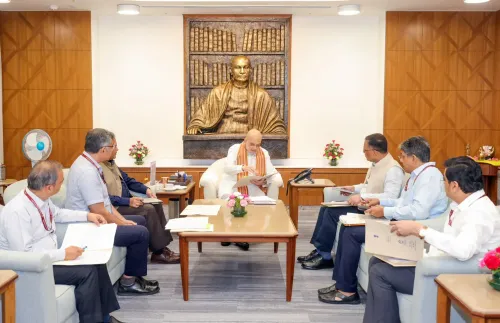
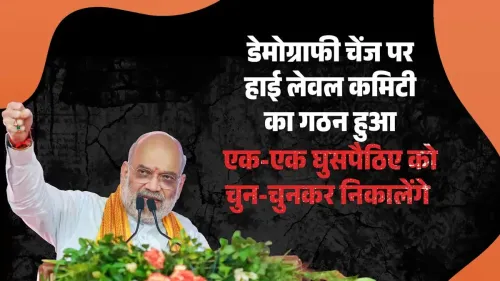
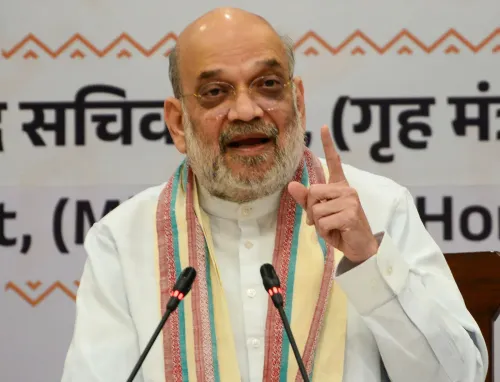
Union Home Minister Amit Shah on Tuesday, 27 May 2025 announced the constitution of a five-member High-Level Committee on Demographic Change, to be chaired by retired Justice Prakash Prabhakar Naolekar, tasked with studying infiltration-driven population shifts and recommending time-bound solutions. The announcement, made via a post on social media platform X, fulfils a commitment made by Prime Minister Narendra Modi on 15 August 2025.
Committee Composition
The panel will be chaired by retired Justice Prakash Prabhakar Naolekar and will include the Census Commissioner, retired IAS officer Durga Shankar Mishra, retired IPS officer Balaji Srivastava, and economist Shamika Ravi as members. Sumant Singh, Joint Secretary (Foreigners-I) at the Ministry of Home Affairs, will serve as Member Secretary.
What the Panel Will Examine
According to Shah, the committee will conduct a comprehensive assessment of demographic changes across India attributed to illegal immigration and other causes it terms 'unnatural'. It will analyse patterns of abnormal population shifts at the levels of religious and social communities, and is mandated to deliver a 'planned and time-bound solution.' Shah described demographic change as 'a serious issue linked not only to our sovereignty but also to national security, law and order, profound changes in social structure, and the preservation of tribal society.'
Political Context
The panel's constitution carries considerable political weight. The infiltration issue dominated discourse ahead of the recently concluded West Bengal Assembly elections, where the Bharatiya Janata Party (BJP) made it a central campaign plank against the then Mamata Banerjee-led government. The BJP went on to defeat the All India Trinamool Congress (TMC) and secured an absolute majority in the state. Critics argue that framing demographic shifts primarily through the lens of religious communities risks stoking communal tensions, and opposition voices have questioned the evidentiary basis for characterising population changes as 'unnatural.'
Background and Significance
The announcement fulfils a pledge Modi made in his Independence Day address on 15 August 2025, when he first named the proposed body. The nearly nine-month gap between that announcement and the formal constitution of the committee drew comment from political observers. This is the first formal institutional mechanism at the national level specifically tasked with studying demographic change linked to infiltration — a subject that has previously featured in state-level exercises, particularly in Assam and along the Bangladesh border.
What Comes Next
No timeline for the committee's final report has been made public. The panel is expected to consult state governments, Census data, and security agencies. Its findings are likely to feed into broader policy discussions on border management, citizenship verification, and the National Register of Citizens (NRC). How the committee defines and measures 'unnatural' demographic change will be closely scrutinised by civil society groups and opposition parties alike.
Point of View
The panel's eventual findings risk being contested along the same communal fault lines the government says it wants to address. The inclusion of Shamika Ravi, a credentialled economist, signals an attempt at analytical rigour; whether that rigour survives the political framing of the mandate remains to be seen.
NationPress
11 Oct 2026
Frequently Asked Questions
What is the High-Level Committee on Demographic Change announced by Amit Shah?
It is a five-member government panel chaired by retired Justice Prakash Prabhakar Naolekar, tasked with assessing demographic changes across India linked to illegal immigration and recommending time-bound solutions. It was formally constituted by the Ministry of Home Affairs in May 2025, fulfilling a pledge made by PM Modi on 15 August 2025.
Who are the members of the Justice Naolekar Committee?
The committee comprises retired Justice Prakash Prabhakar Naolekar (chair), the Census Commissioner, retired IAS officer Durga Shankar Mishra, retired IPS officer Balaji Srivastava, and economist Shamika Ravi. Sumant Singh, Joint Secretary (Foreigners-I) at the Ministry of Home Affairs, serves as Member Secretary.
Why has the committee been formed now?
The panel fulfils a commitment Prime Minister Modi made on Independence Day, 15 August 2025. Its formal constitution comes shortly after the BJP's victory in West Bengal elections, where infiltration and demographic change were prominent campaign themes against the then-ruling Trinamool Congress government.
What will the Naolekar Committee actually do?
The committee is mandated to conduct a comprehensive assessment of demographic changes attributed to illegal immigration, analyse population shifts across religious and social communities, and present a planned, time-bound policy solution. No deadline for its final report has been announced publicly.
What concerns have critics raised about the committee?
Critics argue that framing demographic shifts through the lens of religious communities risks inflaming communal tensions. Opposition voices have also questioned the evidentiary basis for labelling population changes as 'unnatural', and civil society groups are expected to scrutinise the methodology the panel uses to reach its conclusions.