Shekhawat Links New Demographic Panel to BJP's Anti-Infiltration Pledge
Synopsis
Union Minister Gajendra Singh Shekhawat has linked the Centre's newly formed High-Level Committee on Demographic Change to BJP's longstanding pledge to remove illegal infiltrators from West Bengal, citing Home Minister Amit Shah's rally promise as the political foundation for the latest enforcement push.
Key Takeaways
Union Minister Gajendra Singh Shekhawat posted on 28 May 2026 linking BJP's anti-infiltration pledge to the newly formed High-Level Committee on Demographic Change .
The committee was constituted by the central government on 26 May 2026 , just two days before the minister's post.
Shekhawat cited Home Minister Amit Shah's West Bengal rally statement — that infiltrators would be 'removed one by one' — as BJP's national-security resolve, not an election promise.
The minister claimed that illegal residents have already begun leaving India following the committee's formation, though this remains unverified.
India's policy on illegal immigration is anchored in the Assam Accord (1985) , the Citizenship Amendment Act (2019) , and the NRC exercise in Assam (2019) .
Analysts will watch whether the committee's mandate extends to other border states beyond West Bengal .
Union Culture and Tourism Minister Gajendra Singh Shekhawat on Thursday, 28 May 2026, invoked a public rally speech by Union Home Minister Amit Shah to argue that the BJP's promise to systematically remove illegal infiltrators from West Bengal is now being fulfilled — pointing to the Centre's formation of a 'High-Level Committee on Demographic Change' on 26 May 2026 as proof that the party's national-security commitment has moved from rhetoric to action.
Context
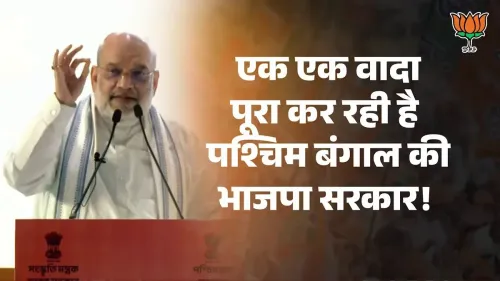
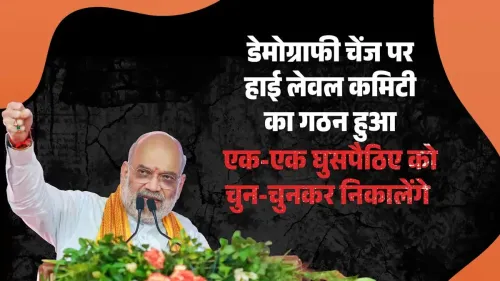
Shekhawat's post recalled a statement Amit Shah made during campaigning ahead of the West Bengal assembly elections, in which the Home Minister had declared — 'Ghuspaith iyon ko chun-chun kar bahar kiya jaega' — ('Infiltrators will be removed one by one'). Shekhawat argued this was 'not merely an election promise' but 'BJP's resolve for the security of the nation.' The minister posted a video alongside the text, reinforcing the message visually.
West Bengal, which shares a long border with Bangladesh, has featured prominently in national debates over illegal immigration for decades. The BJP has consistently made the issue a centrepiece of its electoral and governance agenda in eastern India.
Policy Backdrop
India's legislative and administrative approach to illegal immigration has evolved through several milestones. The Assam Accord of 1985 set 25 March 1971 as the cut-off date for detecting and expelling illegal entrants, creating the country's first formal framework on the issue. The Citizenship Amendment Act of 2019 further sharpened legal distinctions between persecuted minorities from neighbouring countries and undocumented migrants, while the National Register of Citizens exercise in Assam — completed in 2019 — provided an operational model that has since been cited as a template for other border states.
Shekhawat's post now situates the newly constituted High-Level Committee on Demographic Change within this lineage, framing it as the next institutional step in a policy arc that stretches back more than four decades.
Stakeholders and Impact
Border communities in West Bengal and other eastern states are the most immediately affected stakeholders, as any enforcement drive directly shapes local demographics, livelihoods, and social fabric. State administrations — particularly in BJP-governed states — are expected to coordinate closely with the central committee, while civil-society groups and opposition parties have historically raised concerns about wrongful detention and the rights of long-resident populations.
Shekhawat's post claims that the mere announcement of the committee has already prompted illegal residents to leave India voluntarily, though this assertion reflects the minister's political framing and cannot be independently verified at this stage.
What's Next
The High-Level Committee on Demographic Change, formed just two days before Shekhawat's post, is expected to define its mandate, membership, and timelines in the coming weeks. Analysts will watch whether its scope extends beyond West Bengal to other border states such as Assam, Tripura, and Mizoram, and whether it triggers fresh legislative or administrative measures at the state level.
With the BJP framing demographic change as a core national-security issue, the committee's first public actions are likely to become a significant political and policy flashpoint in the months ahead.
Point of View
Thereby reinforcing the BJP's national-security brand ahead of what is expected to be a fiercely contested political cycle in eastern India. By attributing the committee's formation to a deterrent effect — claiming infiltrators have already begun leaving — the minister is both crediting central governance and pre-empting opposition criticism that the promise was hollow. This fits a broader BJP pattern of using administrative announcements to validate electoral commitments, particularly on immigration and border security. The durability of this narrative will depend heavily on what the committee actually delivers in the months ahead.
NationPress
12 Oct 2026
Frequently Asked Questions
What is the High-Level Committee on Demographic Change formed in May 2026?
The High-Level Committee on Demographic Change is a central government body constituted on 26 May 2026 to examine and act on issues of illegal immigration and demographic shifts, particularly in border states such as West Bengal.
What did Amit Shah say about infiltrators in West Bengal?
During West Bengal assembly election campaigning, Home Minister Amit Shah publicly stated that infiltrators would be 'removed one by one' — a promise Union Minister Shekhawat has now cited as the BJP's national-security resolve, not merely an election slogan.
What is BJP's policy on illegal immigration in West Bengal?
The BJP has made the detection and removal of illegal immigrants — particularly from Bangladesh — a central plank of its governance agenda in West Bengal and other eastern border states, backed by measures such as the Citizenship Amendment Act of 2019 and the NRC exercise in Assam.
How does the NRC in Assam relate to West Bengal's infiltration issue?
The National Register of Citizens completed in Assam in 2019 is widely cited as an operational model for identifying illegal residents and has been referenced in policy discussions about extending similar exercises to West Bengal and other border states.
Who is Gajendra Singh Shekhawat?
Gajendra Singh Shekhawat is the Union Minister of Culture and Tourism, a senior BJP leader, and a Lok Sabha MP from Jodhpur, Rajasthan .