'Analogue and Alchemy': Australian artist and Punjab coppersmith revive UNESCO Thathera craft
Synopsis
An Australian sculptor and a Punjab coppersmith whose family has practised the UNESCO-listed Thathera craft for over 200 years have co-created an exhibition in New Delhi that is as much a cultural preservation act as it is an art show. 'Analogue and Alchemy' may be the most tangible symbol yet of India-Australia creative diplomacy.
Key Takeaways
Australian artist Elliot Bastianon and Punjab master coppersmith Hari Krishan have co-created the exhibition 'Analogue and Alchemy' in New Delhi .
The show combines Bastianon's electroplating-based sculpture with the UNESCO -recognised Thathera tradition of hand-crafted copper and brass work.
The Thathera craft of Jandiala Guru , Punjab, has been practised for over 200 years and is listed on UNESCO's Intangible Cultural Heritage register.
The Australian High Commission in India described the collaboration as 'a powerful example of how international creative collaboration can preserve cultural heritage.' The exhibition highlights deepening India-Australia cultural ties and raises visibility for an endangered artisan tradition.
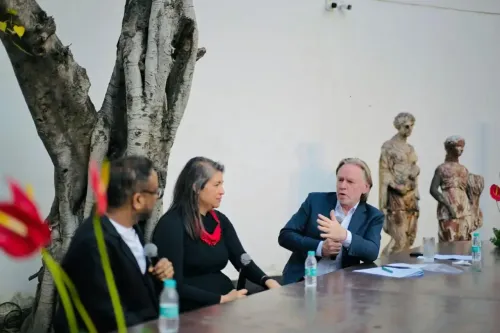
Australian sculptor Elliot Bastianon and Punjab's master coppersmith Hari Krishan have joined forces for an exhibition titled 'Analogue and Alchemy' in New Delhi, uniting contemporary metal sculpture with the UNESCO-recognised Thathera tradition of hand-crafted copper and brass work. The collaboration, showcased in July 2025, underscores the deepening cultural ties between India and Australia through the shared language of craft.
The Artists and Their Methods
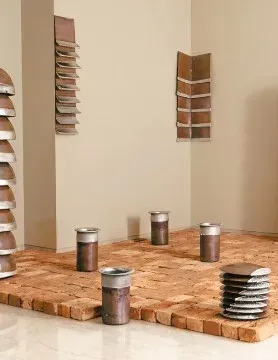
Bastianon, an Australian artist based in New Delhi, is known for his distinctive sculptural process: he stacks identical metal pieces and applies electroplating to transform them into dense, geological-like forms — both wall-mounted and freestanding. His partner in this project, Hari Krishan, carries forward hand-forming techniques that have been transmitted across generations for over 200 years within his family.
The pairing is deliberate and conceptually rich. Where Bastianon's practice is rooted in industrial process and repetition, Krishan's craft is entirely hand-driven — each vessel shaped by eye, touch, and inherited knowledge. Together, they explore what happens when these two vocabularies of making are placed in conversation.
The Thathera Tradition
The Thathera craft originates from Jandiala Guru in Punjab, where artisans have traditionally manufactured brass and copper utensils using techniques passed down without written instruction. UNESCO inscribed the craft on its Representative List of Intangible Cultural Heritage of Humanity, recognising it as a living tradition at risk of disappearing. According to UNESCO's documentation, the metals used — copper, brass, and certain alloys — are also believed to carry health benefits in the communities that use them.
The Thathera community's survival depends on continued demand for their work. Collaborations such as this one are seen by cultural observers as a meaningful, if partial, response to the economic pressures that have drawn younger artisans away from the trade.
What the Australian High Commission Said
The Australian High Commission in India highlighted the exhibition on Instagram, stating: 'Innovation thrives at the intersection of tradition and modernity. In a remarkable cross-cultural collaboration, Australian artist Elliot Bastianon has teamed up with Punjab's master coppersmith Hari Krishan to present Analogue and Alchemy — an exhibition that blends contemporary sculptural practice with the UNESCO-recognised Thathera craft using hand-crafted copper and brass.'
The High Commission added: 'Beyond the striking visual art, this partnership supports a rare, generational North Indian metalworking tradition. It's a powerful example of how international creative collaboration can preserve cultural heritage while driving artistic innovation, reflecting deepening Australia-India cultural ties.'
Heritage, Innovation, and What Comes Next
The exhibition arrives at a moment when India-Australia cultural exchange has been gaining institutional momentum, with both governments investing in people-to-people programmes alongside the bilateral economic relationship. 'Analogue and Alchemy' sits within that broader current — a ground-level example of how artistic partnerships can do what policy documents often cannot: make an endangered tradition visible to new audiences.
Whether the collaboration leads to a longer-term programme supporting Thathera artisans remains to be seen, but the exhibition has already drawn attention to a craft that, without such interventions, risks fading within a generation.
Point of View
But they also expose a structural problem: UNESCO inscription alone does not sustain a living craft. The Thathera community in Jandiala Guru faces real economic attrition, and one high-profile exhibition — however well-intentioned — does not replace a demand ecosystem. The more pointed question is whether the India-Australia cultural partnership can move beyond showcase moments toward sustained market linkages or apprenticeship funding for endangered craft communities. The art world's attention is welcome; institutional follow-through is what the Thatheras actually need.
NationPress
12 Oct 2026
Frequently Asked Questions
What is the 'Analogue and Alchemy' exhibition?
'Analogue and Alchemy' is a joint exhibition in New Delhi by Australian sculptor Elliot Bastianon and Punjab master coppersmith Hari Krishan. It brings together contemporary electroplating-based sculpture and the UNESCO-recognised Thathera tradition of hand-crafted copper and brass work.
What is the Thathera craft and why is it significant?
The Thathera craft refers to the traditional technique of manufacturing copper and brass utensils practised in Jandiala Guru, Punjab, for over 200 years. UNESCO has inscribed it on its Representative List of Intangible Cultural Heritage of Humanity, recognising it as a rare and endangered living tradition.
Who is Elliot Bastianon?
Elliot Bastianon is an Australian artist based in New Delhi, known for creating wall-mounted and freestanding sculptures by stacking identical metal pieces and applying electroplating to produce dense, geological-like structures.
What role did the Australian High Commission play?
The Australian High Commission in India publicly endorsed the exhibition on Instagram, calling it 'a powerful example of how international creative collaboration can preserve cultural heritage while driving artistic innovation' and linking it to deepening Australia-India cultural ties.
Why does the Thathera tradition matter today?
The Thathera craft is at risk of disappearing as younger artisans move away from the trade under economic pressure. Collaborations and exhibitions that raise the tradition's profile are seen as one way to sustain demand and awareness for this UNESCO-listed heritage craft.