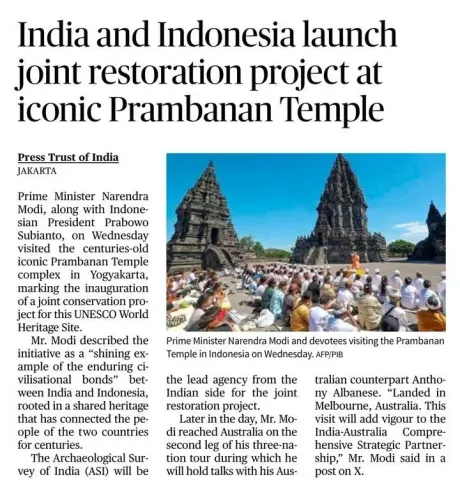
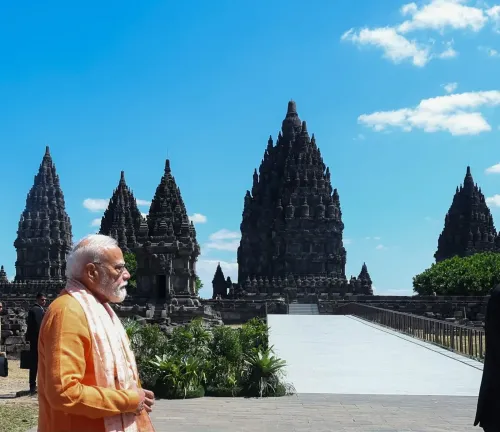
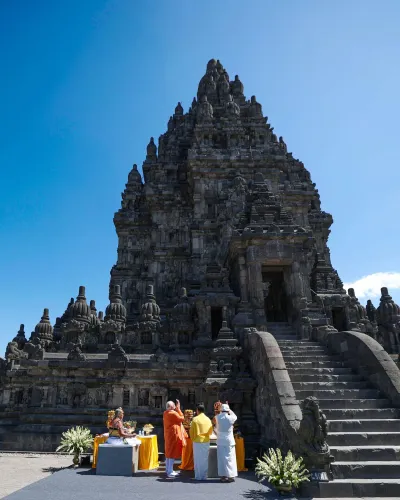
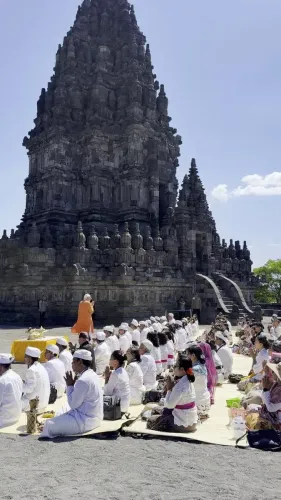
CM Rekha Gupta Hails ASI Role in Prambanan Temple Conservation
Synopsis
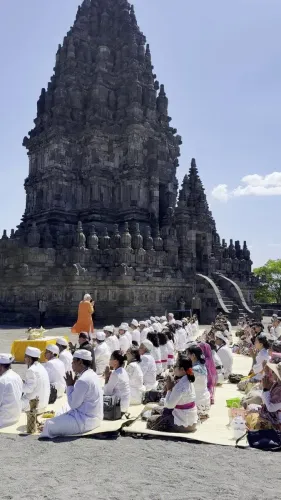
Delhi Chief Minister Rekha Gupta on 8 July 2026 welcomed the Archaeological Survey of India's planned conservation role at Indonesia's UNESCO-listed Prambanan Temple, framing it as a milestone in PM Modi's cultural diplomacy and India's effort to renew civilisational ties across the Indo-Pacific.
Key Takeaways
Delhi CM Rekha Gupta publicly endorsed the ASI 's role in conserving Indonesia 's Prambanan Temple via a post on 8 July 2026 .
The Prambanan Temple is a 9th-century Hindu complex in Central Java and a UNESCO World Heritage Site since 1991 .
ASI , India's apex archaeological body founded in 1861 , has prior overseas conservation experience in Cambodia and Vietnam .
The announcement is linked to PM Modi 's visit to Indonesia , tagged #PMModiInIndonesia .
The initiative aligns with India's Act East Policy (upgraded 2014 ), which prioritises cultural engagement with ASEAN nations.
Specific terms and timeline of the ASI-Prambanan partnership are yet to be officially confirmed.
Delhi Chief Minister Rekha Gupta on Wednesday, 8 July 2026, praised the decision to deploy Archaeological Survey of India (ASI) expertise in the conservation of the Prambanan Temple in Indonesia, crediting Prime Minister Narendra Modi's leadership for deepening India's civilisational ties with the Indo-Pacific world.
Context
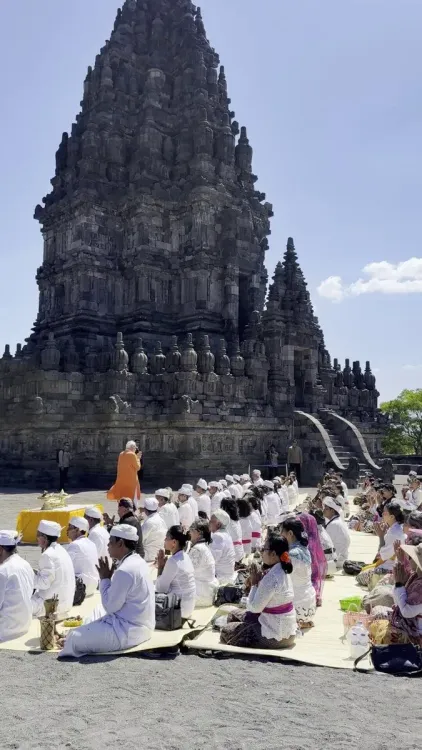
Gupta's post, written in Hindi, stated that under PM Modi's leadership, 'Bharat apni Sanatan sāṃskṛtik virasat se jude vaiśvik sambandhon ko naī ūrjā de rahā hai' — ('India is infusing new energy into its global relationships rooted in its Sanatan cultural heritage'). She specifically highlighted that ASI will now share its conservation expertise at the Prambanan Temple complex, a 9th-century Hindu temple compound in Central Java inscribed as a UNESCO World Heritage Site in 1991. The post carried the hashtag #PMModiInIndonesia, placing it in the context of an ongoing or recent high-level bilateral visit.
Policy Backdrop
India's Act East Policy, formally upgraded in 2014, places cultural and civilisational engagement with ASEAN nations at its core alongside economic and strategic priorities. The deployment of ASI — India's apex archaeological body, founded in 1861 — for overseas heritage conservation is a well-established instrument of Indian soft power. Similar ASI-led conservation partnerships have previously been undertaken in Cambodia and Vietnam, where shared Hindu-Buddhist heritage provided the diplomatic scaffolding.
The Prambanan announcement follows this established pattern of coupling high-profile bilateral visits with tangible, on-the-ground heritage cooperation. Indonesia holds the world's largest Muslim-majority population, yet its pre-Islamic Hindu-Buddhist heritage — most visibly at Prambanan and Borobudur — remains central to national identity, making cultural cooperation a politically resonant area for both governments.
Stakeholders and Impact
The primary beneficiaries of the partnership include Indonesian heritage conservation bodies, the Indonesian tourism sector, and the broader community of scholars and pilgrims connected to the site. For India, the collaboration reinforces ASI's international profile and strengthens the narrative of a shared civilisational arc across the Indo-Pacific. Gupta's post invoked the chant 'Om Namah Shivaya', describing it as 'Sanatan ki shāśvat chetanā kā divya svar' — ('the divine voice of Sanatan's eternal consciousness') — resonating at Prambanan, underlining the cultural and spiritual framing the BJP government places on such diplomatic moves.
For the Delhi BJP, amplifying the announcement serves a dual purpose: it associates the party's state leadership with a nationally celebrated foreign-policy achievement, and it reinforces the broader ideological emphasis on India's Hindu-Buddhist civilisational identity in global affairs.
What's Next
Attention will now turn to the formalisation of the ASI technical partnership, including the specific terms, timeline, and scope of conservation work at Prambanan. Any joint heritage project announcements emerging from upcoming India-ASEAN summits or bilateral meetings between New Delhi and Jakarta will be closely watched. The Prambanan initiative may also set a template for similar ASI engagements at other Hindu-Buddhist heritage sites across Southeast Asia.
Point of View
She connects a technical conservation agreement to a much larger ideological project: positioning India as the natural custodian of Hindu-Buddhist heritage across Asia. This framing serves both diplomatic and domestic audiences simultaneously. The Prambanan move fits a deliberate pattern — from Angkor Wat to My Son — of using ASI as a soft-power instrument, and signals that cultural diplomacy will remain a defining feature of India's Act East engagement well into the late 2020s.
NationPress
7 Oct 2026
Frequently Asked Questions
What is India's role in conserving the Prambanan Temple in Indonesia?
India's Archaeological Survey of India (ASI) is set to share its conservation expertise at the Prambanan Temple in Central Java, Indonesia , a move announced during PM Modi 's visit to Indonesia in July 2026.
What is the Prambanan Temple and why is it significant?
Prambanan is a 9th-century Hindu temple complex in Central Java, Indonesia , dedicated to the Trimurti. It was inscribed as a UNESCO World Heritage Site in 1991 and is one of the largest Hindu temple compounds in Southeast Asia.
Has ASI worked on overseas temple conservation before?
Yes. The Archaeological Survey of India has previously undertaken conservation projects at Hindu-Buddhist heritage sites in Cambodia and Vietnam , making Prambanan a continuation of India's established cultural diplomacy in Southeast Asia.
Why did Delhi CM Rekha Gupta comment on the Prambanan Temple?
Delhi Chief Minister Rekha Gupta posted on X on 8 July 2026 to highlight the announcement as evidence of PM Modi 's success in renewing India's global cultural and civilisational relationships under the Act East Policy .
What is India's Act East Policy and how does it relate to this?
India's Act East Policy , upgraded in 2014 , prioritises economic, strategic, and cultural engagement with ASEAN nations. The ASI-Prambanan conservation partnership is a direct expression of the policy's cultural diplomacy pillar.