Rajasthan Governor Bagde Calls on FM Sitharaman
Synopsis
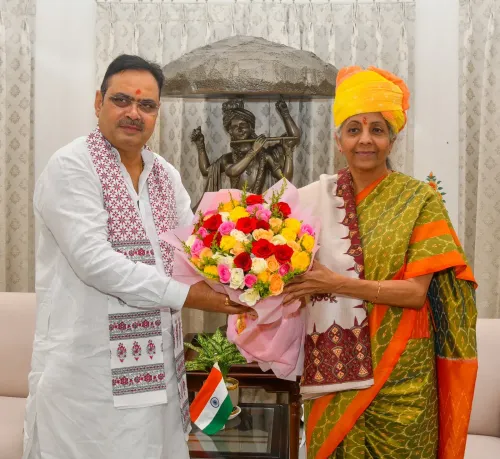
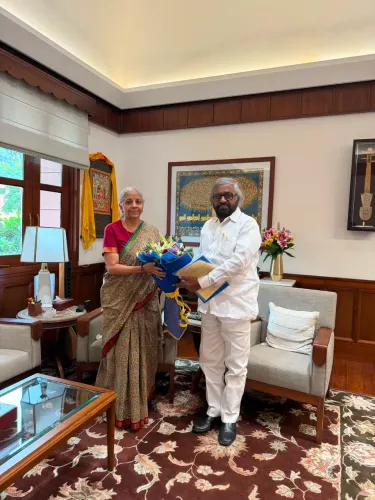
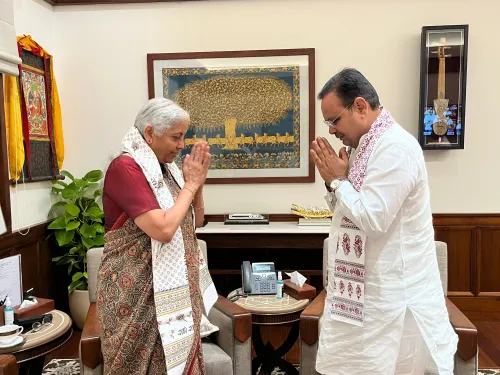
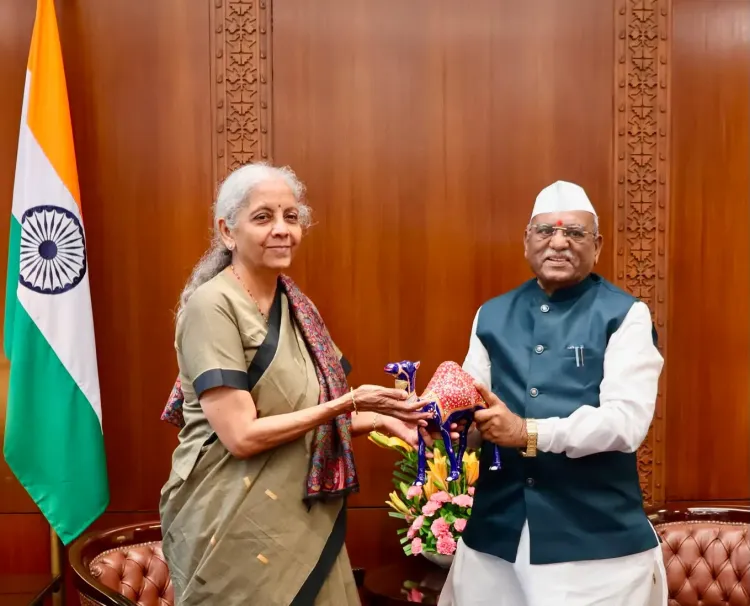
Rajasthan Governor Haribhau Kishanrao Bagde called on Union Finance Minister Nirmala Sitharaman in New Delhi on July 8, 2026. The courtesy meeting reflects routine federal coordination between constitutional functionaries and the Union government on administrative and fiscal matters.
Key Takeaways
Haribhau Kishanrao Bagde , Governor of Rajasthan since July 2024 , called on Union Finance Minister Nirmala Sitharaman on July 8, 2026 .
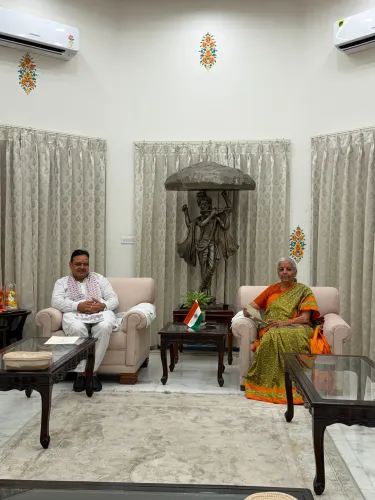
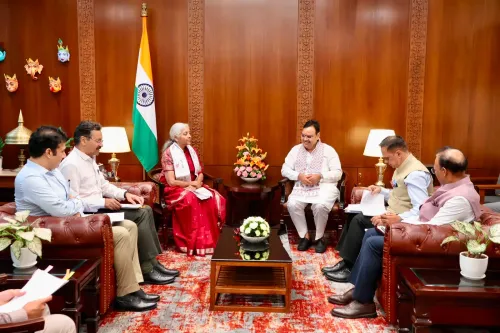
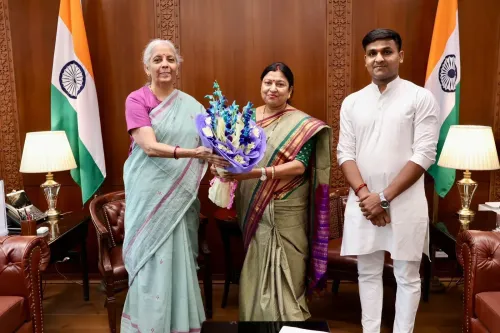
The meeting was confirmed via the Finance Minister's official social media account and included photographic documentation.
Such meetings between governors and Union ministers are a standard feature of India's federal framework under Article 155 of the Constitution.
Rajasthan depends significantly on central fiscal transfers for sectors including agriculture, rural infrastructure, and disaster management.
No public details of the meeting's specific agenda or outcomes have been disclosed.
Follow-up on any discussions is expected during the next Finance Ministry review of state plan assistance.
Union Finance Minister Nirmala Sitharaman received Haribhau Kishanrao Bagde, the Governor of Rajasthan, at a courtesy call in New Delhi on Wednesday, July 8, 2026. The meeting, confirmed through the Finance Minister's official social media account, reflects the routine federal coordination that takes place between constitutional functionaries and central government ministers.
Context
Haribhau Kishanrao Bagde has served as Governor of Rajasthan since July 2024. A veteran BJP leader from Maharashtra, he previously served as Speaker of the Maharashtra Legislative Assembly and as a Rajya Sabha member before being appointed to the constitutional post. As Governor, he functions as the constitutional head of Rajasthan and the formal link between the state and the Union government.
Nirmala Sitharaman has held the Finance and Corporate Affairs portfolios since 2019, making her the central authority on fiscal transfers, Union Budget allocations, and centrally sponsored scheme funding that directly affect states including Rajasthan.
Policy Backdrop
Under Article 155 of the Constitution, Governors are appointed by the President and serve as a bridge between the Union and state administrations. Such calls on central ministers are a standard feature of India's federal architecture, allowing governors to flag state-level administrative or fiscal concerns through appropriate channels.
The 15th Finance Commission recommendations, which govern centre-state revenue sharing through 2025-26, include specific grants to states for local bodies and disaster management. Rajasthan, with its large geography and significant dependence on central transfers for sectors like agriculture and rural infrastructure, has a direct stake in how these fiscal flows are structured and reviewed.
Stakeholders and Impact
The primary stakeholders in such meetings are the Rajasthan state government and its finance and planning departments, which rely on timely central disbursements for scheme implementation. Centrally sponsored schemes covering rural development, water conservation, and social welfare in Rajasthan require ongoing coordination between the state and the Union Finance Ministry.
While no public details of the meeting's agenda or specific outcomes have been disclosed, such interactions are considered part of the standard administrative calendar. They serve as opportunities for the constitutional head of a state to convey ground-level feedback on policy execution to the central government.
What's Next
Any substantive outcomes from the meeting would likely surface during the next Finance Ministry review of state plan assistance or during the upcoming Rajasthan legislative assembly session, where fiscal matters are routinely discussed. The broader pattern of such consultations suggests this meeting is part of ongoing federal dialogue rather than a precursor to a specific policy announcement.
Point of View
But it carries quiet significance given Rajasthan's dependence on central transfers and the ongoing cycle of Finance Commission grant disbursements. Governors of states — particularly those with complex centre-state dynamics — frequently use such meetings to serve as informal conduits for state concerns that may not easily surface through official state government channels. For Sitharaman, who manages the fiscal architecture that directly shapes state budgets, these interactions are part of a broader pattern of maintaining institutional relationships with constitutional heads across India's states. The meeting signals no friction, but underscores the dense web of coordination that underpins Indian federalism.
NationPress
7 Oct 2026
Frequently Asked Questions
Why did Rajasthan Governor Bagde meet Finance Minister Sitharaman?
The meeting was a courtesy call, a standard practice under India's federal system where governors meet central ministers to discuss administrative and fiscal coordination. No specific agenda has been publicly disclosed.
Who is Haribhau Kishanrao Bagde?
Haribhau Kishanrao Bagde is the Governor of Rajasthan, appointed in July 2024 . He is a veteran BJP leader from Maharashtra who previously served as Speaker of the Maharashtra Legislative Assembly and as a Rajya Sabha member.
What is the role of a Governor in centre-state relations?
Under Article 155 of the Constitution, Governors are appointed by the President and act as the constitutional head of a state. They serve as a formal link between the state and the Union government, including on matters of fiscal transfers and scheme implementation.
What central funds does Rajasthan receive from the Finance Ministry?
Rajasthan receives central transfers shaped by the 15th Finance Commission recommendations, including grants for local bodies and disaster management, as well as funding for centrally sponsored schemes in agriculture, rural development, and social welfare.
Is this meeting a sign of any new policy announcement for Rajasthan?
No new policy announcement has been indicated. Such courtesy calls between governors and Union ministers are routine and are not typically precursors to specific fiscal decisions or scheme launches.