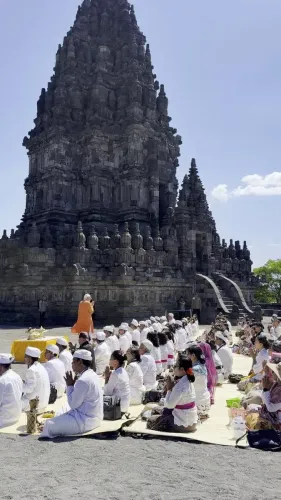
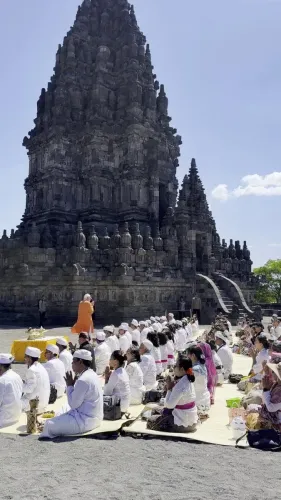
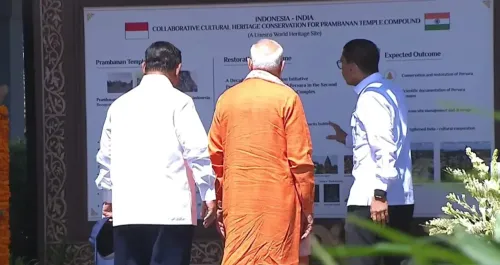
Shekhawat: India to restore UNESCO Prambanan Shiva Temple
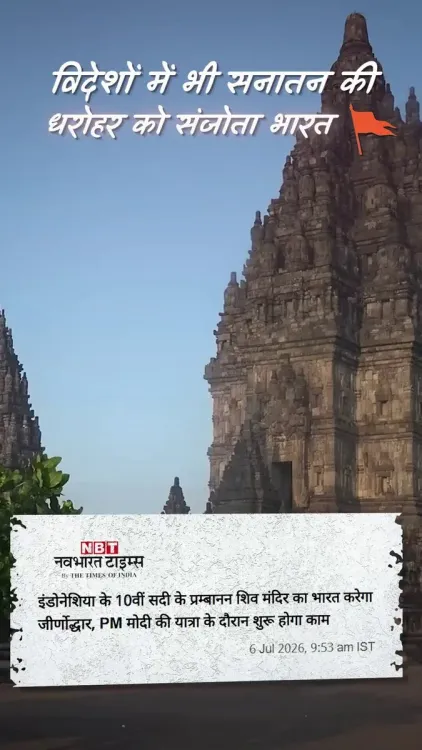
Synopsis
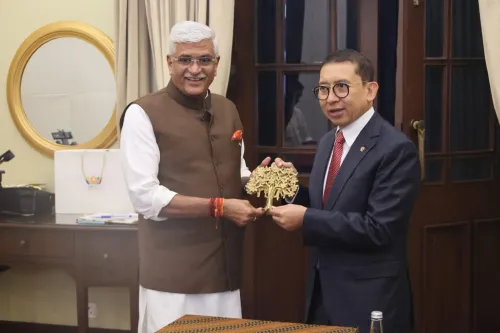
Union Culture and Tourism Minister Gajendra Singh Shekhawat announced that India will restore Indonesia's 9th-century Prambanan Shiva Temple, a UNESCO World Heritage Site, framing the move as a commitment to shared Sanatana heritage and a deepening of centuries-old India-Indonesia cultural ties.
Key Takeaways
Union Culture and Tourism Minister Gajendra Singh Shekhawat announced on 7 July 2026 that India will restore the Prambanan Shiva Temple in Indonesia.
The Prambanan complex is a 9th-century Hindu temple in Central Java , dedicated to Lord Shiva , and has been a UNESCO World Heritage Site since 1991 .
Shekhawat described the initiative as a symbol of India's 'unwavering commitment to shared cultural heritage and Sanatana traditions.' The move aligns with India's Act East Policy , which prioritises cultural diplomacy and heritage cooperation with ASEAN nations.
Formal project modalities, including funding, ASI deployment, and bilateral agreements, are yet to be publicly announced.
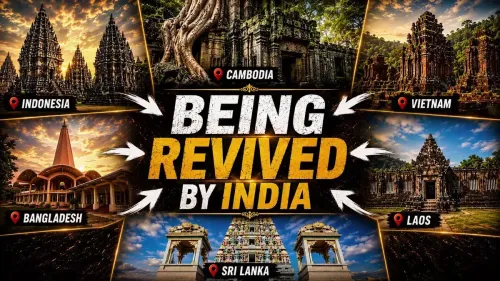
The initiative is expected to strengthen India-Indonesia bilateral ties and may set a precedent for similar heritage conservation projects across Southeast Asia.
Union Culture and Tourism Minister Gajendra Singh Shekhawat announced on Tuesday, 7 July 2026 that India will undertake the restoration of the Prambanan Shiva Temple in Indonesia, a UNESCO World Heritage Site, describing the move as a historic initiative in the preservation of Sanatana cultural heritage.
Posting on X, Shekhawat wrote: 'सनातन संस्कृति की अमर विरासत के संरक्षण की दिशा में एक ऐतिहासिक पहल' ('A historic initiative towards the preservation of the immortal legacy of Sanatana culture'). He stated that India's participation in conserving the ancient temple is 'a symbol of our unwavering commitment to shared cultural heritage and Sanatana traditions,' and that the initiative will lend new strength to the centuries-old cultural ties between the two nations.
Context
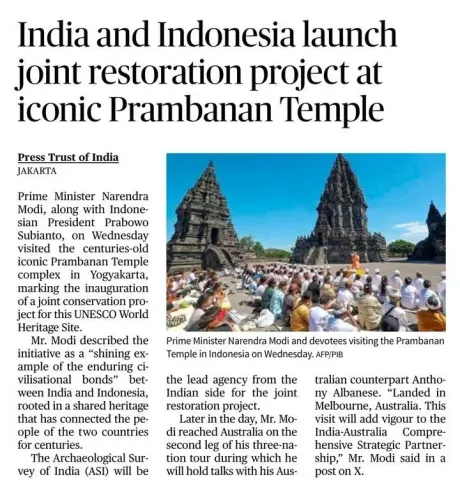
The Prambanan Temple complex, located in Central Java, Indonesia, is a 9th-century Hindu temple compound dedicated primarily to Lord Shiva. It was inscribed as a UNESCO World Heritage Site in 1991 and is among the largest Hindu temple complexes in Southeast Asia. The site stands as one of the most enduring physical markers of the ancient cultural and religious exchange between the Indian subcontinent and the Indonesian archipelago through maritime trade routes.
Indonesia, though today a majority-Muslim nation, retains deep Hindu-Buddhist cultural roots, most visibly on the island of Bali and in the heritage monuments of Java. The Prambanan complex draws millions of visitors annually and holds religious significance for Hindu communities across the region.
Policy Backdrop
India's decision aligns with its Act East Policy, upgraded from the earlier Look East Policy in 2014, which has made cultural diplomacy and heritage cooperation with ASEAN nations a strategic priority. The Archaeological Survey of India (ASI) has previously led conservation projects at historic Indian-linked sites abroad as instruments of soft-power engagement.
This announcement extends that pattern into one of Southeast Asia's most prominent heritage landmarks. The move complements economic and strategic ties under the Act East framework without altering core bilateral trade or security agendas, reinforcing India's positioning as a custodian of shared civilisational memory across Asia.
Stakeholders and Impact
The restoration initiative is expected to be welcomed by Indonesian Hindu communities, heritage conservation professionals, and cultural institutions in both countries. For India, it offers a high-visibility demonstration of civilisational diplomacy — projecting cultural continuity and shared identity beyond political boundaries.
For Indonesia, Indian technical and financial participation in restoring a UNESCO-listed monument could accelerate conservation timelines and bring in specialised expertise from ASI, which has experience with comparable ancient stone temple structures on the subcontinent. The project is also likely to feature prominently in future India-Indonesia bilateral summits and ASEAN-India cultural forums.
What's Next
The formal modalities of the project — including funding arrangements, ASI deployment timelines, and the signing of any bilateral cultural agreement — are yet to be publicly detailed. Observers will watch for announcements at the next India-Indonesia bilateral summit or during upcoming ASEAN-India cultural meetings.
As India deepens its cultural footprint across Southeast Asia, the Prambanan restoration could set a precedent for similar ASI-led engagements at other Hindu-Buddhist heritage sites in the region, reinforcing the government's broader civilisational diplomacy agenda under the Act East framework.
Point of View
Not merely a symbolic gesture. By anchoring India's role at Prambanan within the Sanatana civilisational narrative, the ministry is deliberately framing cultural diplomacy in identity terms that resonate domestically while also projecting influence across ASEAN. The choice of a UNESCO-listed site in the world's largest Muslim-majority nation is strategically nuanced — it foregrounds shared pre-Islamic heritage without disrupting the broader India-Indonesia strategic partnership. If project modalities are formalised swiftly, this could become a flagship example of India's soft-power outreach under the Act East Policy heading into the next ASEAN-India summit cycle.
NationPress
6 Oct 2026
Frequently Asked Questions
Which temple is India restoring in Indonesia?
India will restore the Prambanan Shiva Temple , a 9th-century Hindu temple complex in Central Java, Indonesia , which has been a UNESCO World Heritage Site since 1991 .
Why is India restoring a temple in Indonesia?
The restoration is part of India's cultural diplomacy under the Act East Policy , aimed at strengthening ties with ASEAN nations through shared Hindu-Buddhist heritage. Minister Shekhawat described it as a symbol of commitment to Sanatana traditions and centuries-old India-Indonesia cultural bonds.
Who announced India's restoration of the Prambanan Temple?
Union Culture and Tourism Minister Gajendra Singh Shekhawat made the announcement on 7 July 2026 via a post on X.
What is the Prambanan Temple and why is it significant?
The Prambanan complex is a 9th-century Hindu temple in Central Java, Indonesia , primarily dedicated to Lord Shiva . It is one of the largest Hindu temple complexes in Southeast Asia and was inscribed as a UNESCO World Heritage Site in 1991 .
Has India done similar heritage restoration projects abroad before?
Yes. The Archaeological Survey of India (ASI) has previously led conservation projects at historic Indian-linked sites in other countries as part of India's soft-power and cultural diplomacy efforts, particularly under the Act East Policy framework.