Shekhawat meets Indonesia Culture Minister at BRICS Bhopal meet
Synopsis
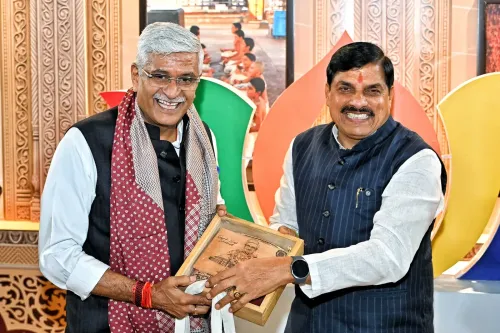
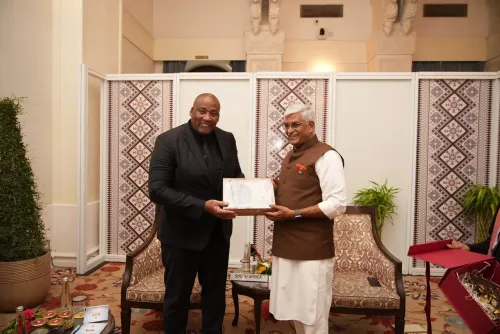
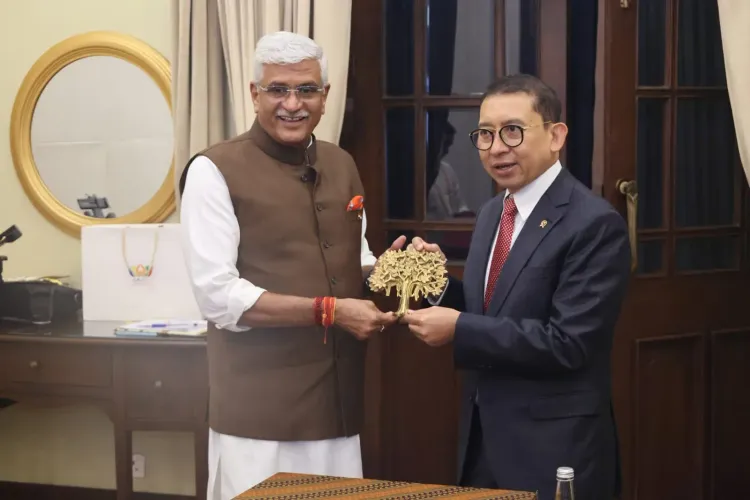
Union Culture Minister Gajendra Singh Shekhawat held a bilateral meeting with Indonesian Culture Minister Fadli Zon at the BRICS Culture Ministers' Meeting in Bhopal, reviewing India's restoration work at the Prambanan Temple Complex and pledging deeper cultural cooperation.
Key Takeaways
Gajendra Singh Shekhawat met H.E.
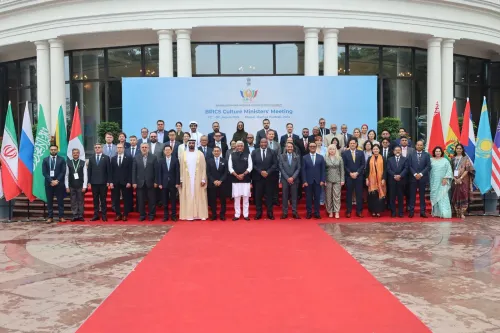
Fadli Zon , Indonesia's Culture Minister, on the sidelines of the BRICS Culture Ministers' Meeting in Bhopal on 7 August 2026 .
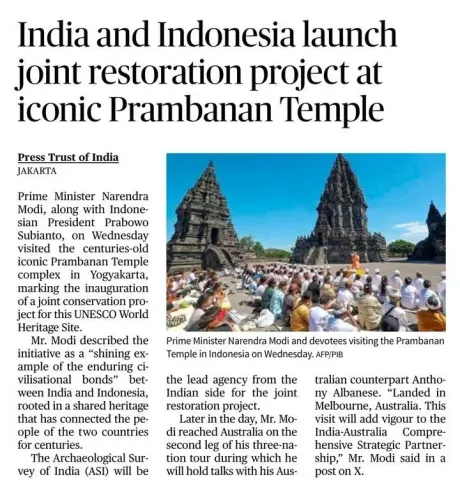
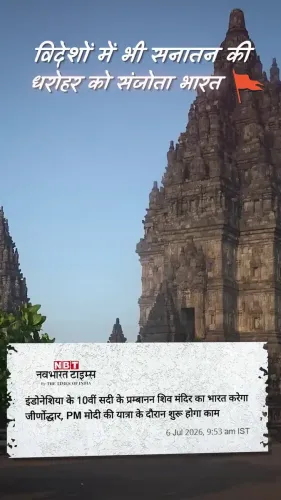
The two sides reviewed India's technical assistance in the restoration and conservation of the Prambanan Temple Complex , a 9th-century Hindu monument in Indonesia.
Discussions covered expanding cultural exchanges, people-to-people connections, and deeper bilateral cooperation.
The meeting builds on commitments made during Prime Minister Modi's 2018 state visit to Indonesia .
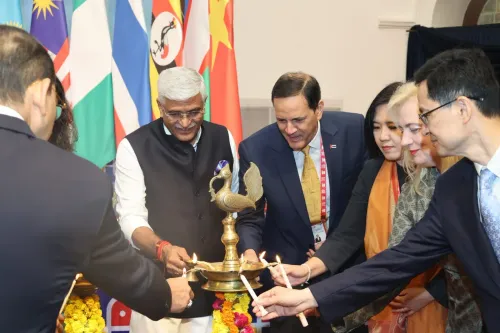
India has used the BRICS multilateral platform to advance cultural diplomacy with ASEAN partners, with Bhopal hosting the Culture Ministers' Meeting.
On the sidelines of the BRICS Culture Ministers' Meeting in Bhopal, Union Culture and Tourism Minister Gajendra Singh Shekhawat sat down with H.E. Fadli Zon, Indonesia's Minister of Culture, for a bilateral that reached back centuries — and forward into a shared diplomatic future. The two ministers reviewed India's ongoing assistance in restoring the Prambanan Temple Complex, a 9th-century Hindu temple complex in Indonesia that has become a living symbol of the subcontinent's civilisational reach across the seas.
Prambanan: where stone and diplomacy meet
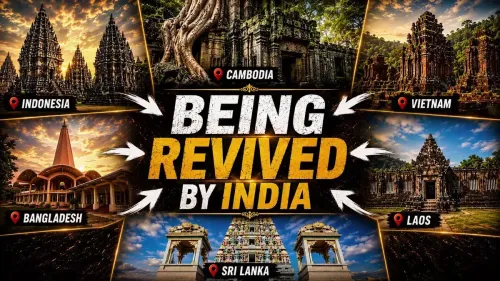
The Prambanan Temple Complex in central Java is one of Southeast Asia's most spectacular Hindu monuments — and India's involvement in its conservation is not merely technical. It is a statement. The restoration project, which India supports through expertise and assistance, frames New Delhi's engagement with Jakarta as something older and deeper than trade ledgers or defence pacts. 'Our discussions focused on further strengthening the centuries-old civilisational and cultural ties between India and Indonesia,' Shekhawat said, describing the meeting as 'warm and productive.'
The two sides reviewed progress on the conservation initiative and discussed expanding cultural exchanges and people-to-people connections. Shekhawat framed the work explicitly as 'preserving our common heritage for future generations' — language that positions India not as a donor, but as a co-custodian of a shared past.
Modi's Indonesia visit as the diplomatic launchpad
The Bhopal bilateral did not emerge in a vacuum. Prime Minister Narendra Modi's state visit to Indonesia in 2018 laid the groundwork for precisely this kind of structured cultural cooperation, with both governments agreeing then to expand exchanges and people-to-people contacts. Shekhawat's meeting with Fadli Zon is, in effect, the ministerial follow-through — converting a leaders' handshake into institutional momentum.
India has consistently used multilateral frameworks like BRICS to conduct this kind of bilateral cultural diplomacy with ASEAN partners. Hosting the Culture Ministers' Meeting in Bhopal — itself a city of deep historical layering — amplifies that signal.
The India-Indonesia civilisational thread
The Hindu-Buddhist heritage that connects India and Indonesia is not rhetorical shorthand. The name 'Indonesia' itself is rooted in the Greek and Sanskrit words for 'Indian islands.' The Ramayana and Mahabharata remain living traditions in Balinese and Javanese culture. Successive Indian governments have leaned into this civilisational link as a force-multiplier for bilateral ties — soft power with ancient roots.
What to watch now: whether the Bhopal meeting produces a follow-up cultural MoU or a fresh progress report on the Prambanan project, both of which are anticipated under the BRICS Culture Ministers' framework.
India's cultural diplomacy in Southeast Asia has found its most durable expression not in press releases, but in scaffolding around a 9th-century temple. That is the kind of statecraft that outlasts election cycles.
Point of View
New Delhi signals that multilateral platforms are not just forums for communiqués but instruments for advancing specific bilateral agendas. The Modi government has consistently treated Hindu-Buddhist heritage corridors across Southeast Asia as soft-power infrastructure, and Shekhawat's Bhopal meeting is a textbook execution of that doctrine. The real test will be whether this ministerial momentum translates into a concrete MoU or a measurable Prambanan conservation milestone.
NationPress
22 Sept 2026
Frequently Asked Questions
What is the Prambanan Temple Complex and why is India involved in its restoration?
The Prambanan Temple Complex is a 9th-century Hindu temple complex in central Java, Indonesia, and one of Southeast Asia's most significant heritage sites. India provides technical assistance for its restoration as part of cultural diplomacy rooted in the two countries' shared Hindu-Buddhist civilisational heritage.
What happened at the BRICS Culture Ministers' Meeting in Bhopal in 2026?
The BRICS Culture Ministers' Meeting was held in Bhopal , where Union Minister Gajendra Singh Shekhawat conducted a bilateral meeting with Indonesia's Culture Minister Fadli Zon , focusing on heritage conservation, cultural exchanges, and people-to-people ties.
What did PM Modi's state visit to Indonesia achieve for cultural ties?
During Prime Minister Modi's 2018 state visit to Indonesia , both governments agreed to expand cultural exchanges and people-to-people contacts, providing the diplomatic foundation for subsequent ministerial-level cultural cooperation including the Prambanan restoration project.
How does India use BRICS for cultural diplomacy with ASEAN countries?
India has used multilateral frameworks like BRICS to conduct bilateral cultural diplomacy with ASEAN partners, leveraging shared heritage narratives and temple-restoration projects to build people-to-people ties and reinforce civilisational links with countries such as Indonesia.