Shekhawat Hosts BRICS Cultural Festival 2026 in Bhopal
Synopsis
Union Culture Minister Gajendra Singh Shekhawat attended the BRICS Cultural Festival 2026 in Bhopal on 8 August, where artists from Belarus, Indonesia and Brazil joined Madhya Pradesh folk performers in a collaborative musical ensemble celebrating cultural harmony.
Key Takeaways
The BRICS Cultural Festival 2026 was held in Bhopal, Madhya Pradesh on the evening of 8 August 2026 .
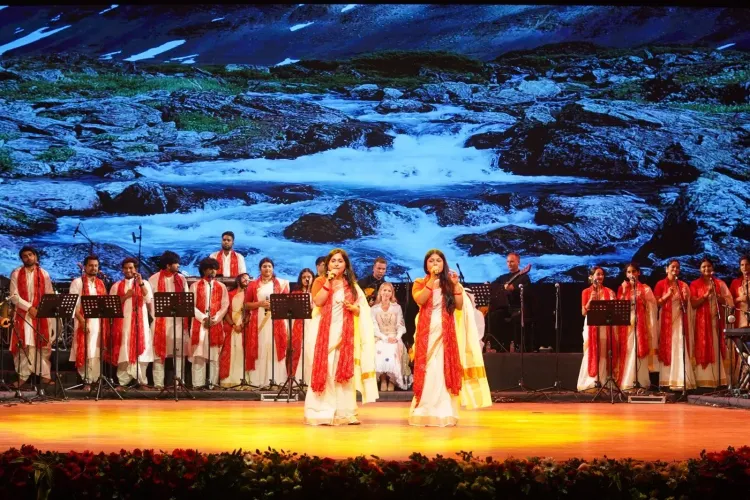
Artists from Belarus , Indonesia , and Brazil performed alongside Madhya Pradesh folk artists in a collaborative musical ensemble.
The festival was anchored in the Sanskrit ideal 'Sarve Sukhino Bhavantu' — 'May all be happy; may all be free from suffering.' Sangeet Natak Akademi and the Government of Madhya Pradesh co-organised the event.
The festival is part of India's broader cultural diplomacy push during the 2026 BRICS cycle , following the bloc's expansion in 2024.
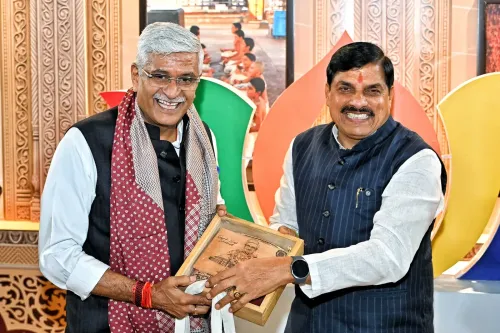
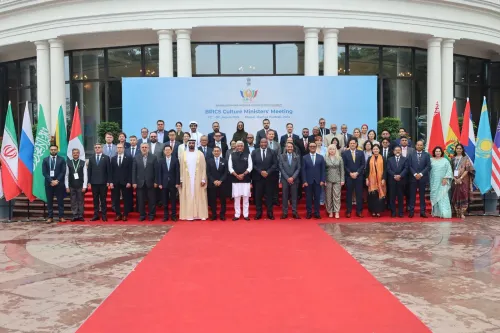
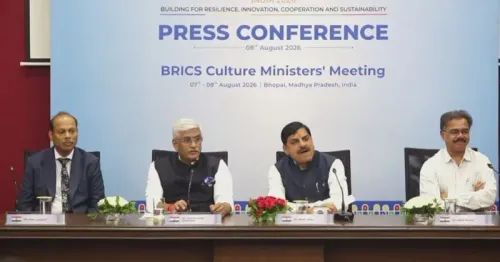
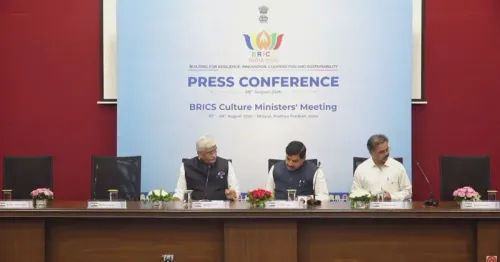
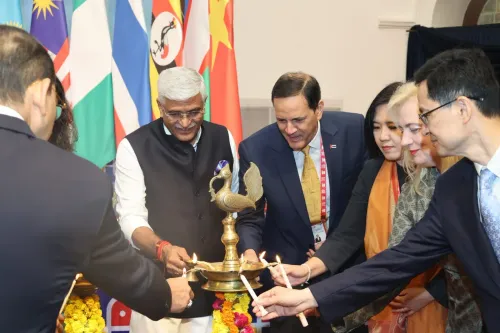
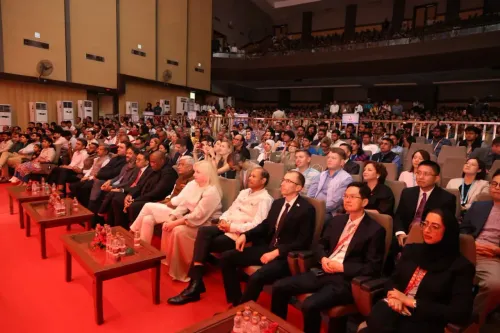
When folk dancers from Madhya Pradesh share a stage with artists from Belarus, Indonesia, and Brazil, the geopolitics of emerging-economy blocs briefly gives way to something older and more instinctive — the human pull of shared rhythm. Union Culture and Tourism Minister Gajendra Singh Shekhawat was in Bhopal on the evening of Saturday, 8 August 2026 for the BRICS Cultural Festival 2026, a multi-nation celebration that drew performing artists from BRICS member and partner countries for an evening of music, dance, and cultural exchange.
One stage, many traditions
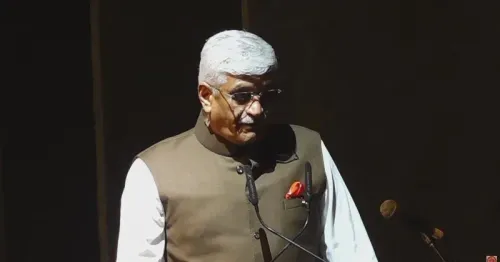
The centrepiece of the evening was a collaborative musical ensemble featuring artists from across the BRICS constellation — a live demonstration of what the minister called 'harmony in diversity.' Shekhawat anchored the night's spirit in the Sanskrit ideal 'Sarve Sukhino Bhavantu' — 'May all be happy; may all be free from suffering' — framing the festival not as a diplomatic courtesy but as a civilisational statement. Madhya Pradesh's own vibrant folk traditions opened the cultural canvas, before international performers layered in their own textures.
Sangeet Natak Akademi and MP government as co-architects
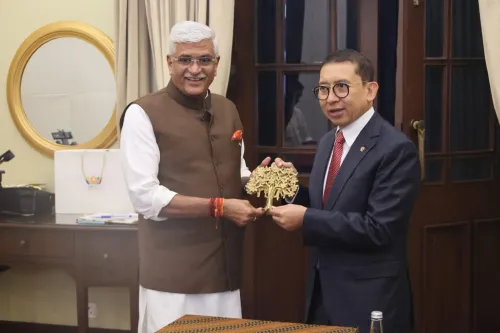
Sangeet Natak Akademi, India's apex body for performing arts, co-organised the event alongside the Government of Madhya Pradesh under Chief Minister Dr. Mohan Yadav. The pairing of a national academy with a state government reflects a deliberate model: cultural diplomacy executed not just from Delhi but from India's heartland cities, putting Bhopal on the map as a soft-power venue. Shekhawat extended his appreciation to both bodies and to all participating artists.
BRICS culture diplomacy after the 2024 expansion
India has long used its BRICS chairmanships to weave cultural programming alongside the bloc's harder economic and security agenda. That strategy has grown more consequential since BRICS expanded in 2024, adding partner countries and broadening the coalition's cultural footprint well beyond its original five members. Festivals like the one in Bhopal serve as the people-to-people layer that formal summit communiqués cannot provide — a room where a Brazilian percussionist and a Belarusian folk ensemble find common ground before any trade negotiation begins.
The hashtags #BRICS2026, #CultureUnitesAll, and #IndiaForBRICS tagged in Shekhawat's post signal that this is part of a coordinated communications push around India's active role in the 2026 BRICS cycle — with more cultural programming likely to follow before the year's main summit.
If Bhopal's evening proved anything, it is that the most durable diplomatic architecture is sometimes built not in negotiating rooms but on a shared stage.
Point of View
The partner-country framework gives India a wider audience for this approach — and more bilateral relationships to cultivate through arts diplomacy. Shekhawat's public tagging of the PMO, MEA, and both Indian embassies in Jakarta and Brasília underscores that this is coordinated foreign-cultural policy, not a standalone ceremony.
NationPress
22 Sept 2026
Frequently Asked Questions
What is the BRICS Cultural Festival 2026?
The BRICS Cultural Festival 2026 is a performing-arts event held under India's 2026 BRICS engagement, bringing together folk and musical artists from BRICS member and partner countries to celebrate cultural diversity and people-to-people ties.
Where was the BRICS Cultural Festival 2026 held?
The festival was held in Bhopal , the capital of Madhya Pradesh , on the evening of 8 August 2026 .
Which countries participated in the BRICS Cultural Festival 2026 in Bhopal?
Artists from Belarus , Indonesia , and Brazil performed alongside folk artists from Madhya Pradesh , with the collaborative ensemble drawing from multiple BRICS member and partner countries.
What is Sangeet Natak Akademi's role in the festival?
Sangeet Natak Akademi , India's national academy of music, dance and drama, co-organised the BRICS Cultural Festival 2026 in Bhopal alongside the Government of Madhya Pradesh.
Why is India hosting BRICS cultural events in 2026?
India is an active participant in the 2026 BRICS cycle and routinely uses cultural festivals to complement formal summit diplomacy with people-to-people exchanges, a strategy that gained greater scope after BRICS expanded its membership in 2024 .