BRICS Cultural Festival 2026: Shekhawat hails shared values of peace and unity in Bhopal
Synopsis
At the BRICS Cultural Festival in Bhopal, Union Minister Shekhawat reframed BRICS not as an economic bloc but as a civilisational compact — invoking Vasudhaiva Kutumbakam and spotlighting Madhya Pradesh's UNESCO heritage sites. With artists from 11 nations on stage and Simhastha-2028 on the horizon, India is using its BRICS Presidency to project soft power as deliberately as hard diplomacy.
Key Takeaways
Union Minister Gajendra Singh Shekhawat addressed the BRICS Cultural Festival at Ravindra Bhavan, Bhopal on 7 August .
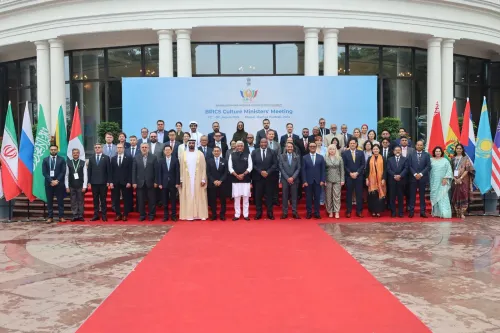
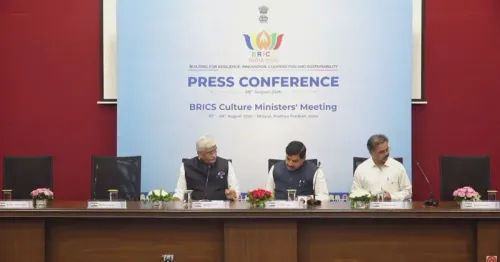
The event was part of the third BRICS Culture Ministers' meeting under India's BRICS Presidency 2026 .
Artists from 11 nations — including Brazil, China, Russia, South Africa, and the UAE — performed at the festival.
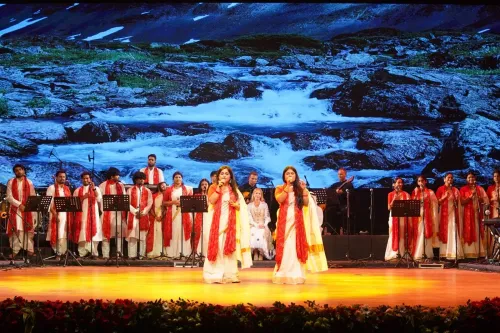
A 32-minute musical showcase on 'Colours of Indian Music' and a 35-minute dance-drama, Amritasya Madhya Pradesh , were among the highlights.
Shekhawat cited UNESCO World Heritage Sites Bhimbetka, Sanchi, and Khajuraho as symbols of India's civilisational continuity.
The festival closed with the 'BRICS Peace Song' , reinforcing the grouping's message of global harmony and unity in diversity.
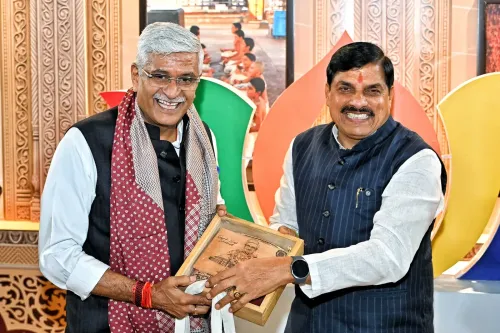
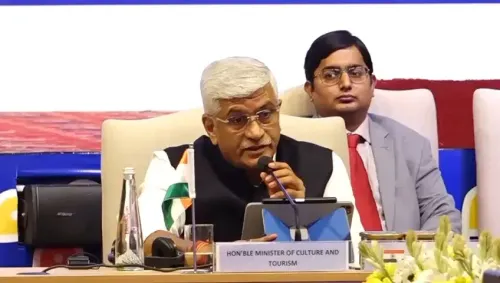
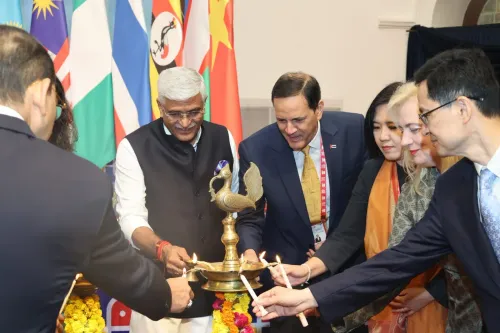
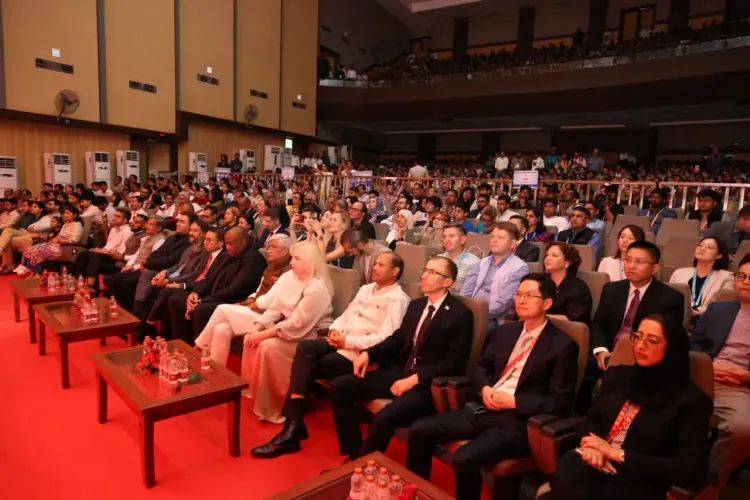
Union Culture and Tourism Minister Gajendra Singh Shekhawat on Friday, 7 August declared that the BRICS grouping is bound together not merely by economic or political ties but by a deeper, shared commitment to culture, peace, mutual respect, and inclusive development. He was speaking at the BRICS Cultural Festival held at Ravindra Bhavan, Bhopal, on the sidelines of the third meeting of the BRICS Culture Ministers under India's BRICS Presidency 2026.
Key Remarks by the Union Minister
Shekhawat described cultural exchanges as a strong and growing pillar of cooperation among BRICS nations and their partner countries. 'BRICS nations are not limited merely to economic or political partnerships. They are united by a deep sense of shared culture, peace, mutual respect and inclusive development,' he said, addressing delegates gathered at the festival.
He invoked two foundational Indian philosophical concepts — Vasudhaiva Kutumbakam (the world is one family) and Atithi Devo Bhava (the guest is akin to God) — to articulate India's approach to international engagement. 'For India, hospitality is not merely a social formality but a profound civilisational value. Though the languages, histories and artistic expressions of BRICS nations may differ, music and art serve as universal languages that unite people through friendship, peace and hope,' the Minister said.
Madhya Pradesh as a Civilisational Canvas
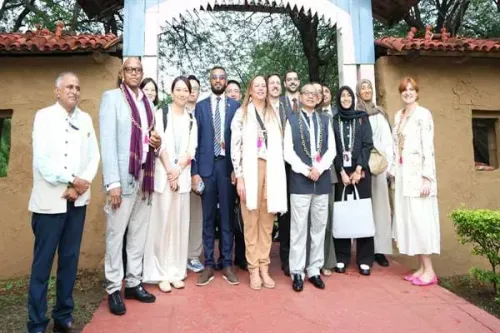
Shekhawat spotlighted Madhya Pradesh as a land where civilisations, faiths, and artistic traditions have flourished for centuries. He cited UNESCO World Heritage Sites — Bhimbetka, Sanchi, and Khajuraho — along with the living traditions of the state's tribal communities, as evidence of India's unbroken civilisational continuity. He welcomed delegates to Bhopal, widely known as the City of Lakes, expressing confidence that the festival would deepen cultural dialogue among BRICS countries.
How the Festival Unfolded
The cultural festival opened with the Vedic prayer Sarve Bhavantu Sukhinah, followed by a 32-minute musical presentation under the theme 'Colours of Indian Music', showcasing the diversity of Hindustani and Carnatic classical traditions. The event concluded with the 'BRICS Peace Song', in which artists from member and partner nations presented their traditional musical forms, collectively conveying a message of peace, friendship, and global harmony.
Artists from Belarus, Brazil, China, Egypt, Ethiopia, Indonesia, Iran, Russia, Saudi Arabia, South Africa, and the United Arab Emirates participated in the festival.
Madhya Pradesh's Cultural Showcase
The Madhya Pradesh Department of Culture presented a 35-minute dance-drama titled Amritasya Madhya Pradesh, portraying the state's cultural, spiritual, historical, and natural heritage. The production featured UNESCO World Heritage Sites, episodes associated with Lord Ram and Lord Krishna, the legacies of Mahakaleshwar, Omkareshwar, Raja Bhoj, the Narmada river, and a preview of preparations for Simhastha-2028.
Broader Significance
The BRICS Cultural Festival is being organised under India's BRICS Presidency 2026 to promote cultural diplomacy, people-to-people exchanges, and international cooperation through music, dance, and the arts. This comes at a moment when BRICS has expanded its membership significantly, making cultural cohesion an increasingly deliberate diplomatic tool alongside trade and security cooperation. The Bhopal meeting marks the third time BRICS Culture Ministers have convened, reflecting the grouping's growing emphasis on soft-power alignment. All eyes will now turn to the outcomes and joint declarations expected from the ministerial meeting itself.
Point of View
But deploying it before Culture Ministers from Russia, China, and the Gulf carries fresh diplomatic weight given current geopolitical fault lines. The real question is whether cultural exchanges at this level translate into durable people-to-people architecture, or remain ceremonial. With BRICS now a far larger and more heterogeneous grouping, holding it together through shared cultural values is an ambitious — and largely untested — proposition.
NationPress
22 Sept 2026
Frequently Asked Questions
What is the BRICS Cultural Festival 2026 in Bhopal?
The BRICS Cultural Festival 2026 is an event organised under India's BRICS Presidency to promote cultural diplomacy and people-to-people exchanges among BRICS member and partner nations. It was held at Ravindra Bhavan in Bhopal on 7 August, alongside the third meeting of BRICS Culture Ministers.
What did Union Minister Gajendra Singh Shekhawat say at the BRICS Cultural Festival?
Shekhawat said BRICS nations are united not just by economic and political ties but by shared values of culture, peace, mutual respect, and inclusive development. He invoked the Indian philosophies of Vasudhaiva Kutumbakam and Atithi Devo Bhava to describe India's civilisational approach to international engagement.
Which countries participated in the BRICS Cultural Festival in Bhopal?
Artists from 11 nations participated, including Belarus, Brazil, China, Egypt, Ethiopia, Indonesia, Iran, Russia, Saudi Arabia, South Africa, and the United Arab Emirates. They performed traditional musical forms as part of the 'BRICS Peace Song' finale.
What cultural performances were held at the BRICS Cultural Festival?
The festival featured a 32-minute musical presentation on 'Colours of Indian Music' showcasing Hindustani and Carnatic traditions, and a 35-minute dance-drama by the Madhya Pradesh Department of Culture titled Amritasya Madhya Pradesh. The event opened with the Vedic prayer Sarve Bhavantu Sukhinah.
Why is India hosting the BRICS Cultural Festival in 2026?
India holds the BRICS Presidency in 2026 and is using the platform to advance cultural diplomacy alongside economic and political cooperation. The festival aims to strengthen people-to-people ties and reinforce the message of global harmony and unity in diversity among the expanded BRICS grouping.