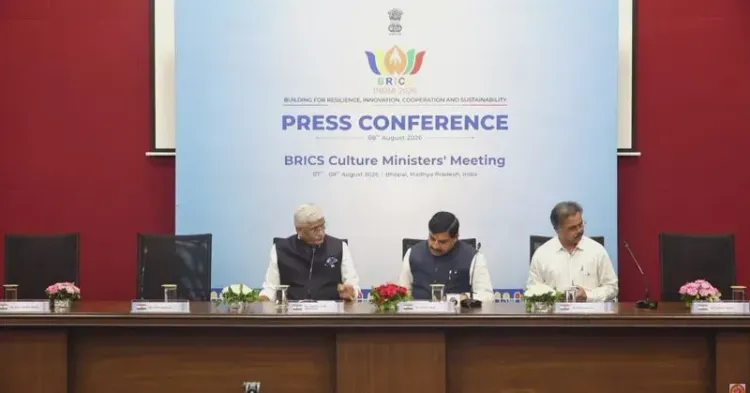
Shekhawat at BRICS Culture Ministers' Meeting Press Conference
Synopsis
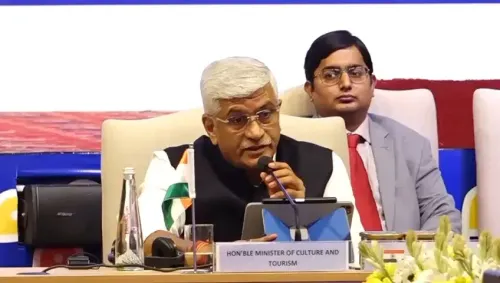
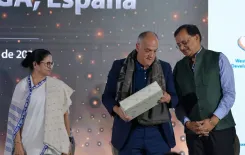
Union Culture and Tourism Minister Gajendra Singh Shekhawat participated in the BRICS Culture Ministers' Meeting press conference on August 8, 2026, as India engaged multilaterally on heritage, arts, and people-to-people cultural ties within the expanded grouping.
Key Takeaways
Gajendra Singh Shekhawat represented India at the BRICS Culture Ministers' Meeting press conference on August 8, 2026 .
The BRICS grouping expanded to include five new members in 2024 , widening the scope of its cultural diplomacy forums.
Cultural cooperation has featured in BRICS joint declarations since the 2015 Ufa Summit .
BRICS ministerial tracks on culture, education and health support the grouping's broader goal of building multipolar institutional linkages.
Key post-meeting deliverables include a potential joint declaration and any follow-up working group mandates ahead of the next full BRICS summit.
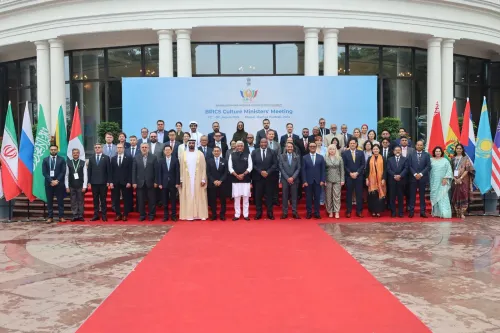
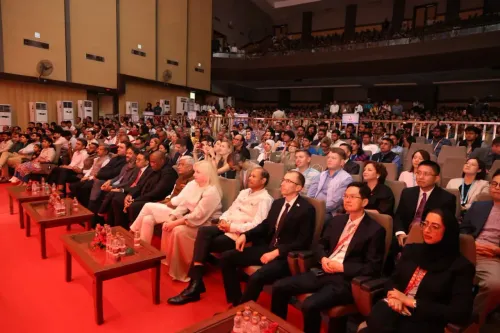
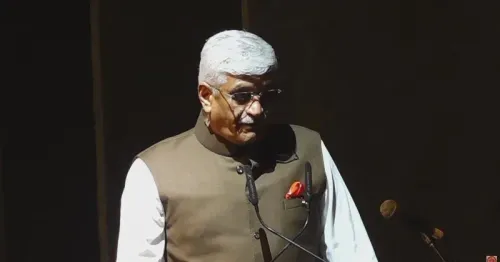
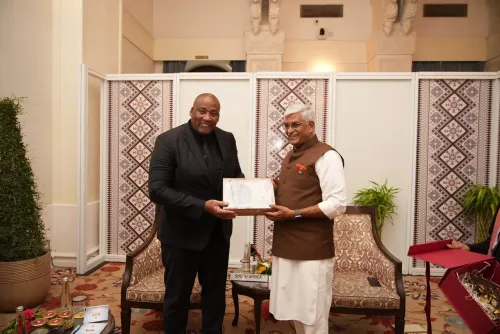
Union Culture and Tourism Minister Gajendra Singh Shekhawat addressed a press conference at the BRICS Culture Ministers' Meeting on Saturday, August 8, 2026, as India engaged with counterparts from across the expanded grouping on shared cultural priorities.
The ministerial forum brings together culture ministers from the BRICS bloc — an intergovernmental grouping of major emerging economies that has grown beyond its original five members since the 2024 expansion — to coordinate on heritage preservation, arts exchange, and people-to-people ties. Cultural cooperation has been a standing pillar of BRICS joint declarations since the 2015 Ufa Summit, but these dedicated ministerial tracks have given the agenda sharper institutional form.
Why a Culture Ministers' Meeting inside BRICS matters
BRICS has steadily broadened its footprint from macroeconomic coordination into sectoral ministerial diplomacy — culture, education, health — each track designed to deepen soft-power linkages among member states and build what the grouping calls multipolar institutional alternatives to existing global frameworks. A culture ministers' meeting is precisely the kind of mechanism that converts summit-level language into working-level commitments: joint heritage programmes, co-produced arts festivals, coordinated positions at bodies like UNESCO. For India, the stakes are real. As one of the grouping's founding and most culturally assertive members, New Delhi has consistently used BRICS cultural forums to project its civilisational heritage and expand bilateral people-to-people ties with partners ranging from Brazil to South Africa to the newly admitted members.What follows the press conference
The immediate deliverable to watch is any joint declaration or communiqué emerging from the meeting, which would set the cultural cooperation agenda until the next full BRICS summit. Follow-up working groups — if announced — would signal whether the ministers moved beyond aspirational language into concrete programming. Shekhawat's presence at the press conference, rather than a junior official, underlines India's investment in this track of BRICS engagement. The culture portfolio, under his stewardship, has been an active vehicle for projecting India's soft power internationally — and a BRICS ministerial is among the highest-profile multilateral stages that portfolio commands.Point of View
Not ceremonial obligations. As BRICS widens with new members, the culture ministers' forum becomes a more complex but also more valuable arena: more voices to align, but a larger combined audience for India's civilisational narrative. Watch whether the joint declaration, if any, includes specific programming commitments or remains at the level of aspirational language — that distinction will define whether this meeting moved the needle.
NationPress
22 Sept 2026
Frequently Asked Questions
What is the BRICS Culture Ministers' Meeting?
The BRICS Culture Ministers' Meeting is a periodic multilateral forum where culture ministers of BRICS member nations coordinate on heritage preservation, arts exchange, and people-to-people ties. It operates as a sectoral track within the broader BRICS institutional framework.
Why did Gajendra Singh Shekhawat attend the BRICS meeting?
As India's Union Minister of Culture and Tourism, Shekhawat is the designated ministerial representative for cultural diplomacy. His attendance at the BRICS Culture Ministers' Meeting reflects India's active engagement in multilateral cultural cooperation within the grouping.
How many countries are now in BRICS?
BRICS expanded in 2024 to include five new members beyond the original five founding nations — Brazil, Russia, India, China and South Africa — significantly widening the grouping's geographic and demographic reach.
What outcomes can be expected from the BRICS Culture Ministers' Meeting?
The key deliverable is typically a joint declaration outlining cultural cooperation priorities, which may include heritage programmes, co-produced arts events, and coordinated positions at international bodies. Follow-up working group decisions are also possible.
When did BRICS first include cultural cooperation in its agenda?
Cultural cooperation language was formally included in BRICS joint declarations from the 2015 Ufa Summit in Russia, and dedicated ministerial-level cultural meetings have since given that agenda more structured institutional form.