Shekhawat Opens XI BRICS Culture Ministers' Meet in Bhopal
Synopsis
Union Culture Minister Gajendra Singh Shekhawat opened the XI BRICS Culture Ministers' Meeting in Bhopal on August 8, 2026, calling culture a transformative pillar of BRICS engagement and spotlighting India's civilisational heritage as a bridge-builder across the expanded bloc.
Key Takeaways
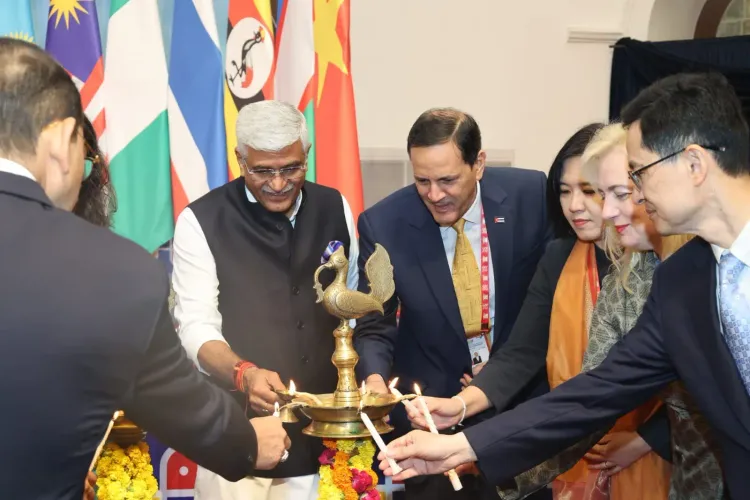
Gajendra Singh Shekhawat inaugurated the XI BRICS Culture Ministers' Meeting in Bhopal on August 8, 2026 .
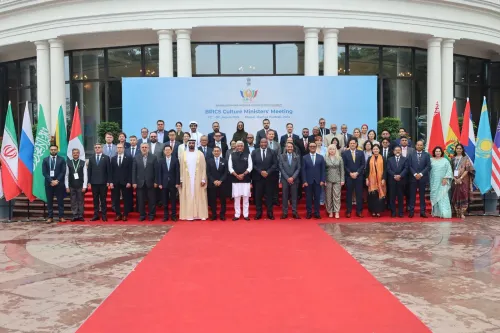
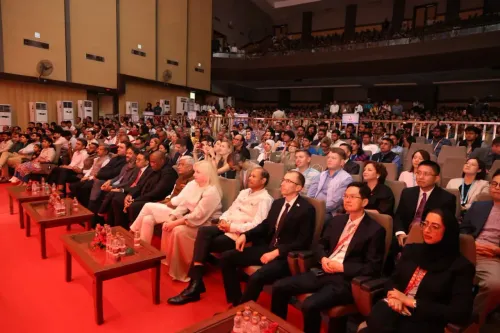
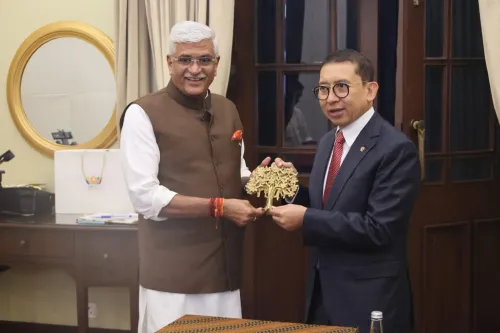
Culture ministers and heads of delegation from BRICS member and partner countries — reflecting the bloc's 2024 expansion — attended the meeting.
Shekhawat emphasised culture as a 'transformative' force for dialogue and people-to-people ties, not merely a ceremonial agenda item.
The meeting is part of the broader BRICS India 2026 cycle, with India holding the BRICS chair.
India has integrated cultural diplomacy into its BRICS engagement since at least the 2016 Goa Summit .
Follow-up joint cultural programmes and agreements from this meeting will be a key indicator of outcomes at the next BRICS Summit.
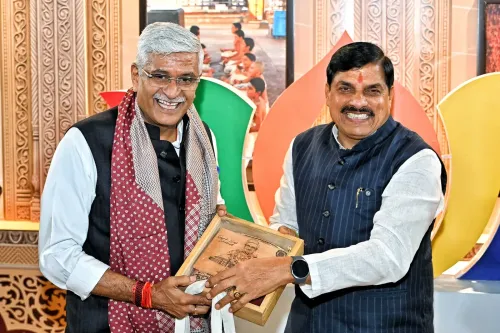
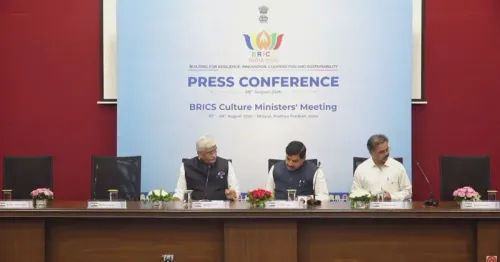
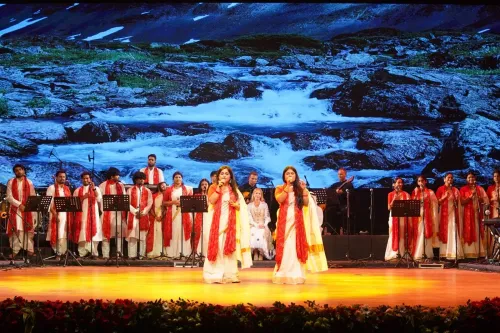
Bhopal stepped onto the global cultural stage on Saturday, August 8, 2026, as Union Culture and Tourism Minister Gajendra Singh Shekhawat inaugurated the XI BRICS Culture Ministers' Meeting — drawing delegates from across BRICS member and partner countries to the capital of Madhya Pradesh.
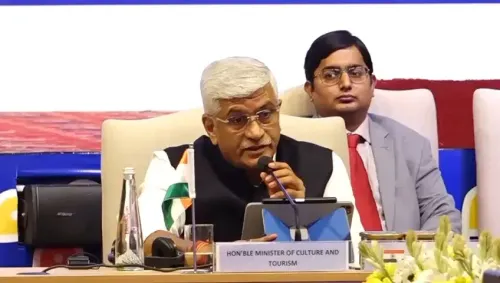
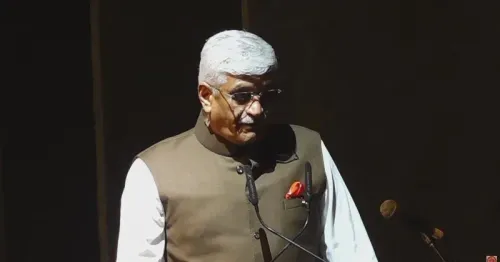
Shekhawat opened the gathering by underscoring what he called the 'transformative power of culture' in building bridges between nations. 'India's rich civilisational heritage and cultural diversity offer immense opportunities to deepen cooperation among BRICS countries,' he said, framing culture not as a soft add-on to multilateral diplomacy but as a 'stronger pillar of our shared global engagement.'
Bhopal as the Stage for BRICS Cultural Diplomacy
The choice of Bhopal — a city layered with Mughal, Rajput, and colonial histories, and home to some of India's richest intangible heritage — was itself a statement. Hosting the meeting under the #BRICSCulture2026 banner, India used the occasion to project its civilisational depth to an audience that now spans far beyond the original five-nation grouping. The BRICS bloc expanded in 2024 to include new member and partner countries, broadening the audience for this kind of cultural outreach considerably. Culture ministers and heads of delegation from across the expanded BRICS constellation were in attendance, making this one of the more consequential gatherings in the current BRICS India 2026 cycle. Shekhawat tagged the Prime Minister's Office and Prime Minister Narendra Modi directly in his post — a signal of how squarely this meeting sits within the government's foreign-policy priorities.India's Soft-Power Playbook at Multilateral Tables
This is not a new script for India, but it is a sharpening one. Since India hosted the BRICS Summit in Goa in 2016, cultural cooperation has been woven into the bloc's agenda alongside economic and geopolitical threads. What has changed is the scale: an expanded BRICS means more partner countries, more cultural institutions in play, and a wider canvas for people-to-people programming. Under the Modi government, cultural diplomacy has been elevated from a courtesy item on summit agendas to a deliberate instrument of foreign policy — from yoga diplomacy at the United Nations to the global rollout of India's G20 cultural presidency themes. The BRICS culture ministers' meeting fits that continuum precisely. The real test will come in what follows: joint cultural programmes, bilateral exchange agreements, or concrete commitments from partner-country delegations. The #BRICSCulture2026 cycle still has months to run, and the next BRICS Summit will be the moment to measure how much of today's language in Bhopal converts into lasting institutional ties.Point of View
India sees a wider audience for its civilisational heritage narrative — one that aligns with the Modi government's broader foreign-policy identity. The durability of this push will depend on whether the Bhopal meeting produces concrete exchange frameworks or remains at the level of ministerial rhetoric.
NationPress
22 Sept 2026
Frequently Asked Questions
What is the XI BRICS Culture Ministers' Meeting?
It is the eleventh edition of the BRICS Culture Ministers' Meeting, a multilateral forum where culture ministers from BRICS member and partner countries convene to discuss cultural cooperation, people-to-people ties, and joint programmes. The 2026 edition was held in Bhopal, India, on August 8.
Why was Bhopal chosen for the BRICS Culture Ministers' Meeting?
Bhopal, the capital of Madhya Pradesh, was selected as the venue under India's BRICS 2026 chairmanship. The city's layered historical and cultural heritage made it a fitting backdrop for a meeting focused on civilisational dialogue.
Who is Gajendra Singh Shekhawat?
Gajendra Singh Shekhawat is India's Union Minister of Culture and Tourism, a senior BJP leader and Lok Sabha MP from Jodhpur, Rajasthan. He represented India at the XI BRICS Culture Ministers' Meeting and delivered the inaugural address.
When did BRICS expand to include new members and partner countries?
BRICS expanded in 2024 with the addition of new member and partner countries, broadening the bloc well beyond its original five founding members: Brazil, Russia, India, China, and South Africa.
What is India's BRICS 2026 chairmanship?
India holds the BRICS chair in 2026, organising a series of meetings and summits across various thematic areas — including culture, under the #BRICSCulture2026 banner — as part of its year-long presidency of the grouping.