CM Mohan Yadav hosts 11th BRICS Culture Meet in Bhopal
Synopsis
Madhya Pradesh CM Dr. Mohan Yadav and Union Culture Minister Gajendra Singh Shekhawat hosted the 11th BRICS Culture Ministers' Meeting in Bhopal on 8 August 2026, where delegates unanimously adopted the 'Bhopal Declaration' to guide long-term cultural cooperation among BRICS member nations.
Key Takeaways
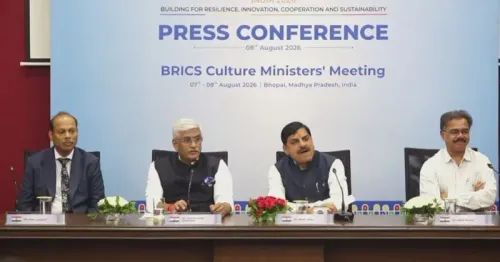
The 11th BRICS Culture Ministers' Meeting was held in Bhopal, Madhya Pradesh on 8 August 2026 .
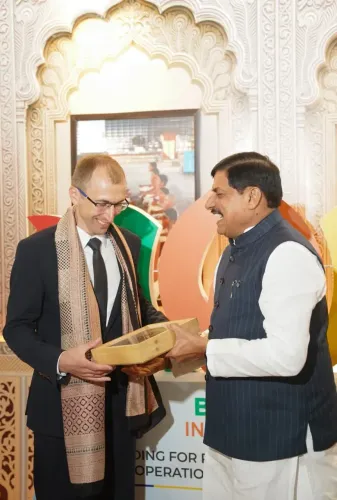
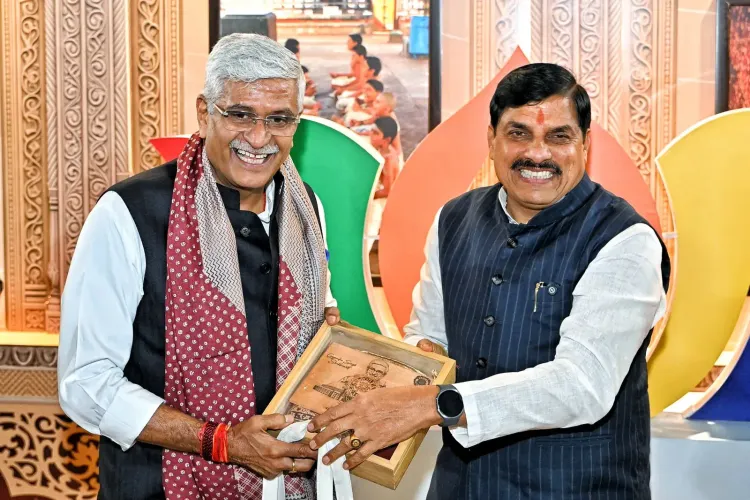
Mohan Yadav welcomed international delegates with commemorative mementos alongside Union Minister Gajendra Singh Shekhawat .
The 'Bhopal Declaration' was adopted unanimously, setting a framework for cultural cooperation and long-term partnerships among BRICS members.
India's use of a state capital as the venue reflects a deliberate federal diplomacy strategy to internationalise regional heritage.
The BRICS culture ministers' track has run alongside the bloc's economic summits for over a decade, expanding its people-to-people agenda.
Follow-up joint cultural programmes and the venue of the 12th BRICS Culture Ministers' Meeting are the key developments to watch.
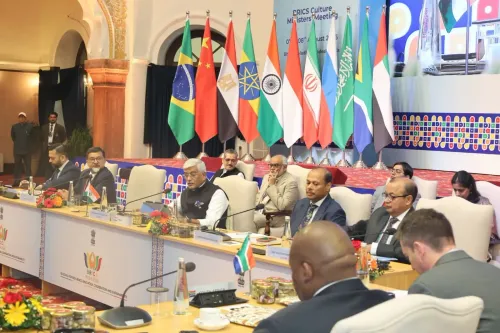
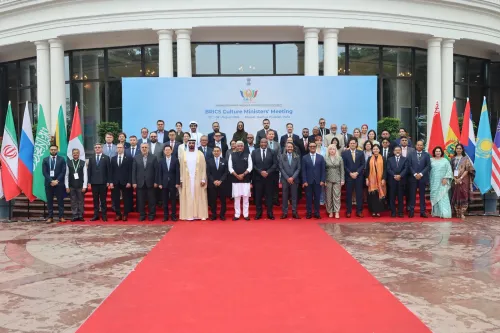
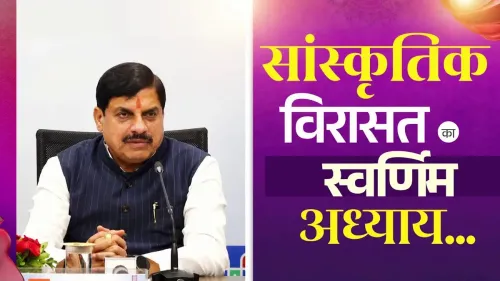
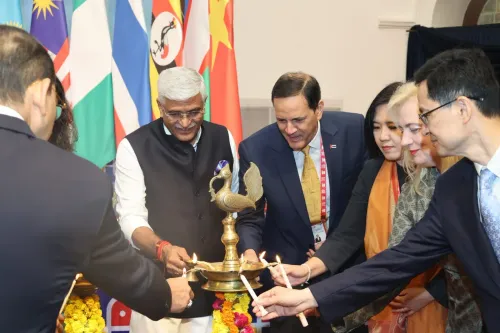
A room full of delegates from across the BRICS world gathered in Bhopal on Saturday, 8 August 2026 — and left with a shared document that could reshape how member nations collaborate on culture for years to come. Madhya Pradesh Chief Minister Dr. Mohan Yadav welcomed delegations at the 11th BRICS Culture Ministers' Meeting, presenting each with a commemorative memento alongside Union Minister for Culture and Tourism Gajendra Singh Shekhawat.
The meeting's headline outcome was unanimous: the 'Bhopal Declaration' was adopted by consensus, a joint statement aimed at deepening cultural cooperation and forging long-term partnerships among BRICS member states. Dr. Yadav called the occasion 'atyanth gauravpurn aur aitihasik' — extremely proud and historic — for Madhya Pradesh.
Why Bhopal, and why it matters for India's federal diplomacy
India's choice of Bhopal as the venue is deliberate statecraft. New Delhi has increasingly used state capitals — rather than just the national capital — to host multilateral cultural tracks, giving regional governments a stake in international engagement and putting their heritage in front of a global audience. For Madhya Pradesh, a state that sits at the geographic heart of India and carries deep archaeological and classical heritage, the spotlight is both symbolic and strategic.
The BRICS culture ministers' track has run in parallel with the grouping's annual economic summits for over a decade, gradually expanding the bloc's people-to-people architecture. Declarations from these meetings typically establish frameworks for joint arts exchanges, heritage preservation cooperation, and coordinated tourism promotion — the Bhopal Declaration is expected to follow that template, though its specific provisions have not yet been made public.
Shekhawat's presence and the Centre-state alignment
Gajendra Singh Shekhawat, the Union Minister who chairs India's cultural diplomacy at the ministerial level, co-hosted the session alongside CM Yadav — a visible signal of Centre-state alignment on the event. The dual presence reinforced that Bhopal was not merely a logistical choice but a politically endorsed platform for projecting India's cultural depth to a grouping that now spans multiple continents.
The next marker to watch: whether the Bhopal Declaration translates into concrete joint festivals, artist residency programmes, or heritage documentation projects — and where the 12th BRICS Culture Ministers' Meeting will be hosted.
Bhopal has hosted an international conversation about culture. The question now is whether the declaration signed here becomes a living framework or a ceremonial document. Given the expanding ambition of BRICS's people-to-people agenda, the pressure is on member states to deliver.
Point of View
Adopted by consensus, adds to a growing body of BRICS soft-power architecture that complements the bloc's economic agenda. For CM Mohan Yadav, who took office in December 2023, the event is an early high-profile international moment that strengthens Madhya Pradesh's identity as a cultural hub. The real test will be whether the declaration generates tangible follow-through — joint programmes, festivals, or heritage initiatives — or remains aspirational text.
NationPress
23 Sept 2026
Frequently Asked Questions
What is the Bhopal Declaration in BRICS?
The Bhopal Declaration is a consensus document adopted at the 11th BRICS Culture Ministers' Meeting held in Bhopal on 8 August 2026. It is designed to guide cultural cooperation and long-term partnerships among BRICS member states.
Where was the 11th BRICS Culture Ministers' Meeting held?
The 11th BRICS Culture Ministers' Meeting was held in Bhopal, the capital of Madhya Pradesh, India, on 8 August 2026.
Who hosted the BRICS Culture Ministers' Meeting in Bhopal?
Madhya Pradesh Chief Minister Dr. Mohan Yadav co-hosted the meeting alongside Union Minister for Culture and Tourism Gajendra Singh Shekhawat.
What is the BRICS culture ministers' track?
The BRICS culture ministers' track is a dedicated diplomatic forum within the BRICS grouping where culture ministers from member nations meet to discuss and advance people-to-people cooperation, arts exchanges, heritage preservation, and tourism collaboration.
Why was Bhopal chosen for the BRICS culture meeting?
India has increasingly used state capitals to host multilateral cultural events, giving regional governments international exposure and showcasing their heritage. Madhya Pradesh, with its rich archaeological and classical heritage, was a fitting choice for a culture-focused summit.