BRICS Cultural Conference 2026: Bhopal Declaration adopted by 14 nations
Synopsis
For the first time in BRICS cultural history, 14 nations agreed to time-bound targets on heritage repatriation, AI-based tracing of stolen artefacts, and a Voluntary Artist Registry — all under India's presidency. The Bhopal Declaration is less a ceremonial communiqué and more a working framework with teeth, setting a new benchmark for multilateral cultural diplomacy.
Key Takeaways
The BRICS Cultural Conference 2026 concluded in Bhopal on 9 August 2026 with the adoption of the Bhopal Declaration .
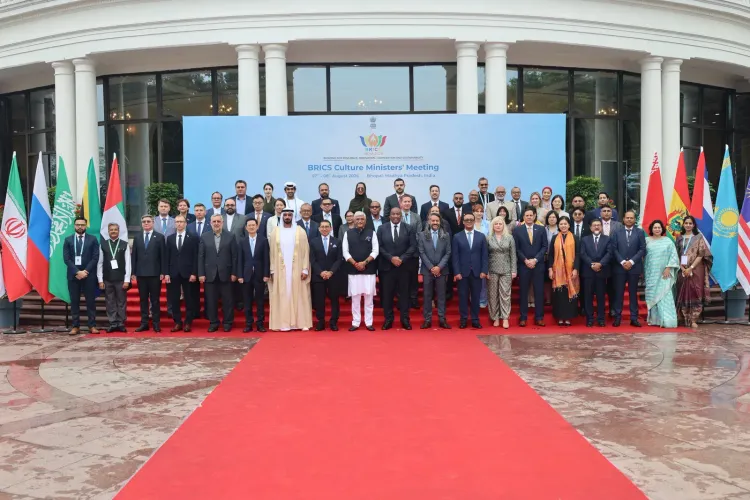
55 delegates from 14 countries participated in the 11th BRICS culture ministerial meeting , the first to set time-bound targets .
The declaration prioritises repatriation of cultural property and explores AI-based tracing tools for stolen artefacts.
India announced a pilot Voluntary Artist Registry to connect creative professionals across BRICS nations.
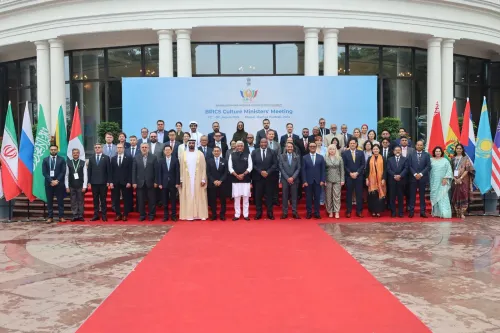
Participating members included Brazil, China, Egypt, Ethiopia, India, Indonesia, Iran, Russia, South Africa, and the UAE ; partner countries were Belarus, Cuba, Kazakhstan, and Thailand .
Three Culture Working Group sessions — in April (virtual), Varanasi (June), and Bhopal (August) — preceded the ministerial meeting.
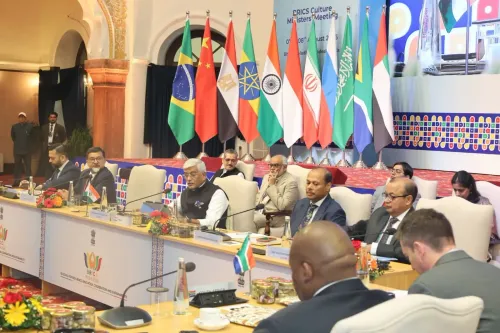
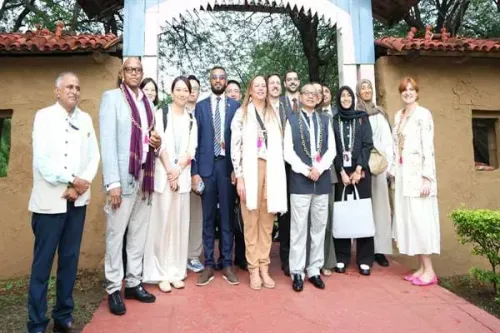
The BRICS Cultural Conference 2026 concluded in Bhopal on 9 August 2026 with the adoption of the Bhopal Declaration, a landmark multilateral document endorsed in the presence of culture ministers from participating nations. The four-day conference — the 11th meeting of BRICS nations on culture — brought together 55 delegates from 14 countries under the theme 'Resilience, Innovation, and Sustainability.'
Key Outcomes of the Bhopal Declaration
The declaration marks the first time time-bound targets were set and a shared roadmap on culture and heritage was formally agreed upon within the BRICS cultural framework. It incorporates a digital component and specific initiatives for the repatriation of cultural property obtained through theft or illicit means. Notably, the document identifies provenance research, restitution, and repatriation as priority areas, including the exploration of Artificial Intelligence-based tracing tools.
What the Government Said
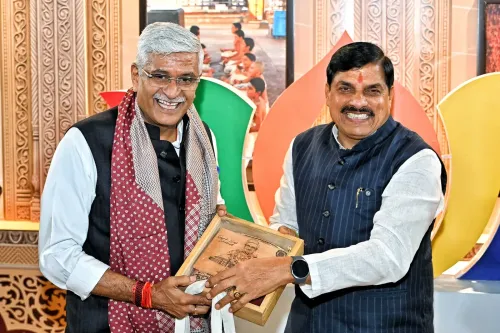
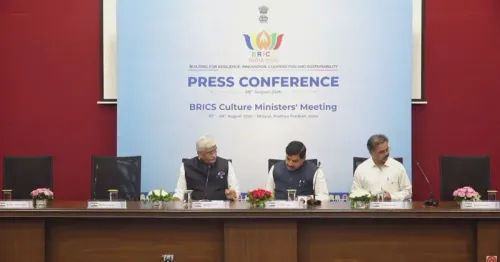
Union Minister Gajendra Singh Shekhawat told reporters that three days of deliberations culminated in the Bhopal Declaration. He highlighted that the conference, guided by India's overarching BRICS theme of 'Building for Resilience, Innovation, Cooperation, and Sustainability,' focused on practical initiatives, institutional cooperation, and sustained collaboration. The declaration, he noted, aims to strengthen the institutional framework for BRICS cultural cooperation.
Digital Economy, AI, and Creators' Rights
The declaration prioritises cooperation in the cultural and creative industries and the creative economy through exchange of methodologies, support for creators, networking, and expanded market access via digital tools. It also addresses creators' rights, emphasising transparency and fair remuneration for the use of copyright-protected works in Artificial Intelligence systems — a clause that reflects growing global concern over AI's impact on intellectual property.
Collaboration on UNESCO's multinational nomination processes for shared cultural heritage is also enhanced under the declaration. Cooperation among museums, libraries, and archives in documentary heritage, digitisation, and preservation is promoted to enable institutional exchange and expertise sharing.
India's Voluntary Artist Registry
As a concrete deliverable, India announced a pilot 'Voluntary Artist Registry' to facilitate cultural exchange, strengthen professional networks, and create opportunities for artists and creative professionals across BRICS nations. The registry is designed to connect talent and support people-to-people ties across member and partner countries.
Participating Nations and Road to Bhopal
Participating BRICS members included Brazil, China, Egypt (online), Ethiopia, India, Indonesia, Iran, Russia, South Africa, and the United Arab Emirates. Partner countries were Belarus, Cuba, Kazakhstan, and Thailand. Culture ministers from Indonesia, South Africa, and the UAE attended in person.
The process leading to the ministerial meeting included three Culture Working Group sessions: a virtual meeting on 29–30 April, a session in Varanasi on 4–5 June, and a third in Bhopal on 5–6 August. Bilateral meetings at the ministerial and secretary levels also took place alongside the multilateral agenda. The declaration positions India's BRICS presidency as a driver of practical cultural diplomacy ahead of the broader BRICS summit calendar.
Point of View
And past multilateral heritage commitments have often stalled at the declaration stage. India's Voluntary Artist Registry is a practical, low-friction initiative that could outlast the summit cycle — but only if it is resourced and operationalised rather than left as a pilot. With a 14-nation bloc that includes geopolitical rivals, translating a shared declaration into coordinated action will require sustained diplomatic will well beyond the presidency year.
NationPress
23 Sept 2026
Frequently Asked Questions
What is the Bhopal Declaration adopted at the BRICS Cultural Conference 2026?
The Bhopal Declaration is a multilateral agreement adopted on 9 August 2026 at the conclusion of the four-day BRICS Cultural Conference in Bhopal. It sets time-bound targets on cultural cooperation, prioritises the repatriation of illicitly removed cultural property, and introduces AI-based tools for tracing stolen artefacts, among other initiatives.
Which countries participated in the BRICS Cultural Conference 2026?
Ten BRICS member nations participated — Brazil, China, Egypt (online), Ethiopia, India, Indonesia, Iran, Russia, South Africa, and the United Arab Emirates. Partner countries Belarus, Cuba, Kazakhstan, and Thailand also took part. Culture ministers from Indonesia, South Africa, and the UAE attended in person.
What is India's Voluntary Artist Registry announced at the conference?
India announced a pilot Voluntary Artist Registry as a concrete outcome of the conference, designed to facilitate cultural exchange and strengthen professional networks for artists and creative professionals across BRICS nations. The registry aims to connect talent and support people-to-people ties among member and partner countries.
Why does the Bhopal Declaration matter for cultural repatriation?
The declaration identifies provenance research, restitution, and repatriation of cultural property as priority areas for the first time within the BRICS cultural framework. It also explores Artificial Intelligence-based tracing tools to identify and recover artefacts taken abroad through theft or illicit means, giving the commitment a technological dimension absent from earlier BRICS cultural agreements.
How does the Bhopal Declaration address Artificial Intelligence and creators' rights?
The declaration addresses creators' rights by emphasising transparency and fair remuneration for the use of copyright-protected works in AI systems. It also proposes AI-based tools for tracing stolen cultural property, positioning technology both as a tool for heritage protection and as a domain requiring regulatory attention.