CM Karnataka Hails 8 Jnanpith Wins as Kannada's Crowning Glory
Synopsis
The Chief Minister's Office of Karnataka paid tribute to the eight Jnanpith Award-winning Kannada writers on 7 November 2026, calling them the pride of all Karnataka and invoking a collective duty to carry their literary legacy to future generations.
Key Takeaways
Kannada holds more Jnanpith Awards than any other Indian language, with a tally of eight .
The Jnanpith Award was instituted in 1961 by the Bharatiya Jnanpith trust as India's highest literary honour.
Kuvempu became the first Kannada — and first South Indian — Jnanpith laureate in 1967 .
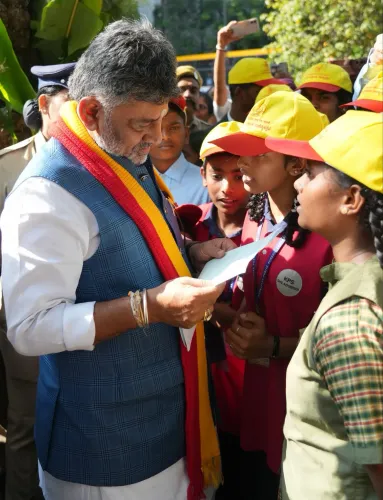
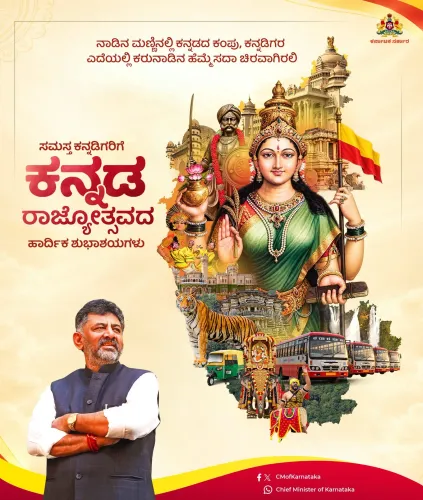
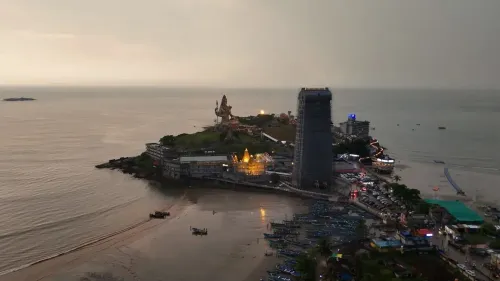
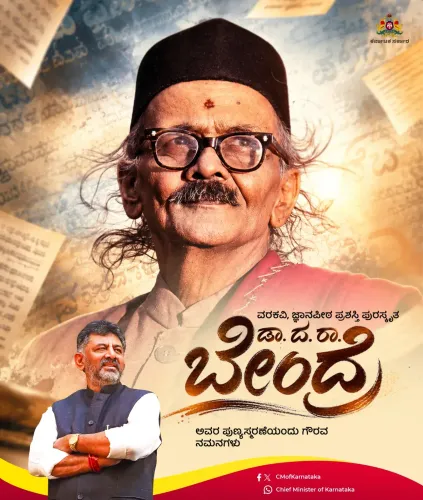
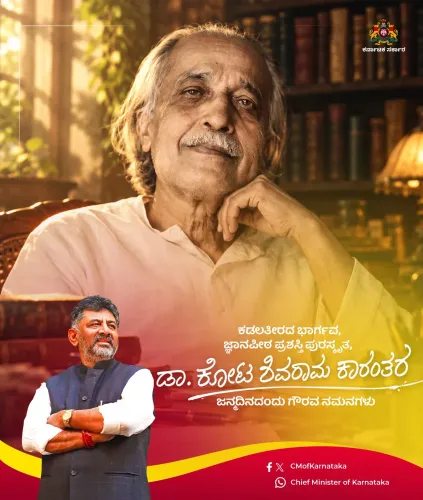
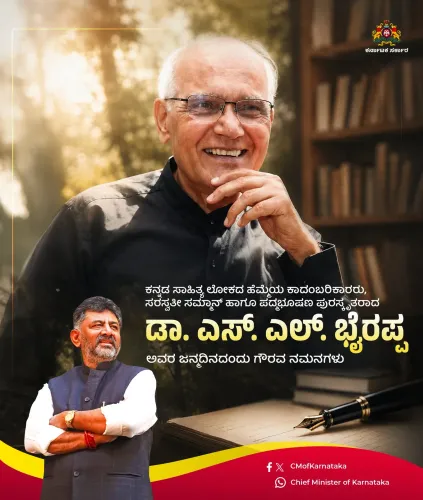
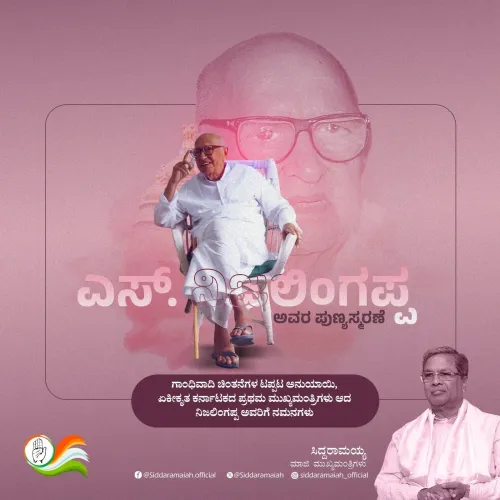
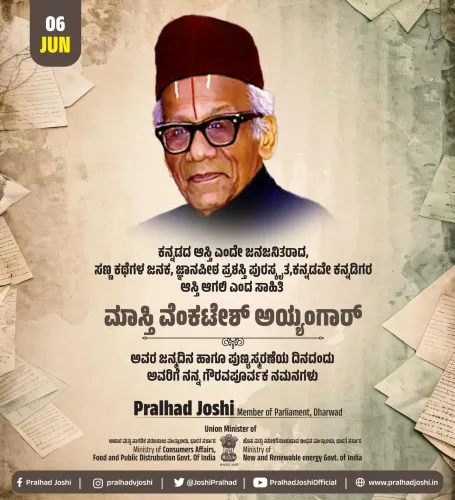
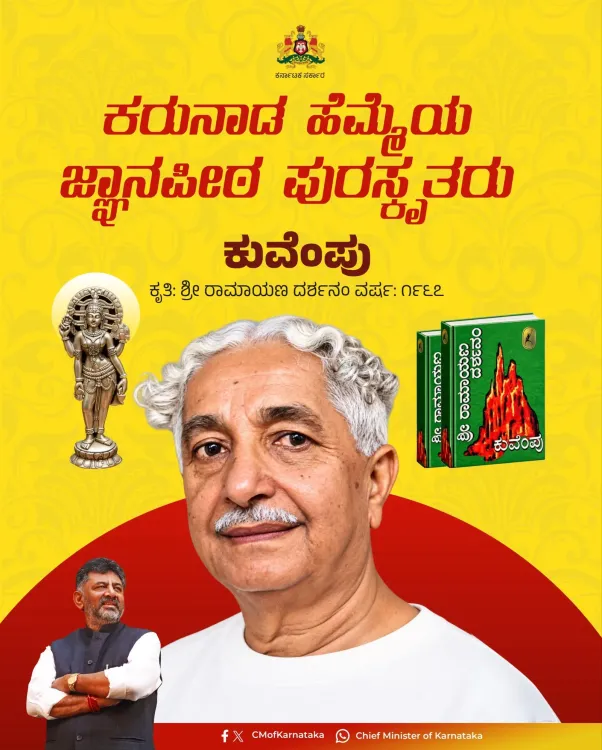
The Chief Minister's Office of Karnataka posted the tribute on 7 November 2026 , accompanied by four images.
The post frames preserving the laureates' legacy for future generations as a collective 'duty' of Karnataka.
Kannada's laureates span poetry, fiction, drama, and criticism, covering both classical and modernist traditions.
Eight feathers in the crown of Kannada literature — and the Chief Minister's Office of Karnataka wants every future generation to know their weight. On Saturday, 7 November 2026, the official CMO account posted a tribute to the eight literary giants who carried Kannada to India's highest literary honour, the Jnanpith Award, calling them the pride of all Karnataka.
The post, written in Kannada, reads: 'ಕನ್ನಡಾಂಬೆ ಮುಕುಟಕ್ಕೆ ೮ ಜ್ಞಾನಪೀಠದ ಗರಿ' — 'Eight Jnanpith feathers in the crown of Mother Kannada.' It salutes the writers who 'illuminated the state's cultural and literary heritage at the national level' and declares it a collective duty to carry that legacy forward to the next generation.
No other language has done this — the Kannada record
Kannada holds more Jnanpith Awards than any other Indian language — a distinction that makes this tribute more than ceremonial. The award, instituted in 1961 by the Bharatiya Jnanpith trust, is India's most prestigious literary honour, and Kannada's tally of eight represents a sustained, decades-long mastery of the form.
The journey began in 1967 when poet Kuvempu became the first Kannada writer to receive the award — and the first from any South Indian language. Seven more laureates followed across the subsequent decades, each time reaffirming Kannada's place at the apex of Indian literary achievement.
Eight laureates, one unbroken tradition
The eight Kannada Jnanpith laureates — Kuvempu, D.R. Bendre, V.K. Gokak, U.R. Ananthamurthy, Girish Karnad, Vinayaka Krishna Gokak, Masti Venkatesha Iyengar, and Chandrashekhar Kambar — wrote across poetry, fiction, drama, and criticism, spanning Kannada's classical roots and its modernist flowering. Their works collectively map a civilisation's inner life.
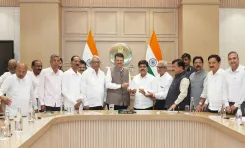
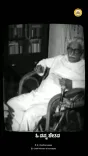
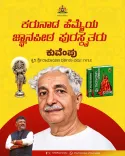
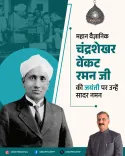
The CMO's post is accompanied by four images, underscoring the visual weight the government attaches to this cultural milestone. The message is as much directed inward — at Karnataka's own citizens — as it is a statement of cultural confidence to the rest of India.
Why the government keeps telling this story
Indian states periodically invoke regional literary achievements to assert cultural identity in a diverse federal landscape. For Karnataka, the Jnanpith tally is a durable source of pride — one that transcends political cycles. The CMO's framing of it as a 'duty' to pass this legacy to future generations hints at ongoing or forthcoming efforts: digitisation of laureates' works, translation initiatives, or school curriculum integration are all possibilities the state has explored in the past.
Kannada's eight crowns didn't arrive by accident. They arrived because a state built institutions, nurtured writers, and kept faith with a language. That is the story Karnataka is telling itself — again, on a November morning, with pride intact.
Point of View
The state has a rare, bipartisan rallying point that every government from different parties has claimed with equal enthusiasm. The CMO's framing of legacy-preservation as a 'duty' may be a signal that concrete programmes — curriculum inclusion, digitisation, translation grants — are being readied. In an era when regional languages are navigating pressure from both English and Hindi, Karnataka is quietly but consistently asserting that Kannada's greatest contribution to India is intellectual and literary, not just administrative.
NationPress
7 Nov 2026
Frequently Asked Questions
How many Jnanpith Awards has Kannada won?
Kannada has won eight Jnanpith Awards , the highest tally of any Indian language, making it the most decorated language in the history of India's top literary honour.
Who was the first Kannada writer to win the Jnanpith Award?
Kuvempu (K.V. Puttappa) was the first Kannada writer to receive the Jnanpith Award, in 1967 , and the first South Indian language writer to be so honoured.
What is the Jnanpith Award?
The Jnanpith Award is India's highest literary honour, instituted in 1961 by the Bharatiya Jnanpith trust and awarded annually to a writer making outstanding contributions to Indian literature.
Why did Karnataka's CMO post about Jnanpith Award winners?
The Chief Minister's Office of Karnataka posted a tribute on 7 November 2026 to celebrate Kannada's record eight Jnanpith wins and to call on citizens to carry the laureates' literary legacy to future generations.
Which Kannada writers have won the Jnanpith Award?
The eight Kannada Jnanpith laureates include Kuvempu, D.R. Bendre, V.K. Gokak, Masti Venkatesha Iyengar, U.R. Ananthamurthy, Girish Karnad , and Chandrashekhar Kambar , among others, spanning poetry, fiction, and drama.