Karnataka CM Office Greets Kannada Rajyotsava 2026
Synopsis
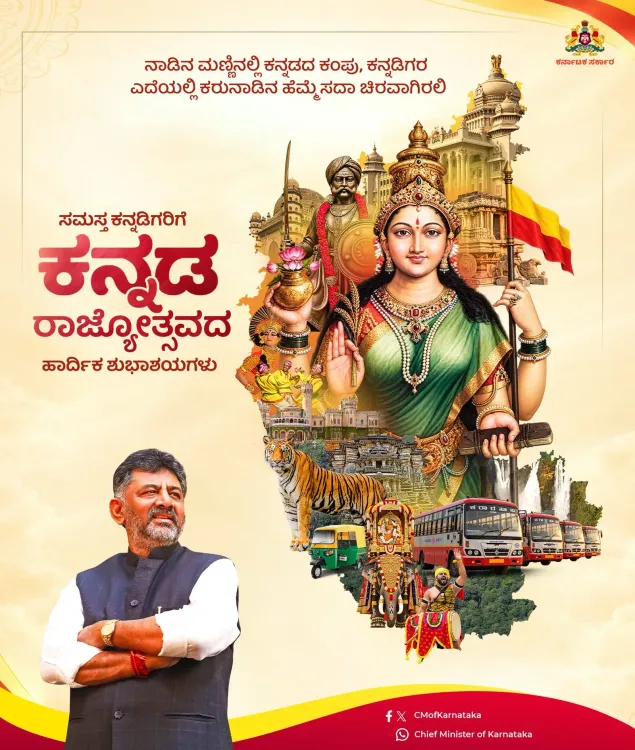
On 1 November 2026, Karnataka's Chief Minister's Office celebrated Kannada Rajyotsava, the state's formation day, with a message affirming Kannada as the breath of its people and pledging to carry the language's identity proudly to future generations.
Key Takeaways
The Chief Minister's Office of Karnataka posted official Kannada Rajyotsava greetings on 1 November 2026 .
Kannada Rajyotsava marks the anniversary of the States Reorganisation Act, 1956 , which created a unified Kannada-speaking state.
The message invoked all regions of Karnataka — from the Cauvery plains to the coast , and Malenadu to Bayalusime .
The CMO called for preserving Kannada language, culture, and heritage and passing Kannada's identity to future generations.
The state was initially named Mysore State in 1956 before being renamed Karnataka in 1973 .
Seventy years after the States Reorganisation Act stitched together Karnataka's linguistic heartland, the pride of Kannada still pulses as fiercely as ever — and on Sunday, 1 November 2026, the Chief Minister's Office of Karnataka marked Kannada Rajyotsava with a resounding public message affirming the language, culture, and people of the state.
The post, written entirely in Kannada, declared: 'ಕನ್ನಡವೇ ಉಸಿರು, ಕರುನಾಡೇ ಹೆಮ್ಮೆ, ಕನ್ನಡಿಗರೇ ನಮ್ಮ ಶಕ್ತಿ!' — 'Kannada is our breath, Karnataka is our pride, Kannadigas are our strength!' The message swept geographically from the Cauvery river plains to the coastal belt, and from the lush Malenadu hill country to the open Bayalusime plateau, invoking every corner of the state as it called for Kannada's fragrance to spread and its glory to resound across the world.
A Day Born from the 1956 Reorganisation
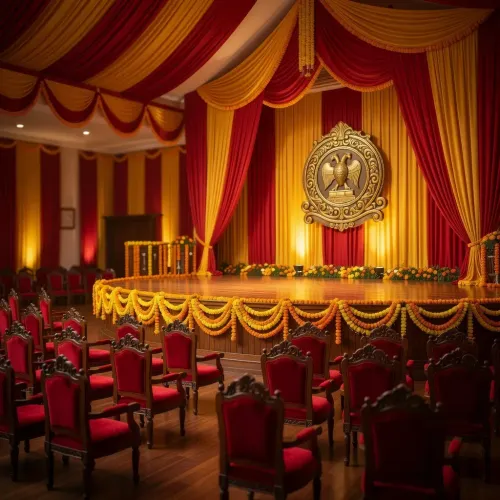
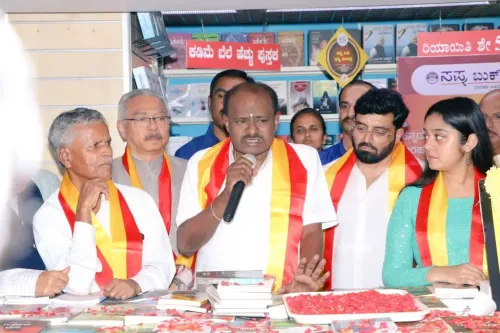
Kannada Rajyotsava — literally 'Karnataka State Festival' — falls every year on 1 November, the anniversary of the States Reorganisation Act, 1956, which merged Kannada-speaking territories from the former princely state of Mysore and surrounding regions into a single linguistic unit. The new state was initially called Mysore State before being renamed Karnataka in 1973. The day is marked by flag-hoisting ceremonies, cultural programmes, and civic awards across all 30-plus districts of the state.
Language as Identity, Not Just Ceremony
The CMO's message carried a deliberate resolve beyond seasonal greetings. It called on citizens to 'preserve and grow our language, culture, and heritage' and to carry Kannada's identity proudly to future generations. That framing — Kannada as asmite (identity), not merely as a calendar occasion — echoes the constitutional recognition of Kannada as one of India's scheduled languages and the federal logic that gave linguistic states their legitimacy in the first place. The line is a soft but firm reminder that linguistic pride is also a civic duty.
From schoolrooms to software corridors, Kannada occupies a layered space in modern Bengaluru — a city that is simultaneously the state capital and a global tech hub where the language competes for space with English and migrant tongues. The Rajyotsava message, broadcast from the official government handle, signals that the state's political leadership views cultural stewardship as an active, ongoing responsibility rather than an archival one.
As district-level celebrations unfold across Karnataka today, the question the government's own words invite is direct: will the resolve expressed in the message translate into sustained policy — in classrooms, in public signage, in digital infrastructure for Kannada — long after the red-and-yellow flags have been folded away?
Point of View
A perennially contested domain in multilingual Bengaluru. Taken alongside recurring debates about Kannada-medium instruction and the dominance of English in the state's IT economy, the message reads less as ceremonial and more as a gentle reiteration of official priorities. Whether district-level programmes or budget allocations follow will determine if the sentiment has policy weight.
NationPress
1 Nov 2026
Frequently Asked Questions
What is Kannada Rajyotsava and why is it celebrated on November 1?
Kannada Rajyotsava is Karnataka's state formation day, celebrated every year on 1 November to mark the anniversary of the States Reorganisation Act, 1956 , which merged Kannada-speaking regions into a single linguistic state originally called Mysore State, renamed Karnataka in 1973.
What did the Karnataka CMO post for Rajyotsava 2026?
The Chief Minister's Office of Karnataka posted a Kannada-language message on 1 November 2026 declaring 'Kannada is our breath, Karnataka is our pride, Kannadigas are our strength,' and called for preserving Kannada language, culture, and heritage for future generations.
When was the state of Karnataka formed?
Karnataka was effectively formed on 1 November 1956 under the States Reorganisation Act, which united Kannada-speaking territories. The state was renamed from Mysore State to Karnataka on 1 November 1973 .
What does Kannada Rajyotsava mean?
Kannada Rajyotsava translates to 'Karnataka State Festival.' It is a public holiday in Karnataka marked by flag-hoisting, cultural events, and civic awards honouring contributions to Kannada language and culture.
How do Karnataka district-level Rajyotsava events typically unfold?
Across Karnataka's districts, Rajyotsava is observed through official flag-hoisting ceremonies, Kannada cultural performances, processions, and awards presented to individuals who have contributed to the promotion of Kannada language and literature.