South Korea exports hit record $115.3 billion in Oct on chip surge
Synopsis
South Korea's October exports hit an all-time monthly record of $115.3 billion — nearly doubling year-on-year — as semiconductor shipments alone crossed $56.4 billion, fuelled by global AI infrastructure investment. With cumulative 2026 exports past $900 billion, the country's trade ministry says a historic $1 trillion annual mark could be reached as early as November.
Key Takeaways
South Korea's October exports hit a record $115.3 billion , up 93.7% year-on-year.
Semiconductor exports surged 259% to $56.4 billion , driven by global AI infrastructure demand.
The monthly trade surplus reached $42.5 billion , with imports rising 36% to $72.78 billion .
Cumulative January–October 2026 exports exceeded $900 billion for the first time; annual $1 trillion target could be hit as early as November .
Exports to the US jumped 185.8% to $24.9 billion ; exports to China soared 133.6% to $26.98 billion .
Industry Minister Kim Jung-kwan cautioned that rising protectionism and geopolitical tensions in the Middle East pose risks ahead.
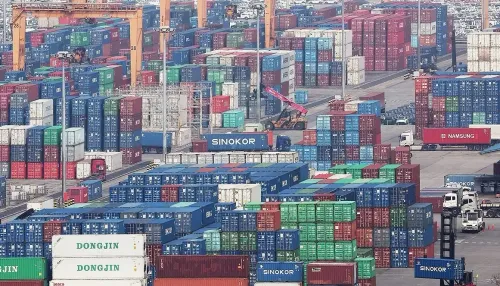
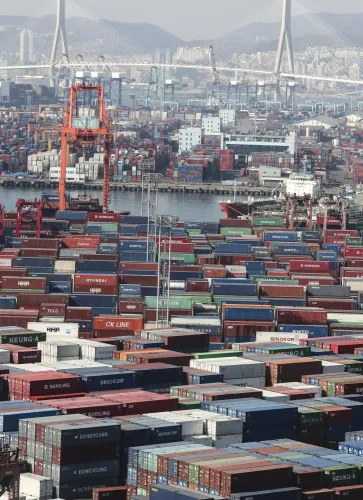
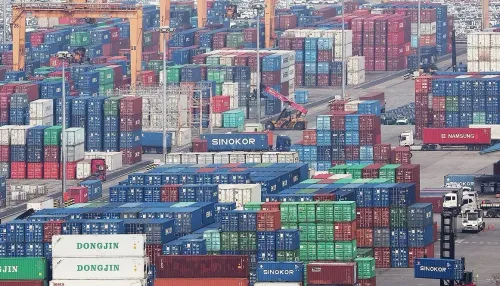
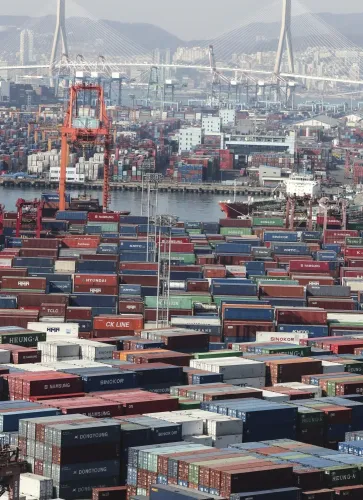
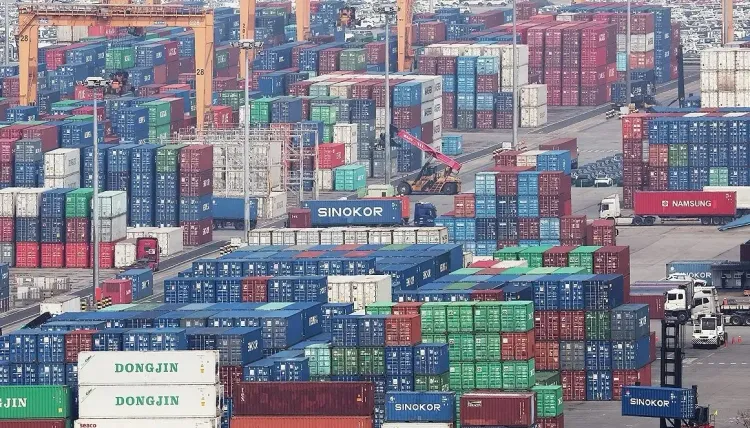
South Korea's monthly exports surged 93.7% year-on-year to a record $115.3 billion in October 2026, powered by an extraordinary jump in semiconductor shipments, according to data released on Sunday, 1 November. The Ministry of Trade, Industry and Resources attributed the milestone to robust global demand for chips and sustained investment by major technology companies in artificial intelligence (AI) infrastructure.
Semiconductor Shipments Drive the Record
Semiconductor exports — the cornerstone of Asia's fourth-largest economy — skyrocketed 259% year-on-year to $56.4 billion in October, according to the ministry's press release. That single category alone accounted for nearly half of total monthly export revenue. Strong AI infrastructure build-outs by global tech majors have sharply accelerated demand for high-bandwidth memory and advanced logic chips, both areas where South Korean manufacturers hold dominant positions.
Trade Surplus and the $1 Trillion Milestone in Sight
Imports rose 36% from a year earlier to $72.78 billion, yielding a monthly trade surplus of $42.5 billion. Cumulatively, exports for the January–October 2026 period exceeded $900 billion for the first time on record. The ministry projected that annual exports could cross $1 trillion as early as November if the current trajectory holds — a landmark that would represent a watershed moment for the Korean economy.
Broad-Based Gains Across Sectors
The export surge was not confined to semiconductors. Petroleum products exports jumped 80% to $6.92 billion, while petrochemical products rose 27.5% to $4 billion. Cosmetics exports shot up 57.5% to $1.44 billion, buoyed by rising demand in China, the United States, and the European Union. Automobile exports gained 18.1% to $6.55 billion, driven by increased overseas demand for gasoline hybrid models.
Key Destination Markets
Exports to China soared 133.6% to $26.98 billion, with shipments of semiconductors and wireless communications equipment leading the charge — marking the fifth consecutive month that exports to China topped $20 billion. Shipments to the United States surged 185.8% to $24.9 billion, supported by robust demand for semiconductors, computers, and electrical equipment tied to AI infrastructure. Exports to Southeast Asian countries rose 128% to $21.33 billion, while those to the European Union climbed 56.4% to $8.1 billion, with chips and automobiles driving both gains.
Government Cautions on Trade Risks Ahead
Despite the record numbers, Industry Minister Kim Jung-kwan sounded a note of caution. 'The global trade environment remains uncertain, with many small and medium-sized enterprises facing difficulties amid rising protectionism in major economies, shifts in global supply chains and geopolitical tensions in the Middle East,' he said. The warning underscores that the record performance was concentrated in large-cap export sectors, and that structural vulnerabilities — including geopolitical risks and supply chain disruptions — remain live threats to sustaining the momentum.
With cumulative exports already past $900 billion and a $1 trillion annual milestone potentially weeks away, South Korea's trade data will be closely watched by global markets in the months ahead.
Point of View
But the story is really about the concentration risk embedded in it. More than half of South Korea's record October exports came from semiconductors alone — meaning the $1 trillion annual milestone, if reached, will have been built on a single commodity cycle driven by AI capex. If hyperscaler investment plateaus or the US-China trade environment tightens further, the reversal could be just as dramatic as the ascent. Minister Kim's warning about protectionism and supply chain fragility was not boilerplate — it was a precise description of the three or four scenarios that could unwind this record within a quarter.
NationPress
1 Nov 2026
Frequently Asked Questions
What made South Korea's October 2026 exports a record?
South Korea's exports hit a record $115.3 billion in October 2026, up 93.7% year-on-year, driven primarily by a 259% surge in semiconductor shipments to $56.4 billion. Strong global demand for AI infrastructure by major technology companies was the principal catalyst.
Is South Korea on track to hit $1 trillion in annual exports?
Yes, according to the Ministry of Trade, Industry and Resources. Cumulative exports for January–October 2026 exceeded $900 billion for the first time, and the ministry projected the $1 trillion annual milestone could be reached as early as November 2026 if current trends continue.
Which export destinations saw the biggest growth in October 2026?
Shipments to the United States surged 185.8% to $24.9 billion, while exports to China soared 133.6% to $26.98 billion — the fifth straight month China topped $20 billion. Southeast Asia rose 128% to $21.33 billion and the EU climbed 56.4% to $8.1 billion.
Which sectors besides semiconductors drove the export surge?
Petroleum products rose 80% to $6.92 billion, automobiles gained 18.1% to $6.55 billion on hybrid demand, cosmetics jumped 57.5% to $1.44 billion, and petrochemicals rose 27.5% to $4 billion — all contributing to the record monthly total.
What risks did South Korea's trade minister flag despite the record numbers?
Industry Minister Kim Jung-kwan warned that rising protectionism in major economies, shifts in global supply chains, and geopolitical tensions in the Middle East pose ongoing challenges, particularly for small and medium-sized enterprises that are less insulated than large exporters.