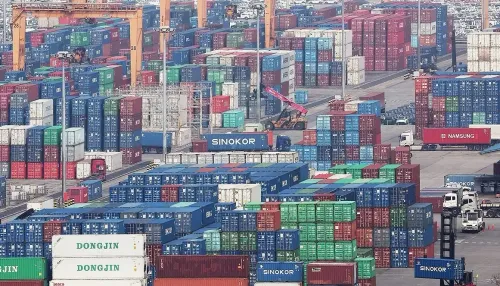
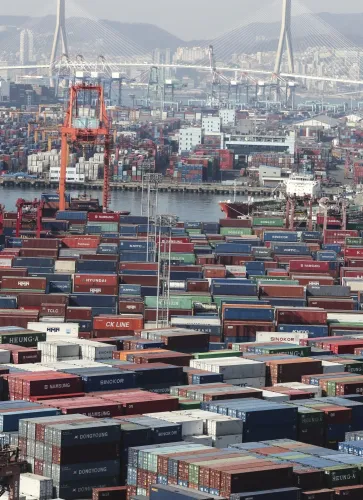
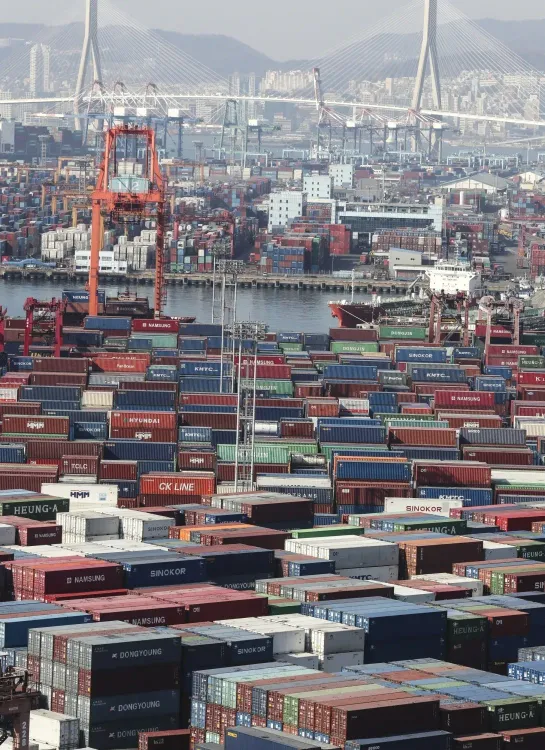
South Korea exports hit record $87.8 billion in May, up 53% on chip supercycle
Synopsis
South Korea just shattered its own export record — $87.8 billion in a single month — with chips alone accounting for 42% of the total. The semiconductor supercycle, powered by global AI infrastructure spending, has pushed the country's five-month trade surplus past its previous full-year record set in 2017. The numbers reframe South Korea as the clearest real-time gauge of how much the world is actually spending to build AI.
Key Takeaways
South Korea posted record monthly exports of $87.8 billion in May 2025 , up 53 per cent year-on-year.
Semiconductor exports surged 169.4 per cent to an all-time monthly high of $37.2 billion , crossing $30 billion for the third straight month.
D-RAM shipments jumped 369.8 per cent to $18.6 billion ; NAND flash rose 206.8 per cent to $1.7 billion .
The five-month cumulative trade surplus reached $101.9 billion , already exceeding the full-year record of $95.2 billion set in 2017 .
Cosmetics exports hit $1.18 billion — the highest figure for any May on record.
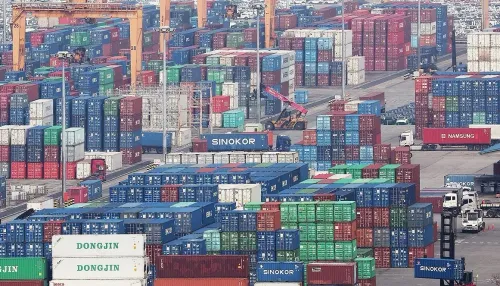
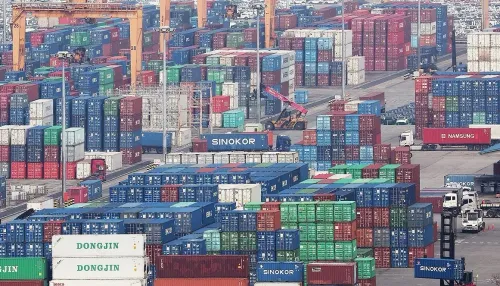
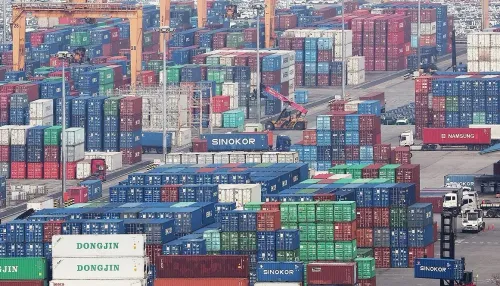
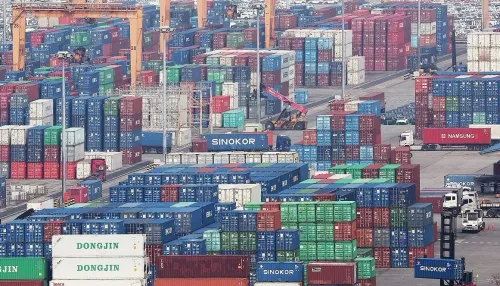
South Korea's monthly exports surged 53 per cent year-on-year to a record high of $87.8 billion in May, driven primarily by a semiconductor supercycle fuelled by global artificial intelligence infrastructure spending, according to government data released on Monday, 1 June. It is the third consecutive month that the country's outbound shipments have crossed the $80 billion threshold.
Trade Surplus Breaks Annual Record
Imports climbed 20.8 per cent on-year to $60.8 billion in May, yielding a monthly trade surplus of $26.95 billion. More strikingly, the combined trade surplus for the first five months of the year has already reached $101.9 billion — surpassing the previous full-year record of $95.2 billion set in 2017, according to the Ministry of Trade, Industry and Resources.
Semiconductors Lead the Charge
Chip exports were the dominant engine, soaring 169.4 per cent on-year to an all-time monthly high of $37.2 billion — accounting for more than 42 per cent of total May exports. This marks the third straight month semiconductor shipments have exceeded the $30 billion mark.
Within the segment, D-RAM exports shot up 369.8 per cent to $18.6 billion, while NAND flash memory shipments rose 206.8 per cent to $1.7 billion. Computer exports — largely solid state drives destined for AI servers — skyrocketed 290.7 per cent to $4.18 billion.
Broad-Based Gains Across Sectors
The export surge was not confined to chips. Petroleum product shipments expanded 46.6 per cent in value to $5.25 billion, even as volumes fell 23.8 per cent, reflecting elevated oil prices amid the ongoing conflict. Notably, export-controlled fuel categories — gasoline, diesel, and kerosene — saw volume declines of 31.1 per cent, 24.3 per cent, and 99.9 per cent respectively.
Ship exports advanced 16.7 per cent to $2.61 billion, while wireless communications equipment and displays rose 12.6 per cent and 9.4 per cent to $1.46 billion and $1.47 billion respectively. Biohealth products added 5.2 per cent to $1.44 billion, cosmetics climbed 24.2 per cent to $1.18 billion — the highest figure for any May on record — and agro-fisheries shipments rose 4.7 per cent to $1.07 billion.
What This Signals for Global Trade
South Korea's export performance is widely watched as a leading indicator of global technology demand. The sustained semiconductor supercycle, underpinned by big-tech investment in AI data centres and server infrastructure, has transformed the country's trade balance within months. With the five-month surplus already exceeding any full-year record, the trajectory suggests 2025 could rewrite South Korea's trade history — provided AI capex holds and geopolitical disruptions remain contained.
Point of View
The numbers confirm that hyperscaler capex is translating into real purchase orders, not just announced budgets. The risk is concentration: chips now exceed 42 per cent of total exports, meaning any demand correction in AI infrastructure — whether from a US regulatory shift, a China tech ban tightening, or a hyperscaler earnings wobble — would hit South Korea's trade balance with unusual speed. The 2017 full-year surplus record being broken in five months is a headline, but the composition of that surplus is the real story.
NationPress
20 Sept 2026
Frequently Asked Questions
What drove South Korea's record exports in May 2025?
South Korea's exports hit a record $87.8 billion in May 2025, up 53 per cent year-on-year, primarily driven by a semiconductor supercycle linked to global big-tech investment in artificial intelligence infrastructure. Chip exports alone surged 169.4 per cent to $37.2 billion, accounting for over 42 per cent of total shipments.
How significant is South Korea's trade surplus in 2025?
The cumulative trade surplus for the first five months of 2025 reached $101.9 billion, already surpassing the previous full-year record of $95.2 billion set in 2017. The monthly surplus in May alone stood at $26.95 billion.
Which semiconductor products saw the biggest export growth?
D-RAM exports surged 369.8 per cent to $18.6 billion, while NAND flash memory shipments rose 206.8 per cent to $1.7 billion. Computer exports, largely solid state drives for AI servers, jumped 290.7 per cent to $4.18 billion.
Were there any sectors that declined in South Korea's May exports?
While petroleum product values rose 46.6 per cent to $5.25 billion on higher oil prices, shipment volumes fell 23.8 per cent. Export-controlled fuel categories saw sharp volume drops — gasoline down 31.1 per cent, diesel down 24.3 per cent, and kerosene down 99.9 per cent year-on-year.
What does South Korea's export performance indicate about global AI demand?
South Korea is widely regarded as a leading indicator of global technology demand, and its May data suggests AI infrastructure investment by major tech companies remains robust. Sustained chip export records over three consecutive months point to continued hyperscaler spending on data centres and AI servers.