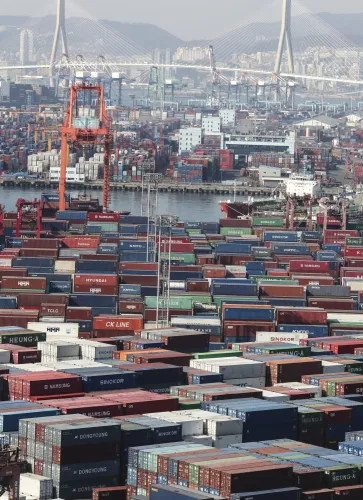
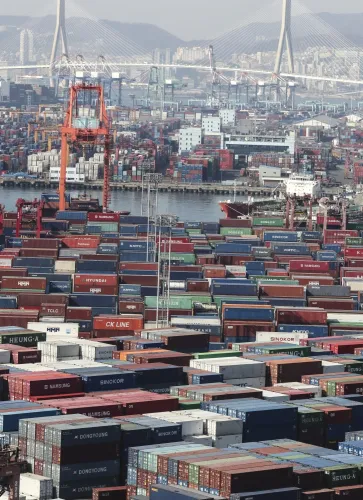
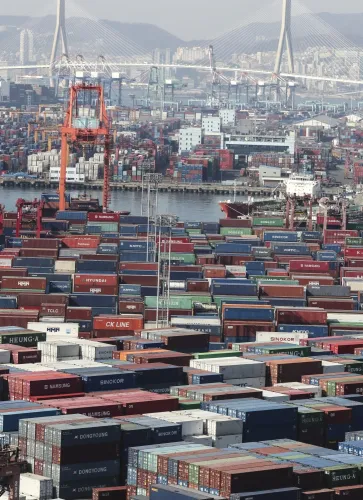
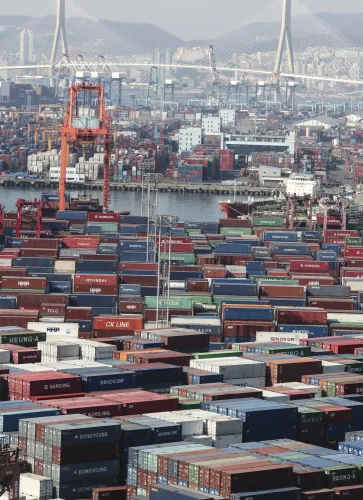
South Korea exports surge 100%+ in Oct 1-20 on record chip shipments
Synopsis
South Korea's exports blew past every prior October record in the first 20 days of the month, with chip shipments alone jumping 222.5% to $27.5 billion and accounting for nearly half of all outbound trade. The numbers signal that South Korea's semiconductor-led recovery is accelerating far faster than analysts had projected, with both the US and China absorbing record volumes simultaneously.
Key Takeaways
South Korea's exports reached $61.6 billion in October 1–20, 2026 — the highest on record for that period.
Semiconductor exports surged 222.5 percent year-on-year to $27.5 billion , making up 44.7 percent of total outbound trade.
Daily average export value hit $4.74 billion — a record for the first 20 days of any month.
Exports to China and the United States each surged roughly 154 percent year-on-year.
Year-to-date exports through 21 October stand at $876.3 billion , up 59.5 percent from a year ago.
South Korea's PPI rose 0.2 percent month-on-month in September , a second consecutive monthly gain driven by Chuseok -season agricultural prices.
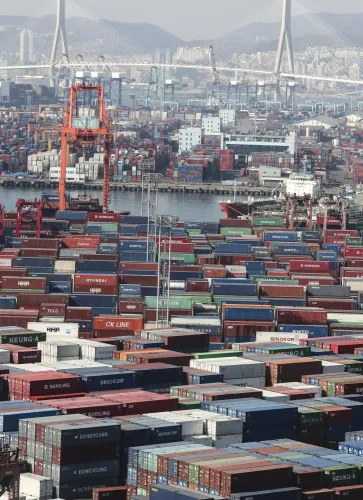
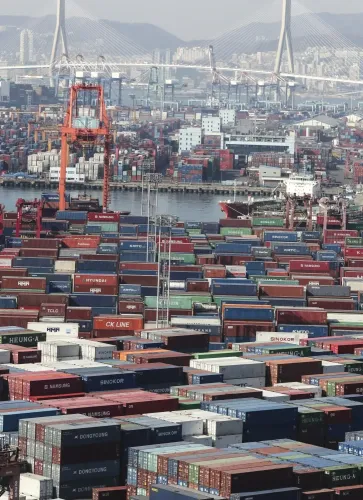
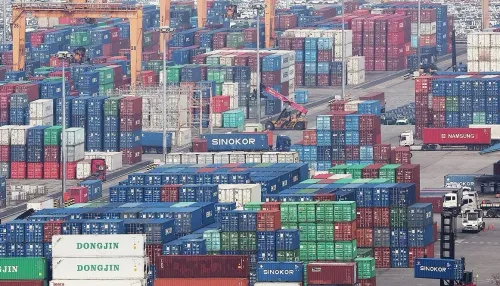
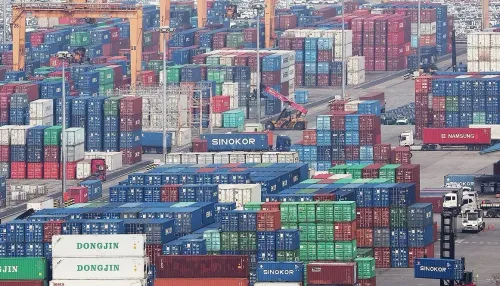
South Korea's exports more than doubled during the first 20 days of October 2026, customs data released on Wednesday showed, driven by a historic surge in semiconductor shipments. Outbound shipments totalled $61.6 billion in the October 1–20 period — the highest figure ever recorded for the first 20 days of October, according to data from the Korea Customs Service.
Record-Breaking Export Numbers
The daily average export value, measured in business days, reached $4.74 billion — the highest for the first 20 days of any month on record. Imports rose 42.8 percent year-on-year to $47.1 billion over the same period, producing a trade surplus of $14.5 billion.
Semiconductors Lead the Charge
Chip exports vaulted 222.5 percent year-on-year to $27.5 billion, setting a fresh record for any 20-day October period and accounting for 44.7 percent of South Korea's total exports — up 16.2 percentage points from a year earlier. The semiconductor sector's outsized contribution reflects surging global demand, particularly from AI infrastructure buildouts requiring high-bandwidth memory and advanced logic chips.
Beyond semiconductors, petroleum product exports rose 68.3 percent to $3.94 billion, automobile exports climbed 40.9 percent to $3.35 billion, and steel product shipments gained 42.6 percent to $2.58 billion.
Key Export Destinations
By destination, exports to China soared 154.4 percent to $16.6 billion, while shipments to the United States surged 154.9 percent to $10.7 billion. Exports to Vietnam and the European Union rose 74.6 percent and 78.2 percent, respectively. The breadth of gains across major trading partners underscores that this recovery is demand-driven rather than concentrated in a single market.
Full-Year Picture and Inflation Signal
Combined exports from 1 January through 21 October reached $876.3 billion, up 59.5 percent from the same period a year earlier. The total trade surplus accumulated so far in 2026 stands at $266.9 billion, according to the latest report.
Separately, South Korea's producer price index (PPI) rose 0.2 percent month-on-month in September — a second consecutive monthly gain — driven by higher agricultural prices during the Chuseok festival season, preliminary data from the Bank of Korea (BOK) showed. The July reading had marked the first monthly decline since August 2025. As a forward indicator of consumer inflation, the PPI uptick is likely to keep the central bank's policy deliberations closely watched in coming weeks.
Point of View
Anchored in AI server buildouts that are proving stickier than earlier cycles. What stands out is that both China and the United States absorbed roughly equivalent surges of around 154% simultaneously, suggesting the demand impulse is broad-based rather than rerouting trade around geopolitical friction. The concern is the concentration risk: at 44.7% of total exports, South Korea is now more dependent on chips than at any point in its modern trade history. A single inventory correction in the AI hardware space could reverse these numbers with equal speed. The PPI uptick, meanwhile, is a secondary signal worth watching — if agricultural price pressures feed through to consumer inflation, the Bank of Korea's room to stay accommodative narrows.
NationPress
21 Oct 2026
Frequently Asked Questions
How much did South Korea's exports grow in the first 20 days of October 2026?
South Korea's exports more than doubled year-on-year to $61.6 billion in the October 1–20 period, according to data from the Korea Customs Service. This was the highest figure ever recorded for the first 20 days of October.
Why did South Korea's exports surge so sharply in October 2026?
The primary driver was a 222.5 percent year-on-year jump in semiconductor exports to $27.5 billion, which alone accounted for nearly 45 percent of total outbound shipments. Global demand for advanced chips, linked to AI infrastructure investment, is the broadly cited factor behind the surge.
Which countries received the most South Korean exports in this period?
China and the United States were the top destinations, with exports to each rising roughly 154 percent year-on-year — to $16.6 billion and $10.7 billion, respectively. Vietnam and the European Union also posted strong gains of around 74–78 percent.
What is South Korea's trade surplus so far in 2026?
The cumulative trade surplus from January 1 through October 21 stands at $266.9 billion, supported by total exports of $876.3 billion — up 59.5 percent from the same period a year earlier.
What do South Korea's producer prices indicate about inflation?
The Bank of Korea's preliminary data shows the producer price index rose 0.2 percent month-on-month in September, a second consecutive monthly increase, driven by higher agricultural prices during the Chuseok festival season. As a leading indicator of consumer inflation, the uptick may influence future monetary policy decisions.