Rajasthan CMO launches 100-week anti-drug Mahabhiyan
Synopsis
The Chief Minister's Office of Rajasthan has announced a 100-week Mahabhiyan to combat substance abuse, invoking PM Narendra Modi's guidance and framing addiction as a 'Nashe Rupi Ravan' to be defeated. CM Bhajan Lal Sharma leads the state-level rollout.
Key Takeaways
100-week Mahabhiyan against substance abuse launched by the Rajasthan CMO under PM Narendra Modi's guidance.
Addiction is framed as 'nashe rupi Ravan' — the Ravana of narcotics — signalling a long-term, culturally resonant offensive.
Chief Minister Bhajan Lal Sharma is the state-level face of the campaign, tagged directly in the official announcement.
The initiative draws from the national Nasha Mukt Bharat Abhiyan , launched on 15 August 2020 , combining awareness drives and de-addiction outreach.
Rajasthan's shared border with Pakistan makes it a critical front for both drug-supply interdiction and demand-reduction efforts.
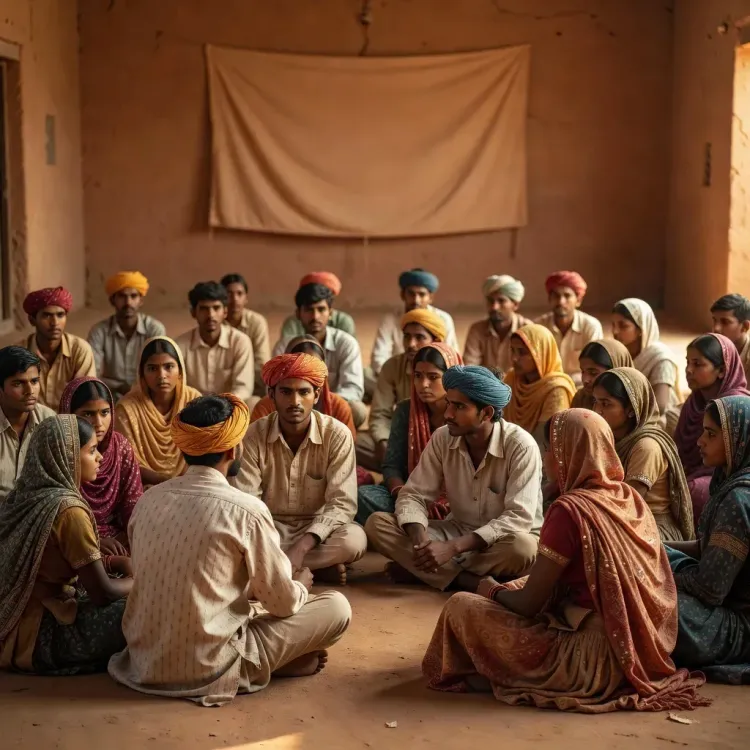
Youth and addiction-affected families are the primary target groups; district-level metrics will be the real measure of success.
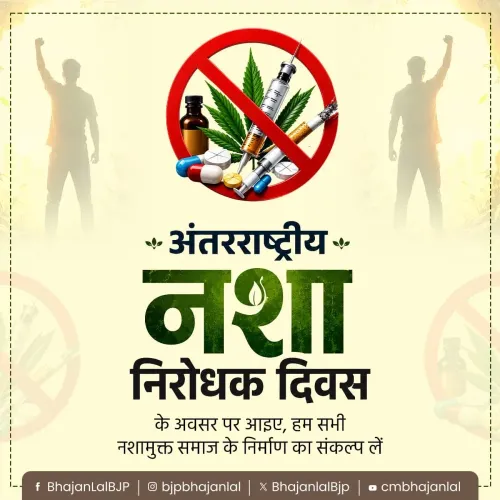
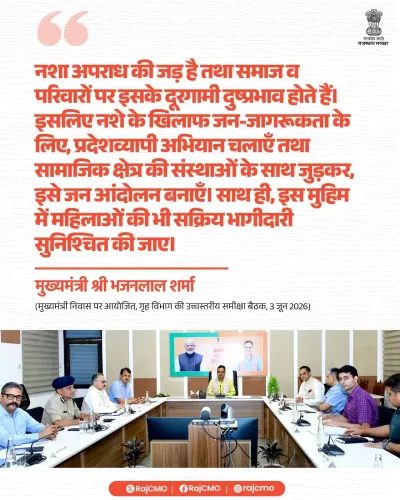
A 100-week Mahabhiyan to slay what the post calls the 'nashe rupi Ravan' — the Ravana of addiction — is now under way in Rajasthan, the Chief Minister's Office announced on Wednesday, 21 October 2026, invoking Prime Minister Narendra Modi's guidance as the campaign's driving force.
The Ravan metaphor and what it signals
The choice of language is deliberate: framing substance abuse as a ten-headed demon to be vanquished channels both festive-season energy and the moral urgency of a civilisational fight. Chief Minister Bhajan Lal Sharma, tagged directly in the post under the hashtag #आपणो_अग्रणी_राजस्थान ('Our Leading Rajasthan'), is the face of the state-level rollout. The campaign positions addiction not merely as a health crisis but as a social evil requiring a sustained, structured offensive — one hundred weeks, not one week.
Rajasthan's border geography and the drug-trafficking stakes
Rajasthan shares a long frontier with Pakistan, making it one of India's most exposed states to narcotics trafficking routes. Demand-reduction drives here carry double weight: they target both local consumption and the broader supply chain that feeds inland markets. Central and state governments have repeatedly treated the state as a frontline in India's anti-narcotics push, combining law-enforcement interdiction with community awareness mobilisation.
Nasha Mukt Bharat Abhiyan: the national backbone
The campaign draws its ideological lineage from the Nasha Mukt Bharat Abhiyan, launched nationally on 15 August 2020, which set out to make India drug-free through awareness drives, de-addiction centres, and district-by-district mobilisation. The current 100-week Mahabhiyan mirrors that model at the state level — week-by-week targets, central guidance, and local implementation — with Rajasthan's youth and addiction-affected families as the primary audience.
What to watch as the campaign unfolds
The real test will come in the district-level rollout: how many de-addiction camps are held, how many families are reached, and whether the Rajasthan health and social welfare departments publish mid-campaign review data. A hundred weeks is a long horizon — roughly two years — making credible, measurable milestones essential to sustaining public trust in the initiative.
Fighting addiction with a two-year clock is a bold bet; the scoreboard will be written in recovery numbers, not mythology.
Point of View
A border state with documented trafficking vulnerabilities, the campaign is as much about optics and governance credibility as it is about measurable de-addiction outcomes. The two-year timeline also serves a political purpose: it stretches deep into the next electoral cycle, allowing the Bhajan Lal Sharma government to claim ongoing momentum. The test will be whether the Mahabhiyan produces verifiable district-level data rather than remaining a well-branded awareness drive.
NationPress
21 Oct 2026
Frequently Asked Questions
What is the 100-week Mahabhiyan in Rajasthan?
It is a sustained anti-drug campaign announced by the Chief Minister's Office of Rajasthan, running for 100 weeks under PM Narendra Modi's guidance, aimed at eliminating substance abuse across the state through awareness drives and de-addiction efforts.
Who is leading the anti-drug campaign in Rajasthan?
Chief Minister Bhajan Lal Sharma is leading the state-level implementation, with the initiative framed as being guided by Prime Minister Narendra Modi at the national level.
What is the Nasha Mukt Bharat Abhiyan?
The Nasha Mukt Bharat Abhiyan is a national drug-free India campaign launched on 15 August 2020, combining community awareness, de-addiction centres, and district-by-district mobilisation — the ideological backbone of Rajasthan's current Mahabhiyan.
Why is Rajasthan a focus area for anti-drug drives?
Rajasthan shares a long border with Pakistan, making it one of India's most exposed states to narcotics trafficking routes. Campaigns here target both local drug consumption and the supply networks feeding other states.
What does 'nashe rupi Ravan' mean?
'Nashe rupi Ravan' translates to 'the Ravan in the form of addiction,' framing substance abuse as a demon — akin to the mythological villain Ravana — that must be defeated, a metaphor the Rajasthan CMO used to announce the campaign.