CM Bhajan Lal Sharma Calls for Drug-Free Society on Anti-Drug Day
Synopsis
On International Day Against Drug Abuse, Rajasthan CM Bhajan Lal Sharma pledged to build a drug-free society, calling substance abuse fatal for individuals, families, and the nation, and urging citizens to spread awareness under the Nasha Mukt Bharat Abhiyan.
Key Takeaways
Rajasthan CM Bhajan Lal Sharma issued an anti-drug appeal on 26 June 2026 , the International Day Against Drug Abuse and Illicit Trafficking.
He described drug abuse as 'fatal for the individual, the family, and society' and called for a collective pledge toward a drug-free nation.
The post carries the hashtags #NashaMuktBharat and #SayNoToDrugs , linking the message to the central government's national campaign.
The Nasha Mukt Bharat Abhiyan was launched in 2020 by the Ministry of Social Justice and Empowerment targeting youth through awareness and community mobilisation.
The International Day Against Drug Abuse has been observed on 26 June globally since a 1987 UN General Assembly resolution.
Youth, families, and state governments are identified as the primary stakeholders in anti-drug outreach efforts.
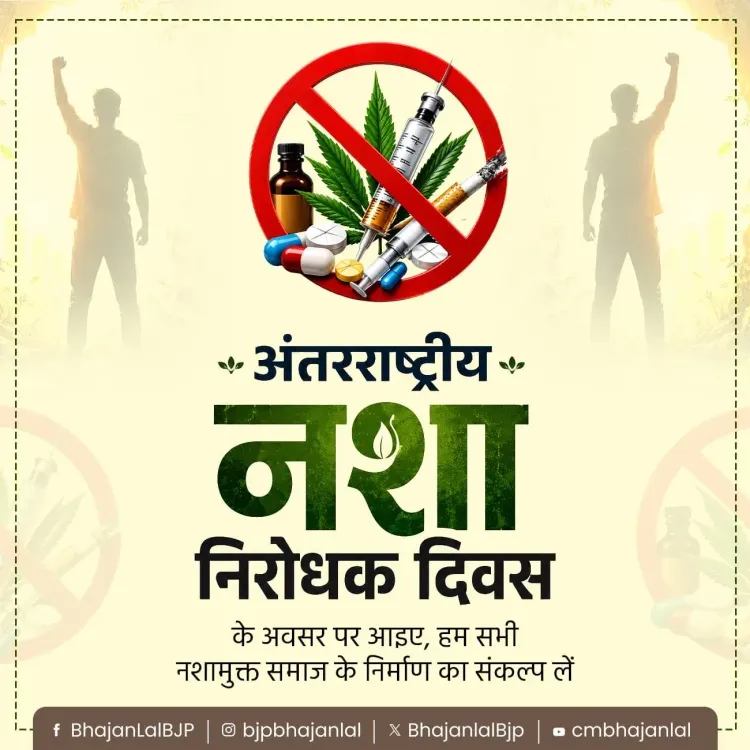
Rajasthan Chief Minister Bhajan Lal Sharma on Friday, 26 June 2026, called on citizens to pledge to build a drug-free society on the occasion of the International Day Against Drug Abuse and Illicit Trafficking, warning that substance abuse is destructive for individuals, families, and society alike.
Context
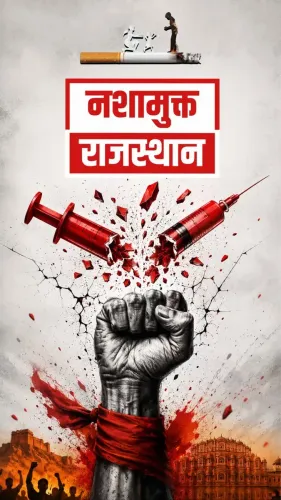
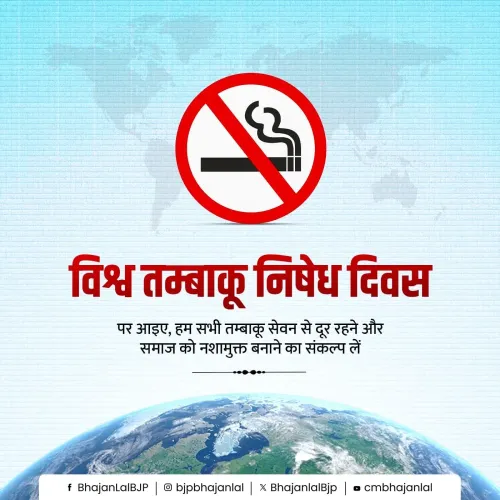
Posting in Hindi on the occasion, CM Sharma urged citizens: 'नशा व्यक्ति, परिवार और समाज तीनों के लिए घातक है' ('Drug abuse is fatal for the individual, the family, and society — all three'). He called on people to stay away from narcotics themselves and to inspire others through public awareness efforts, using the hashtags #NashaMuktBharat and #SayNoToDrugs.
The International Day Against Drug Abuse and Illicit Trafficking is observed every year on 26 June, following a 1987 United Nations General Assembly resolution aimed at strengthening global cooperation against narcotics. India has observed the day consistently as part of its commitment to that resolution.
Policy Backdrop
The post aligns with the Nasha Mukt Bharat Abhiyan, a national awareness campaign launched in 2020 by the Ministry of Social Justice and Empowerment to combat drug abuse, particularly among youth. The campaign focuses on community mobilisation, awareness generation, and support for rehabilitation efforts across states.
Multiple BJP-ruled state governments have run parallel awareness drives and rehabilitation programmes coordinated with the central ministry. The emphasis on individual and collective responsibility in CM Sharma's message mirrors the approach adopted in successive national action plans on narcotics control.
Stakeholders and Impact
Youth remain the primary target demographic of anti-drug campaigns at both the central and state levels, with families and local communities identified as key enablers of awareness. State governments play a critical implementation role, translating national policy into ground-level outreach programmes.
Rajasthan, like several other large states, faces challenges related to drug trafficking given its geographic location and border dynamics. Anti-narcotics messaging from the Chief Minister's office on a designated international observance reinforces the state's alignment with the central government's broader public health and social welfare agenda.
What's Next
Observers will watch for any Rajasthan-specific anti-narcotics action plans, budget allocations, or legislative moves tied to this year's observance. Developments in the implementation of the Narcotic Drugs and Psychotropic Substances Act at the state level, and any fresh directives from the Ministry of Social Justice and Empowerment, will indicate whether this messaging translates into concrete policy action in the months ahead.
Frequently Asked Questions
What did Rajasthan CM Bhajan Lal Sharma say on Anti-Drug Day 2026?
CM Bhajan Lal Sharma called on citizens to pledge to build a drug-free society, stating that drug abuse is fatal for individuals, families, and society, and urged people to stay away from narcotics and spread awareness among others.
When is International Day Against Drug Abuse observed?
The International Day Against Drug Abuse and Illicit Trafficking is observed every year on 26 June, following a 1987 United Nations General Assembly resolution to strengthen global cooperation against narcotics.
What is the Nasha Mukt Bharat Abhiyan?
The Nasha Mukt Bharat Abhiyan is a national awareness campaign launched in 2020 by India's Ministry of Social Justice and Empowerment to combat drug abuse, particularly among youth, through community mobilisation and rehabilitation support.
Who is Bhajan Lal Sharma?
Bhajan Lal Sharma is the Chief Minister of Rajasthan and a BJP leader who assumed office in December 2023 following the state assembly elections.
Why does India observe 26 June as Anti-Drug Day?
India observes 26 June as the International Day Against Drug Abuse in line with a 1987 UN General Assembly resolution that called for global cooperation against illicit drug trafficking and substance abuse.