CM Bhajan Lal Sharma Calls for Tobacco-Free Rajasthan on World No Tobacco Day
Synopsis
Rajasthan Chief Minister Bhajan Lal Sharma marked World No Tobacco Day on 31 May 2026 by urging citizens to pledge against tobacco use, connecting individual health choices to building an empowered and prosperous nation, in line with India's NTCP and COTPA frameworks.
Key Takeaways
Rajasthan Chief Minister Bhajan Lal Sharma posted a World No Tobacco Day message on 31 May 2026 calling for a tobacco-free and addiction-free society.
He stated that tobacco harms not only individual health but also family and community well-being.
World No Tobacco Day is a WHO -initiated annual observance held every 31 May since 1987 .
India enacted COTPA in 2003 and ratified the WHO Framework Convention on Tobacco Control in 2005 .
The National Tobacco Control Programme , launched in 2007-08 , supports state-level tobacco awareness and enforcement, including in Rajasthan .
Follow-up action on school-based tobacco-free education and COTPA enforcement in Rajasthan will be key indicators of policy intent.
Rajasthan Chief Minister Bhajan Lal Sharma on 31 May 2026 called on citizens to pledge abstinence from tobacco and work toward a drug-free society, marking World No Tobacco Day. Posting on X, the BJP leader framed individual health choices as foundational to building a stronger nation.
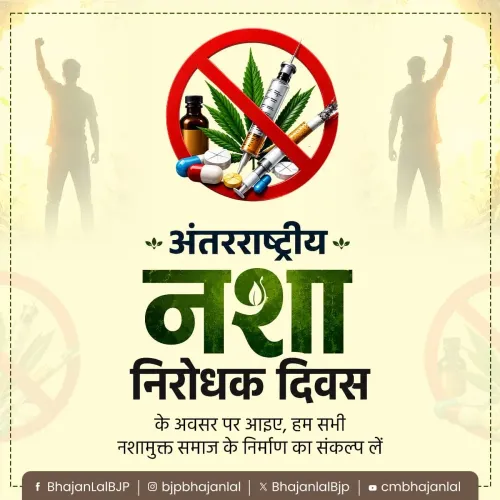
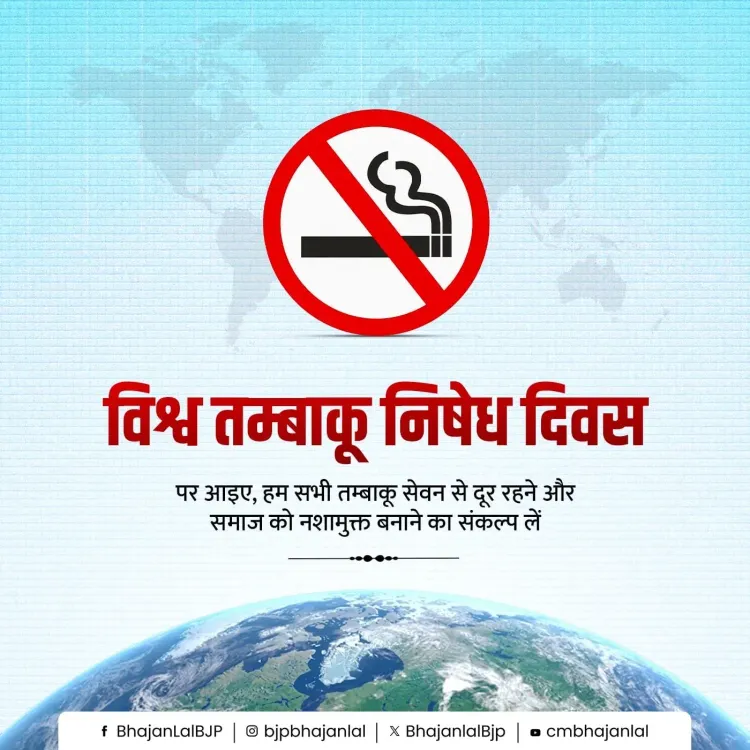
In his post, Sharma wrote: 'आइए, विश्व तम्बाकू निषेध दिवस पर हम सभी तम्बाकू सेवन से दूर रहने और समाज को नशामुक्त बनाने का संकल्प लें!' ['Come, on World No Tobacco Day, let us all resolve to stay away from tobacco use and make society free from addiction!']. He added that tobacco harms not only health but also the happiness of families and communities, and that adopting a healthy lifestyle is the path to building 'an empowered, aware, and prosperous nation.'
Context
World No Tobacco Day is observed every year on 31 May, an annual global observance initiated by the World Health Organization (WHO) in 1987 to highlight the health and social risks of tobacco use. Governments, health bodies, and public figures across India routinely issue awareness messages and campaign pledges on this date. Sharma's post follows this established pattern of state leadership amplifying anti-tobacco messaging on the occasion.
Policy Backdrop
India enacted the Cigarettes and Other Tobacco Products Act (COTPA) in 2003, banning smoking in public places and regulating tobacco sales and advertising. The country further ratified the WHO Framework Convention on Tobacco Control in 2005, committing to stronger packaging warnings and advertising restrictions. At the central level, the National Tobacco Control Programme (NTCP), launched in 2007-08, supports state governments including Rajasthan in running awareness drives, enforcement of COTPA provisions, and educational outreach.
BJP-led administrations in Rajasthan have aligned state-level tobacco control efforts with national health missions, consistently framing reduced tobacco consumption as a contributor to household welfare, economic productivity, and social cohesion — themes that echo directly in Sharma's 31 May message.
Stakeholders and Impact
The appeal is directed broadly at tobacco users, youth, and families across Rajasthan, with public health workers positioned as the implementing community for follow-through campaigns. Anti-tobacco messaging by chief ministers carries institutional weight, often reinforcing district-level enforcement drives and school-based awareness programmes. Youth exposure to tobacco remains a key concern for state health departments, as early initiation is linked to long-term addiction and associated economic burdens on families.
Civil society organisations working under the NTCP framework in Rajasthan typically use World No Tobacco Day as a focal point for community pledges, street plays, and outreach in schools and colleges — activities that such statements from the Chief Minister's office help legitimise and energise.
What's Next
Attention will now turn to whether Rajasthan follows up with concrete policy steps, including the rollout or expansion of school-based tobacco-free education programmes and updated enforcement of COTPA provisions at the district level. Sustained action beyond the symbolic observance — such as increased penalties for sales near educational institutions or wider deployment of tobacco cessation services — will determine the on-ground impact of the Chief Minister's pledge. The state's alignment with central health mission targets on tobacco reduction will also be a marker to watch in the months ahead.
Point of View
It signals to district administrations and health departments that enforcement and awareness activity should be prioritised. The messaging — linking individual health to national prosperity — is consistent with the BJP's broader 'Swasth Bharat' communication strategy, which ties personal responsibility to collective nation-building. What distinguishes meaningful engagement from symbolic gesture will be the state's follow-through on COTPA enforcement and NTCP-funded outreach in the weeks that follow. Rajasthan's track record on school-based tobacco education will be the real test of whether this pledge translates into policy momentum.
NationPress
19 Sept 2026
Frequently Asked Questions
Why does India observe World No Tobacco Day on 31 May?
World No Tobacco Day is observed on 31 May every year as established by the WHO in 1987 to raise global awareness about the health risks of tobacco use and advocate for effective policies to reduce consumption.
What is the National Tobacco Control Programme in India?
The National Tobacco Control Programme (NTCP) is a central government scheme launched in 2007-08 that supports states, including Rajasthan , in tobacco awareness campaigns, COTPA enforcement, and school-based education to reduce tobacco use.
What is COTPA and how does it apply in Rajasthan?
COTPA — the Cigarettes and Other Tobacco Products Act, 2003 — bans smoking in public places, restricts tobacco advertising, and regulates sales, including near educational institutions. Rajasthan is required to enforce its provisions at the district level.
What did Rajasthan CM Bhajan Lal Sharma say on World No Tobacco Day 2026?
Bhajan Lal Sharma called on citizens to resolve to stay away from tobacco and make society addiction-free, stating that tobacco harms family happiness and that a healthy lifestyle is essential to building an empowered and prosperous nation.
How does India's tobacco control policy connect to international commitments?
India ratified the WHO Framework Convention on Tobacco Control in 2005 , committing to stronger health warnings on packaging, advertising restrictions, and support for cessation services — obligations that underpin domestic laws like COTPA and programmes like the NTCP .