South Korea museum chief offers to resign over misattributed colonial-era calligraphy
Synopsis
South Korea's top museum chief has offered to quit after a calligraphic work from his own private collection — written by a pro-Japanese colonial collaborator — was displayed at the National Museum of Korea and wrongly credited to an independence activist. In a society where colonial-era distinctions carry profound moral weight, the mix-up exposed a breach of institutional trust that parliamentary pressure and two public apologies could not paper over.
Key Takeaways
You Hong-june , director of the National Museum of Korea , offered to resign on 21 October 2026 .
A calligraphic work from his private collection was wrongly attributed to a Korean independence activist; it was later identified as the work of a pro-Japanese colonial collaborator .
The museum removed the piece from its 'Our Dining Table' special exhibition after the controversy erupted.
You apologised twice and bowed before lawmakers at a parliamentary audit on Monday ; calls for resignation persisted nonetheless.
You served as head of the Cultural Heritage Administration from 2004 to 2008 and became museum director in July of the previous year — a tenure of roughly 15 months .
He accepted full responsibility, saying the public's trust 'collapsed in an instant because of my personal mistake.'
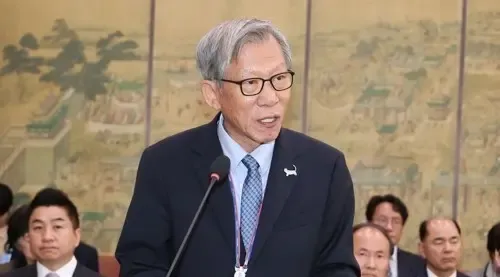
You Hong-june, director of the National Museum of Korea, offered to resign on Wednesday, 21 October 2026, following a controversy in which a calligraphic work from his private collection was wrongly attributed to a Korean independence activist inside the museum's ongoing special exhibition. The piece was subsequently found to have been written by a prominent pro-Japanese collaborator during Japan's 1910–45 colonial rule of Korea.
How the Controversy Unfolded
The misattributed calligraphic work had been displayed at the museum's 'Our Dining Table' special exhibition, where it was introduced as the creation of a Korean independence figure. Investigators and critics later established that the piece was authored by a known collaborator with Japan's colonial administration — and that it had come from You's own private collection. The museum moved swiftly to remove the item once the misidentification became public.
You had already faced intense scrutiny earlier in the week, apologising twice and bowing before lawmakers during a parliamentary audit on Monday. Despite that public contrition, calls for his resignation continued from opposition politicians and prominent voices in South Korea's cultural sector, who argued that an apology alone was inadequate accountability for what they described as a serious institutional failure.
You Hong-june's Resignation Statement
In a formal statement sent to reporters on Wednesday, You said he had concluded that stepping down was necessary 'to restore the museum's tarnished honour.' He accepted full personal responsibility for the episode.
'The deep trust the public has placed in the National Museum of Korea and the value our staff has built collapsed in an instant because of my personal mistake,' he said. 'All criticism over this matter is entirely my responsibility.'
You issued a further apology, saying he was 'deeply sorry' to citizens who had been disappointed, to the bereaved family of the independence activist whose name had been falsely attached to the work, and to museum staff who had no part in the error.
Who Is You Hong-june
You is a widely respected art historian and the author of the bestselling 'My Exploration of Cultural Heritage' book series — a defining work of cultural history in South Korea. He previously led the Cultural Heritage Administration, now known as the Korea Heritage Service, from 2004 to 2008, before assuming the role of museum director in July of the previous year — a tenure of roughly 15 months at the time of his offer to resign.
'Although it was a short period of 15 months, being able to take part in the honourable task of protecting the value of our cultural heritage was the greatest blessing and honour of my life,' You said in his statement.
Impact on the Exhibition and the Institution
You appealed to the public not to allow the broader significance of the 'Our Dining Table' exhibition to be overshadowed by the controversy. He praised museum researchers for preparing the show 'with great care over a long period' and acknowledged staff who 'worked day and night for the museum's growth.'
The episode has cast a shadow over an institution that holds primary custodial responsibility for South Korea's national cultural heritage — particularly sensitive given the charged historical memory surrounding Japan's colonial period. The misidentification of a collaborator's work as that of an independence activist struck a raw nerve in a society where colonial-era distinctions carry deep political and moral weight.
It remains to be seen whether the museum's board will formally accept You's resignation and how the government will manage the institution's credibility in the near term.
Point of View
In a national museum, as the creation of someone who resisted that very collaboration. In South Korea, where the line between independence activist and pro-Japanese collaborator remains one of the most politically charged distinctions in public life, this was never going to be treated as a curatorial footnote. That the offending piece came from the director's own private collection makes the governance failure doubly difficult to defend. Two apologies and a parliamentary bow were not going to be enough — and they weren't. The question now is whether the museum can rebuild credibility swiftly enough to insulate its broader programme, and whether the government's response will be seen as proportionate or merely reactive.
NationPress
21 Oct 2026
Frequently Asked Questions
Why is South Korea's National Museum of Korea director offering to resign?
You Hong-june offered to resign after a calligraphic work from his private collection was displayed at the museum and wrongly attributed to a Korean independence activist. The piece was later identified as the work of a pro-Japanese collaborator from Japan's 1910–45 colonial rule of Korea, triggering a public and parliamentary backlash.
What was the misattributed calligraphic work at the centre of the controversy?
The work was a piece of calligraphy included in the museum's 'Our Dining Table' special exhibition. It was introduced as the creation of a Korean independence activist but was subsequently found to have been written by a prominent pro-Japanese collaborator during Japan's colonial period — and to have come from director You Hong-june's own private collection.
How did the South Korean government and lawmakers respond?
You was called before a parliamentary audit on Monday, where he apologised twice and bowed before lawmakers. Opposition politicians and figures in the cultural sector said the apology was insufficient and called for his resignation. He subsequently offered to step down on Wednesday.
Who is You Hong-june?
You Hong-june is a prominent South Korean art historian and the author of the widely read 'My Exploration of Cultural Heritage' book series. He previously headed the Cultural Heritage Administration — now the Korea Heritage Service — from 2004 to 2008, and became director of the National Museum of Korea in July of the previous year.
What happens next after You Hong-june's resignation offer?
You has offered to resign; whether the museum's board formally accepts the resignation and how quickly a successor is appointed remains to be confirmed. The museum has already removed the misattributed work from the exhibition, and You has asked the public to continue supporting the institution despite the controversy.