Shekhawat Hits Back at Critics of Manuscript Conservation
Synopsis
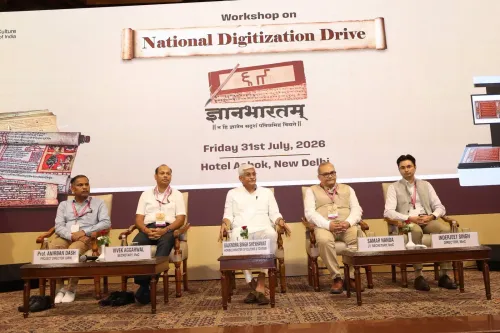
Union Culture Minister Gajendra Singh Shekhawat pushed back on September 24 against political questioning of manuscript collection and conservation work, defending the National Mission for Manuscripts launched in 2003 to digitise and preserve India's ancient written heritage.
Key Takeaways
Union Culture Minister Gajendra Singh Shekhawat posted on September 24, 2026 questioning whether manuscript conservation should be subject to political criticism.
The minister asked pointedly: 'Is it right to raise questions about the collection and conservation of manuscripts for political reasons?' The National Mission for Manuscripts , launched in 2003 under the Ministry of Culture , exists to survey, document, conserve, and digitise India's ancient manuscript heritage.
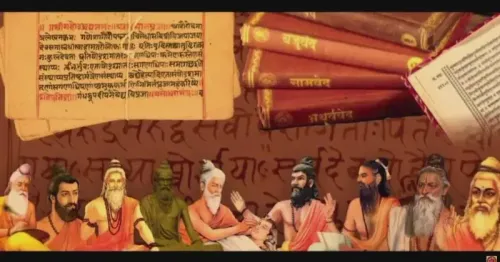
India holds one of the world's largest manuscript collections, spanning classical literature, medicine, astronomy, and philosophy.
The post signals that manuscript digitisation and preservation have entered the broader arena of cultural and political contestation in India.
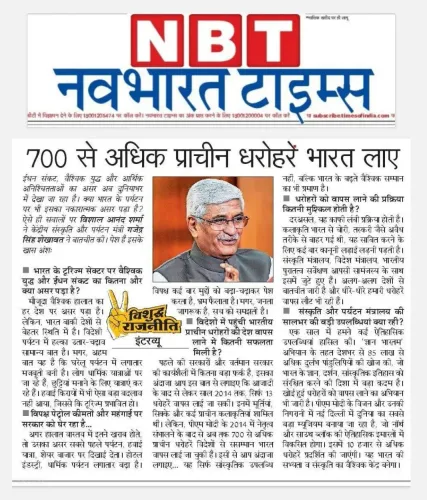
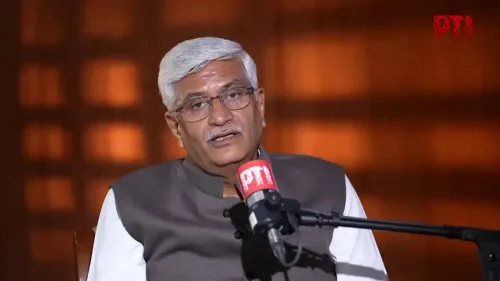
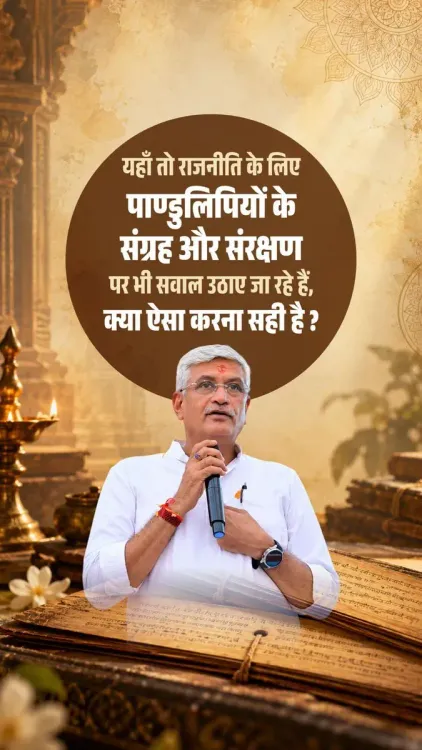
Should the age-old work of collecting and safeguarding India's ancient manuscripts really become a political football? Union Culture and Tourism Minister Gajendra Singh Shekhawat does not think so — and on Thursday, September 24, 2026, he said exactly that on X, pushing back sharply against what he described as politically motivated questioning of manuscript preservation efforts.
Posting in Hindi, Shekhawat wrote: 'यहाँ तो राजनीति के लिए पाण्डुलिपियों के संग्रह और संरक्षण पर भी सवाल उठाए जा रहे हैं, क्या ऐसा करना सही है?' — which translates as: 'Here, even the collection and conservation of manuscripts is being questioned for political reasons — is this right?'
What the National Mission for Manuscripts Actually Does
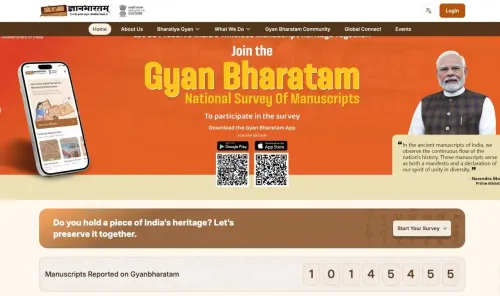
The minister's defence points directly to the National Mission for Manuscripts, a Ministry of Culture initiative that has been running since 2003. Its mandate is straightforward: survey, document, conserve, and digitise India's vast manuscript heritage — palm-leaf texts, paper folios, and birch-bark scrolls scattered across temples, monasteries, private collections, and regional libraries.
India holds one of the largest manuscript collections in the world, with estimates running into tens of millions of handwritten texts spanning subjects from classical literature and astronomy to medicine and philosophy. The Mission's core argument has always been that these materials are fragile, irreplaceable, and under active threat from climate, neglect, and time. Conservation, by that logic, is a race against loss — not a political act.
When Heritage Work Becomes a Political Charge
Shekhawat's pointed rhetorical question — 'Is this right?' — reflects a recurrent tension in Indian cultural policy. Critics of heritage programmes have periodically argued that government-backed conservation projects carry selective emphasis, amplifying certain traditions or regions over others. The minister's post pushes back against that framing, insisting that the basic act of collecting and preserving manuscripts should stand beyond political contestation.
The exchange also signals that manuscript digitisation — once a quiet, technical process — has entered the louder arena of cultural politics, where questions of whose history gets funded and whose gets preserved are increasingly contested.
For manuscript scholars and heritage institutions, the stakes are practical as well as symbolic: sustained funding and political will are what keep digitisation targets on track and conservation labs open. When the work itself becomes controversial, those commitments become harder to secure.
The real question Shekhawat is raising has no partisan answer: can a civilisation afford to let its oldest written records decay while arguing about who benefits from saving them?
Frequently Asked Questions
What is the National Mission for Manuscripts in India?
The National Mission for Manuscripts is a Ministry of Culture initiative launched in 2003 to survey, document, conserve, and digitise India's ancient manuscript heritage, covering texts on palm leaf, paper, and birch bark held across temples, libraries, and private collections.
Why did Gajendra Singh Shekhawat post about manuscripts?
Shekhawat posted on September 24, 2026 to push back against what he described as politically motivated questioning of manuscript collection and conservation efforts, arguing that such work should not be made a subject of political controversy.
Is manuscript conservation a political issue in India?
It has periodically become one. Critics have questioned whether government-backed conservation programmes carry selective emphasis favouring certain traditions, while defenders argue that preservation of fragile ancient texts is a neutral, civilisational necessity.
How many manuscripts does India have?
India holds one of the largest manuscript collections in the world, with estimates suggesting tens of millions of handwritten texts across subjects including literature, medicine, philosophy, and astronomy.
What does the Ministry of Culture do for heritage preservation?
The Ministry of Culture funds and oversees multiple heritage initiatives including the National Mission for Manuscripts, which digitises and conserves ancient texts, as well as broader programmes for the upkeep of monuments, museums, and intangible cultural heritage.