Shekhawat: 1 Million Manuscripts Published Under Gyan Bharatam Mission
Synopsis
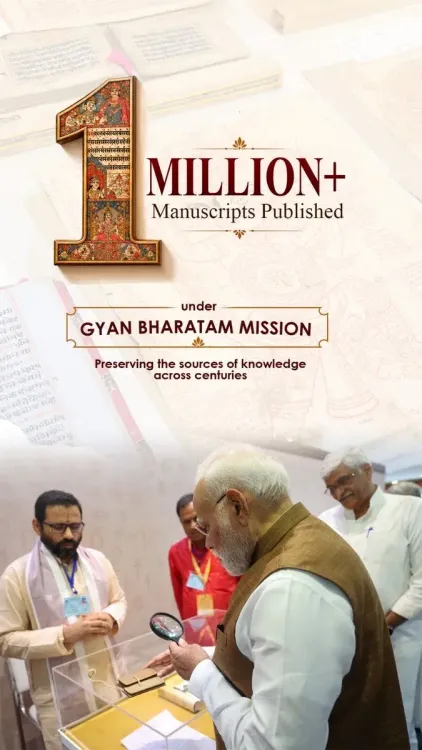
Union Culture Minister Gajendra Singh Shekhawat announced that the Gyan Bharatam Mission has published one million manuscripts, framing it as a landmark step in making India's civilisational knowledge heritage accessible to a global audience under PM Modi's 'Vikas Bhi, Virasat Bhi' vision.
Key Takeaways
One million manuscripts have been published under the Gyan Bharatam Mission , according to Union Culture and Tourism Minister Gajendra Singh Shekhawat .
The mission builds on the National Mission for Manuscripts , established in 2003 , which focused on surveying, documenting, and conserving India's manuscript wealth.
The current phase shifts emphasis from physical conservation to active public dissemination, making texts accessible to wider audiences.
Minister Shekhawat framed the milestone under the 'Vikas Bhi, Virasat Bhi' — development and heritage — policy framework attributed to Prime Minister Narendra Modi .
India holds the world's largest surviving manuscript tradition across dozens of languages, covering astronomy, medicine, philosophy, music, and statecraft.
The next critical question for scholars is whether the published corpus will be fully searchable, indexed, and openly accessible to the global academic community.
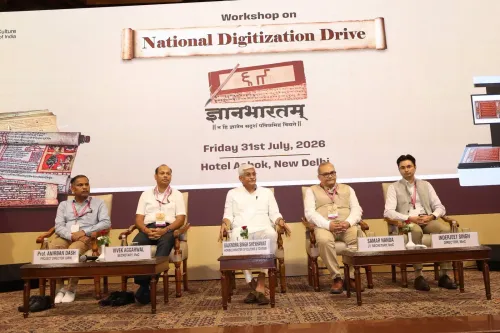
A civilisation's memory, long locked in fragile palm leaves and fading ink, is now being opened to the world — one manuscript at a time. Union Culture and Tourism Minister Gajendra Singh Shekhawat on Wednesday, September 30, 2026, announced that the Gyan Bharatam Mission has crossed the landmark figure of one million manuscripts published, calling it a historic step in bringing India's intellectual and civilisational heritage to a wider audience.
One Million Manuscripts — What the Number Means
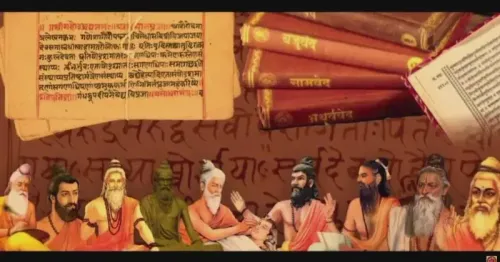
The figure is staggering by any measure. India is home to the world's largest surviving manuscript tradition — spanning Sanskrit, Prakrit, Arabic, Persian, Tamil, Telugu, and dozens of other languages — covering subjects from astronomy and medicine to philosophy, music, and statecraft. Shekhawat framed the milestone as 'One Million Windows into India's Knowledge Heritage,' invoking the scale of what has long remained inaccessible to most Indians and nearly invisible to the world.
In his post, the minister described the publication drive as 'Vikas Bhi, Virasat Bhi' — development as well as heritage — the governing framework Prime Minister Narendra Modi has used to argue that economic modernisation and cultural preservation are not competing goals but complementary ones. The mission, Shekhawat wrote, advances the PM's 'vision of preserving India's heritage while taking its knowledge legacy to the world.'
Gyan Bharatam Mission and the National Manuscript Push
The institutional roots of this effort go back to 2003, when the National Mission for Manuscripts was established under the Ministry of Culture to survey, document, and conserve India's manuscript wealth. That early programme focused heavily on cataloguing and physical preservation — an enormous task given that millions of texts were scattered across temple archives, private collections, monasteries, and regional libraries.
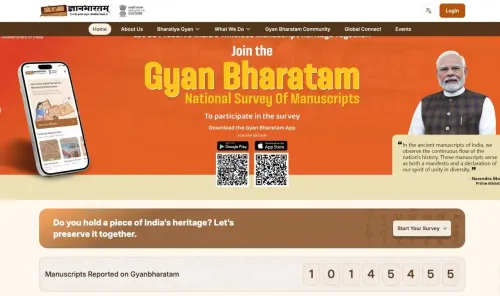
The current phase, branded as the Gyan Bharatam Mission, pairs that conservation mandate with public dissemination — getting published, accessible versions of manuscripts into the hands of scholars, students, and citizens. The shift from preservation-in-storage to active publication marks a meaningful policy evolution: safeguarding a text is one thing; making it readable and discoverable is another entirely.
Heritage Policy as Political Identity
The announcement fits a deliberate pattern the BJP-led government has cultivated across two terms: positioning India's ancient knowledge systems — Ayurveda, yoga, classical literature, architectural texts — as assets to be projected globally, not merely archived domestically. Shekhawat's framing of this as PM Modi's 'visionary leadership' is consistent with how the party has consistently connected cultural milestones to the prime minister's personal brand.
For Indology scholars and heritage researchers, however, the publication count raises the next-level question: how discoverable, searchable, and academically usable are these published manuscripts? A million documents uploaded or printed is a foundation. A million documents properly indexed, translated, and cross-referenced is a revolution. The minister's post does not specify the format or accessibility of the published works — that detail will matter enormously to the scholarly community watching this space.
What the Global Knowledge Community Is Watching
India's manuscript diplomacy has quiet strategic dimensions too. As institutions worldwide digitise ancient texts and compete to host authoritative collections, a published corpus of one million Indian manuscripts — if made openly accessible — could reshape how universities in Europe, the United States, and across Asia engage with South Asian intellectual history. The government has signalled that taking the 'knowledge legacy to the world' is an explicit goal. The execution — open access, multilingual metadata, international partnerships — will determine whether that goal becomes reality.
One million manuscripts in. The next test is whether India can turn an archive into an open library the world actually reads.
Point of View
The Ram temple consecration, and the International Year of Millets. Publishing one million manuscripts is a genuine achievement in scale, but the political framing — tying every cultural milestone directly to the Prime Minister's vision — is as deliberate as the policy itself. For the BJP, 'Vikas Bhi, Virasat Bhi' is not just a slogan; it is a governing identity that blunts the traditional opposition charge that development politics ignores culture. The harder, less photogenic work — open-access infrastructure, translation pipelines, international academic partnerships — will determine whether this milestone is a foundation or a headline.
NationPress
1 Oct 2026
Frequently Asked Questions
What is the Gyan Bharatam Mission?
The Gyan Bharatam Mission is an initiative under India's Ministry of Culture aimed at publishing and disseminating India's manuscript heritage to make ancient knowledge accessible to a broader audience, building on the earlier National Mission for Manuscripts established in 2003.
How many manuscripts has India published under this mission?
Union Culture Minister Gajendra Singh Shekhawat announced that one million manuscripts have now been published under the Gyan Bharatam Mission as of September 30, 2026.
What is the National Mission for Manuscripts?
The National Mission for Manuscripts was established in 2003 under the Ministry of Culture to survey, document, and conserve India's vast manuscript wealth, which spans Sanskrit, Persian, Tamil, Telugu, and many other languages.
What does 'Vikas Bhi Virasat Bhi' mean?
'Vikas Bhi, Virasat Bhi' translates to 'Development as well as Heritage' and is a policy framework associated with Prime Minister Narendra Modi, arguing that economic modernisation and cultural preservation are complementary goals.
Why does India's manuscript tradition matter globally?
India is considered home to the world's largest surviving manuscript tradition, covering subjects from astronomy and medicine to philosophy and music across dozens of languages, making its digitisation and publication of major interest to global scholarly and cultural institutions.