Shekhawat: Gyan Bharatam Maps Over 1 Crore Manuscripts
Synopsis
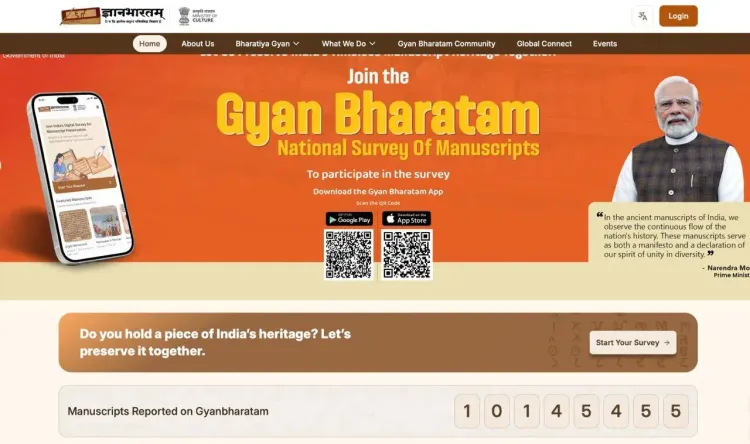
Union Culture and Tourism Minister Gajendra Singh Shekhawat announced on June 8, 2026 that the Gyan Bharatam National Survey of Manuscripts has mapped over 1 crore manuscripts nationwide, describing it as a landmark Jan Bhagidari achievement in civilisational heritage preservation under PM Modi's leadership.
Key Takeaways
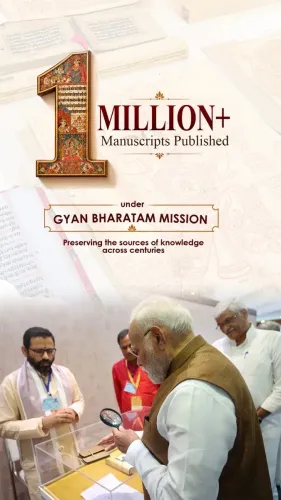
The Gyan Bharatam National Survey of Manuscripts has mapped over 1 crore manuscripts across India, according to Union Minister Gajendra Singh Shekhawat .
The survey is framed as a Jan Bhagidari movement involving citizens, scholars, institutions, and communities.
The initiative builds on the National Mission for Manuscripts launched in 2003 under the Ministry of Culture.
The milestone is positioned within the government's Vikas bhi Virasat bhi (Development as well as Heritage) policy narrative.
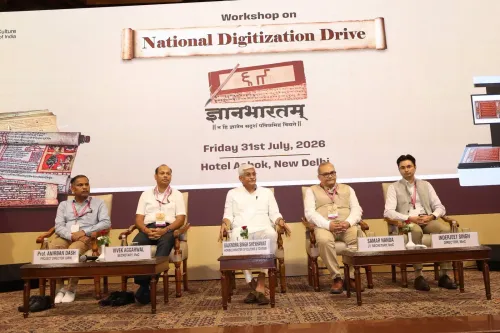
The next anticipated phase involves large-scale digitisation and scholarly indexing of the mapped manuscripts.
The achievement is being highlighted as part of the 12 Years of Vikas Bhi Virasat Bhi campaign.
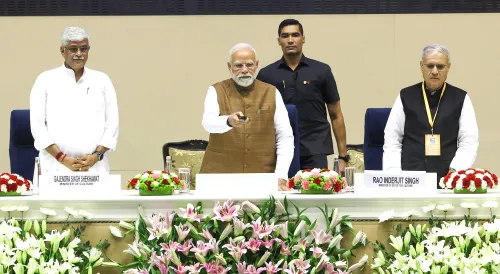
Union Culture and Tourism Minister Gajendra Singh Shekhawat on Monday, June 8, 2026, announced that the Gyan Bharatam National Survey of Manuscripts has mapped over 1 crore manuscripts from across India, calling it a historic milestone in the country's cultural heritage preservation efforts.
Context
Shekhawat described the achievement as 'not just the mapping of manuscripts' but 'the rediscovery of Bharat's intellectual legacy.' The announcement was made under the hashtag #GyanBharatam and linked to the broader government slogan #VikasBhiVirasatBhi (Development as well as Heritage), a phrase that has become central to the ruling dispensation's cultural outreach.
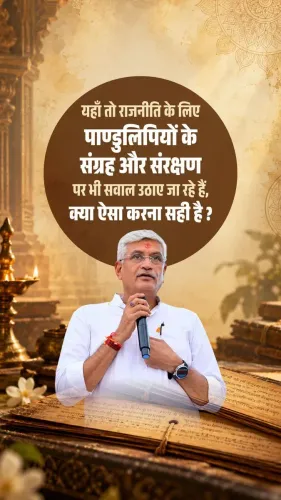
The minister credited the milestone to what he termed a large-scale Jan Bhagidari (people's participation) movement, with citizens, scholars, institutions, and communities contributing to the survey's reach across the country.
Policy Backdrop
India's formal effort to document its manuscript wealth dates to 2003, when the National Mission for Manuscripts was launched under the Ministry of Culture to locate, catalogue, and conserve manuscript collections held in private homes, temples, monasteries, and institutions.
The Gyan Bharatam National Survey of Manuscripts represents an evolution of that mission, extending its scope through a citizen-participation model that mirrors approaches used in programmes such as Swachh Bharat. The post-2014 policy environment has consistently sought to frame heritage preservation as a complement to, rather than a departure from, development priorities.
The Vikas bhi Virasat bhi framing — development alongside heritage — has been a recurring motif in Prime Minister Narendra Modi's cultural policy statements, and Shekhawat's post explicitly anchors the manuscript milestone within that narrative.
Stakeholders and Impact
The survey's reported scale — 1 crore manuscripts mapped — would represent one of the largest documentation exercises of written heritage anywhere in the world, given that India is estimated to hold a significant share of the world's surviving manuscript corpus across languages including Sanskrit, Arabic, Persian, Tamil, Telugu, Malayalam, and dozens of others.
Heritage scholars, universities, temple trusts, and community custodians have been identified as key participants in the survey. For these stakeholders, formal mapping is a prerequisite for the next critical step: digitisation, which would make the content of these manuscripts accessible to researchers globally.
The initiative also carries implications for India's soft-power positioning, as manuscript heritage is increasingly cited in multilateral cultural forums and in the country's engagement with the UNESCO Memory of the World programme.
What's Next
The mapping milestone is expected to feed into the next phase of the government's manuscript preservation agenda: large-scale digitisation and scholarly indexing. Observers will watch for references to heritage funding in the upcoming Union Budget and the Culture Ministry's annual report, as well as any parliamentary discussion on allocations for conservation infrastructure.
With the 12 Years of Vikas Bhi Virasat Bhi campaign framing the announcement, the milestone is also likely to feature prominently in the ruling party's cultural governance record ahead of electoral cycles in several states. The broader question of how many of the mapped manuscripts will be digitised and made publicly accessible will define the programme's lasting legacy.
Point of View
If validated, would be a genuinely significant archival achievement, but the post conspicuously blurs the line between survey (mapping) and the harder task of digitisation and scholarly access — the metrics that heritage experts consider the true measure of preservation success. The Jan Bhagidari framing is also deliberate, extending a participatory model that has proven politically resonant in other flagship programmes to the cultural domain. Ultimately, the announcement signals that heritage policy will remain a front-line political asset for the ruling dispensation, not merely a bureaucratic function.
NationPress
23 Oct 2026
Frequently Asked Questions
What is the Gyan Bharatam National Survey of Manuscripts?
The Gyan Bharatam National Survey of Manuscripts is a nationwide initiative under India's Ministry of Culture to locate, document, and map manuscript collections held by individuals, institutions, temples, and communities across the country. It builds on the National Mission for Manuscripts launched in 2003.
How many manuscripts has India mapped under the Gyan Bharatam survey?
Union Culture and Tourism Minister Gajendra Singh Shekhawat announced on June 8, 2026 that the survey has mapped over 1 crore (10 million) manuscripts from across India.
What does Jan Bhagidari mean in the context of the manuscript survey?
Jan Bhagidari means 'people's participation.' In this context it refers to the involvement of ordinary citizens, scholars, heritage institutions, and local communities in identifying and reporting manuscript holdings, rather than relying solely on government agencies.
What is the Vikas bhi Virasat bhi policy?
Vikas bhi Virasat bhi — meaning 'Development as well as Heritage' — is a policy slogan used by the Modi government to argue that infrastructure development and cultural heritage preservation are complementary goals, not competing ones. It has been a recurring theme in cultural and tourism policy since 2014.
What happens after manuscripts are mapped — will they be digitised?
Mapping is the first step; digitisation and scholarly indexing are the next phases. Experts and observers are watching for budget allocations and ministry announcements that would fund the conversion of mapped manuscripts into digitally accessible archives for researchers in India and abroad.