CM Fadnavis backs Gyan Bharatam manuscript survey
Synopsis
Maharashtra CM Devendra Fadnavis has backed the Centre's Gyan Bharatam — National Survey of Manuscripts, calling on citizens, temples, ashrams, and institutions to register manuscripts older than 75 years on the dedicated app and website to preserve India's written heritage.
Key Takeaways
Maharashtra CM Devendra Fadnavis publicly endorsed the Gyan Bharatam — National Survey of Manuscripts on 8 July 2026 .
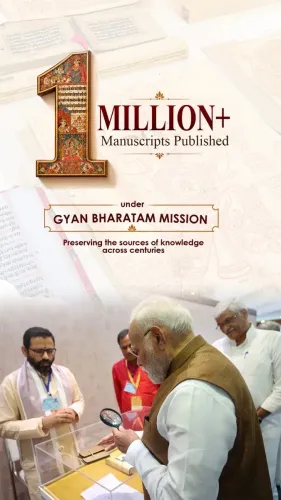
The initiative is run by the Ministry of Culture, Government of India , under PM Narendra Modi , and aims to preserve, digitise, and disseminate India's manuscript heritage.
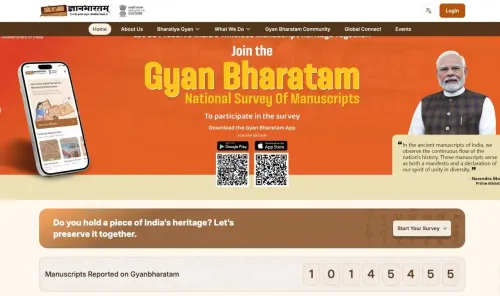
Citizens, temples, monasteries, ashrams, and institutions holding manuscripts older than 75 years are urged to register on the Gyan Bharatam App or at gyanbharatam.com .
The programme continues the lineage of the National Mission for Manuscripts launched in 2003 , adding a digital citizen-participation layer.
Maharashtra is identified as a state with a particularly rich manuscript legacy spanning over a thousand years of cultural and intellectual history.
State-level registration numbers and the operational rollout of the app will be key indicators of the programme's early impact.
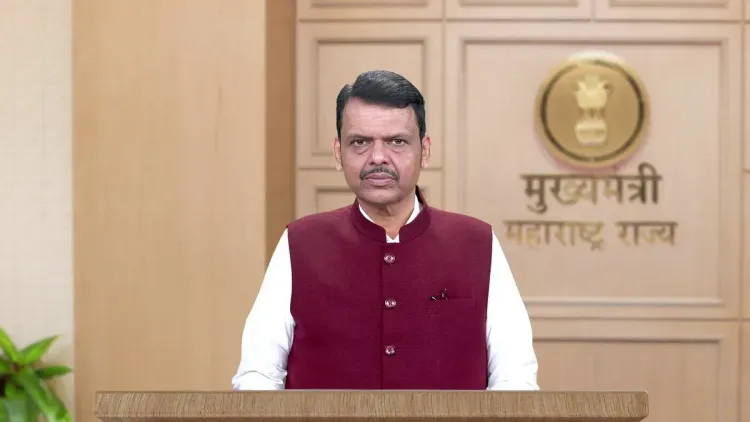
Maharashtra Chief Minister Devendra Fadnavis on Wednesday, 8 July 2026, publicly endorsed the Gyan Bharatam — National Survey of Manuscripts, urging citizens across the state to register manuscripts older than 75 years on the dedicated app and portal. The appeal, issued in both English and Marathi, positions Maharashtra as a key participant in the Ministry of Culture, Government of India's national heritage digitisation drive launched under Prime Minister Narendra Modi.
Context
In his post, Fadnavis described Maharashtra as 'a land of profound wisdom, holding a glorious thousand-year cultural and historical legacy preserved through its rare manuscripts.' He called on individuals, as well as institutions such as मठ, मंदिरे, आश्रम (monasteries, temples, and ashrams), to come forward and log their manuscript holdings. The Marathi portion of the post summarises the mission's purpose as 'जतन ज्ञानसंपदेचे, संवर्धन भारतीय संस्कृतीचे' — 'preserving the wealth of knowledge, nurturing Indian culture.'
The appeal covers handwritten books, pothi (palm-leaf or cloth scrolls), and rare texts held in private or institutional collections. Citizens can register manuscript details at gyanbharatam.com or through the Gyan Bharatam App.
Policy backdrop
The Gyan Bharatam initiative is anchored in a long-standing central government commitment to manuscript conservation. The Ministry of Culture had earlier launched the National Mission for Manuscripts in 2003, which aimed to survey, conserve, and digitise India's vast written heritage. The current programme continues that lineage, adding a citizen-participation layer through a dedicated digital platform.
The broader policy thrust — integrating traditional knowledge systems with modern technology — has been a recurring theme in cultural governance under the Modi government. By extending the survey to individual households and community institutions, the initiative moves beyond archival repositories to tap decentralised, privately held manuscript wealth.
Stakeholders and impact
Maharashtra is among India's richest repositories of historical manuscripts, spanning Sanskrit, Marathi, Persian, and Modi script texts that document centuries of religious, scientific, and literary thought. Temples, monasteries, ashrams, research institutions, and private collectors stand as the primary participants whose cooperation will determine the survey's reach within the state.
Historians and academic researchers stand to benefit significantly, as a centralised, digitised catalogue would make previously inaccessible manuscripts available for scholarly study. For manuscript custodians, participation offers formal documentation and, potentially, conservation support under the national framework.
What's next
The immediate focus will be on registration numbers from Maharashtra as state-level outreach drives begin following the Chief Minister's public endorsement. The operational rollout of the Gyan Bharatam App and portal will be critical to converting public awareness into active participation.
If Maharashtra's response is substantial, it could serve as a model for other manuscript-rich states, reinforcing the Centre's goal of building a comprehensive national inventory of India's written heritage. The scale of citizen participation will be the defining metric for the programme's early success.
Point of View
Reinforcing the BJP's consistent framing of heritage preservation as a governance priority. By specifically invoking Maharashtra's 'thousand-year' intellectual legacy, he tailors a national scheme to a regional identity, a tactic that serves both cultural outreach and political consolidation in a state where the party holds power. The citizen-participation architecture of the scheme — routing individuals, temples, and ashrams through a digital platform — also signals an attempt to democratise heritage documentation beyond elite archival institutions. Whether the app's operational readiness and grassroots awareness match the political momentum will ultimately determine if the initiative moves beyond symbolism.
NationPress
6 Oct 2026
Frequently Asked Questions
What is Gyan Bharatam and who launched it?
Gyan Bharatam — National Survey of Manuscripts is an initiative by the Ministry of Culture, Government of India , launched under Prime Minister Narendra Modi , to survey, digitise, and disseminate India's ancient manuscript heritage.
How can I register my manuscript under Gyan Bharatam?
You can register manuscript details on the Gyan Bharatam App or the official website at gyanbharatam.com . The process is open to individuals, temples, monasteries, ashrams, and institutions holding manuscripts more than 75 years old .
What types of manuscripts are covered under this survey?
The survey covers handwritten books, pothi (traditional scrolls), and rare texts that are more than 75 years old , whether held in personal collections or by institutions such as temples, ashrams, and monasteries.
Why is Maharashtra important for the Gyan Bharatam manuscript survey?
Maharashtra holds an extensive collection of rare manuscripts in Sanskrit, Marathi, Persian, and Modi script, representing centuries of religious, literary, and scientific knowledge, making it one of India's most significant manuscript-rich states.
What is the history behind India's national manuscript preservation efforts?
India's formal manuscript preservation effort began with the National Mission for Manuscripts in 2003 , launched by the Ministry of Culture to survey, conserve, and digitise the country's written heritage. Gyan Bharatam builds on that mission with a citizen-participation digital platform.