CM Sai Reviews 150-Year-Old Manuscripts in Kondagaon
Synopsis
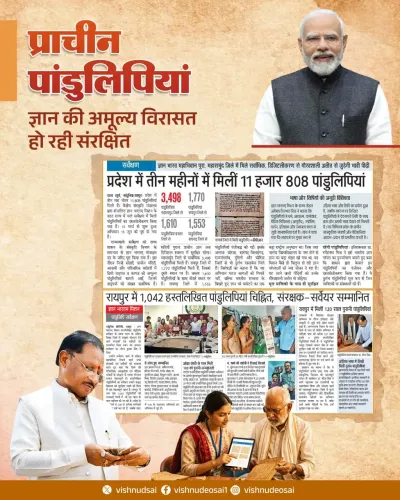
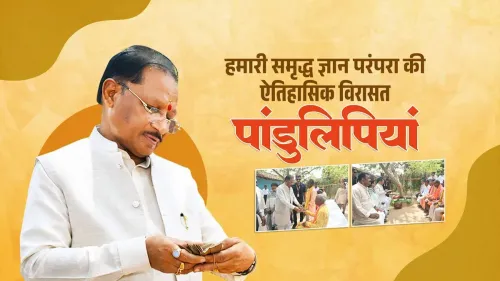
Chief Minister Vishnu Deo Sai visited village Badekanera in Kondagaon district on 1 June 2026 to review eight privately held manuscripts nearly 150 years old, surfaced under the Gyan Bharatam Abhiyan. The texts include genealogical records, almanacs, and ancient scriptures preserved across generations by local families.
Key Takeaways
CM Vishnu Deo Sai personally examined eight rare manuscripts estimated to be nearly 150 years old at village Badekanera, Kondagaon on 1 June 2026 .
The manuscripts — including panji , puran , and panchang — have been preserved within local families since the time of their grandparents and great-grandparents.
The visit was conducted under the Gyan Bharatam Abhiyan , Chhattisgarh's state campaign to locate and protect privately held ancient texts.
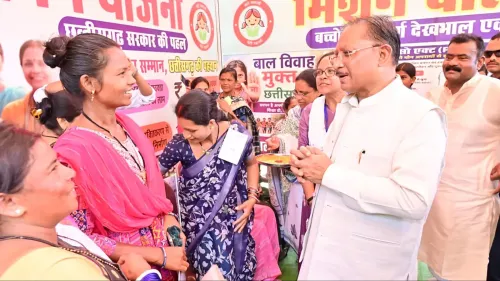
The exercise was part of the broader Sushasan Tihar 2026 (Good Governance Festival) outreach programme.
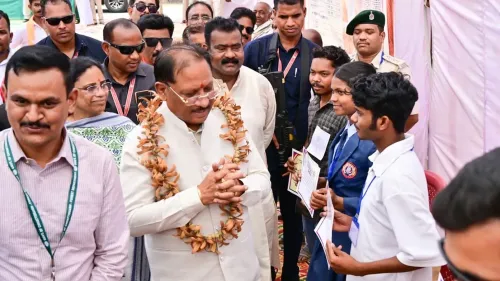
Five community members shared the history and significance of the manuscripts directly with the Chief Minister.
No formal conservation or digitisation announcement has been made yet for the Kondagaon collection.
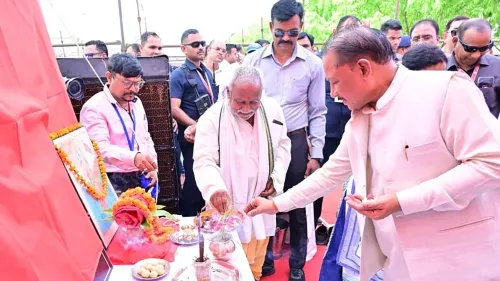
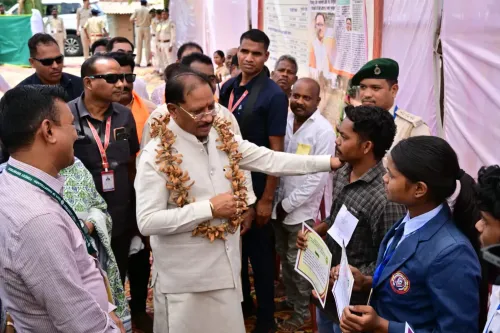
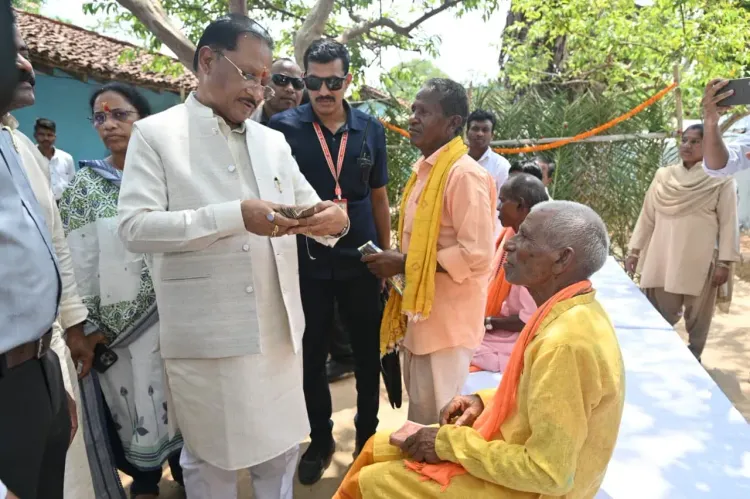
The Chief Minister's Office of Chhattisgarh announced on Monday, 1 June 2026 that Chief Minister Vishnu Deo Sai visited village Badekanera, Kondagaon district, where he examined eight rare manuscripts estimated to be nearly 150 years old — texts that have remained in private family custody across generations.
Context
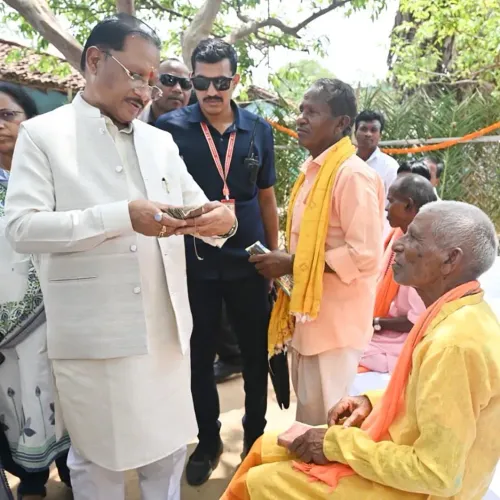
During the visit, CM Sai personally reviewed the manuscripts and spoke with village resident Ramuram Yadav about their history, preservation, and significance. Community members — Hardu Kashyap, Parameshwar Manikpuri, Trilokhan Manikpuri, Pursoti Ram Maurya, and Chamru Nag — told the Chief Minister that these texts have been safeguarded within their families since the time of their grandparents and great-grandparents.
The manuscripts include panji (genealogical records), puran (ancient scriptures), panchang (almanacs), and other classical texts. In his address, CM Sai praised the families, saying, 'Preserving one's roots and history is the greatest gift for future generations.'
Policy Backdrop
The discovery and review of these manuscripts took place under the Gyan Bharatam Abhiyan, a state-level campaign in Chhattisgarh focused on locating, documenting, and protecting ancient manuscripts and traditional knowledge texts held privately by communities. The campaign reflects a broader effort to surface heritage materials that have never entered formal archival systems.
At the national level, India's National Mission for Manuscripts, launched in 2003, has provided a policy framework for surveying, conserving, and digitising handwritten texts across states. Chhattisgarh's state-level drive builds on this lineage, directing attention toward rural and tribal districts where scribal traditions have persisted outside institutional knowledge.
The visit was conducted under the #SushasanTihar2026 (Good Governance Festival 2026) banner — a periodic outreach initiative that combines public administration engagement with cultural documentation in villages.
Stakeholders and Impact
Kondagaon district, situated in the Bastar division of Chhattisgarh, is home to a dense concentration of tribal communities and has long been associated with preserved indigenous cultural artefacts. The eight manuscripts surfaced in Badekanera represent the kind of privately held heritage that formal conservation drives rarely reach without direct community engagement.
For the families involved, the Chief Minister's visit represents formal state recognition of their role as custodians of living heritage. Heritage researchers and archivists stand to benefit if the state follows through with cataloguing or digitisation of the finds.
What's Next
The state government has not yet announced specific steps for the conservation or digitisation of the Kondagaon manuscripts, but the Gyan Bharatam Abhiyan framework opens pathways for cataloguing grants, professional conservation support, or eventual transfer to district or state archives. If the government moves to formally document these texts, the Badekanera collection could serve as a model for similar community-held repositories across Chhattisgarh's tribal belt — and a test case for how state heritage policy translates from announcement to archival action.
Frequently Asked Questions
What is the Gyan Bharatam Abhiyan in Chhattisgarh?
The Gyan Bharatam Abhiyan is a state government campaign in Chhattisgarh designed to locate, document, and conserve ancient manuscripts and traditional knowledge texts that are held privately by families and communities, rather than in formal archives or libraries.
Where is Badekanera village located?
Badekanera is a village in Kondagaon district , which falls within the Bastar division of Chhattisgarh, a region known for its tribal communities and indigenous cultural heritage.
What types of manuscripts were found in Kondagaon?
The eight manuscripts reviewed by CM Sai include panji (genealogical records), puran (ancient scriptures), panchang (almanacs), and other classical texts, all estimated to be nearly 150 years old .
What is Sushasan Tihar 2026?
Sushasan Tihar, or Good Governance Festival, is a periodic outreach initiative of the Chhattisgarh government that combines direct public administration engagement with cultural and community activities across villages in the state.
Will the Kondagaon manuscripts be digitised or moved to an archive?
As of 1 June 2026 , no formal announcement has been made regarding digitisation, conservation grants, or archival transfer for the Badekanera manuscripts. The Gyan Bharatam Abhiyan framework does provide pathways for such steps.