CM Sai Views 150-Year-Old Odia Manuscripts in Kondagaon
Synopsis
Chhattisgarh CM Vishnu Deo Sai on June 1, 2026 examined 150-year-old Odia-language manuscripts in Kondagaon's Badekaner village, praising a four-generation custodian family and calling for preservation of such heritage under the Sushasan Tihar 2026 programme.
Key Takeaways
CM Vishnu Deo Sai visited village Badekaner, Kondagaon district on June 1, 2026 and examined ancient manuscripts.
The manuscripts are approximately 150 years old and written in the Odia language .
The collection includes Panji, Purana and Panchang texts representing genealogical, religious and almanac traditions.
A single family has preserved the manuscripts across four generations , without formal institutional support.
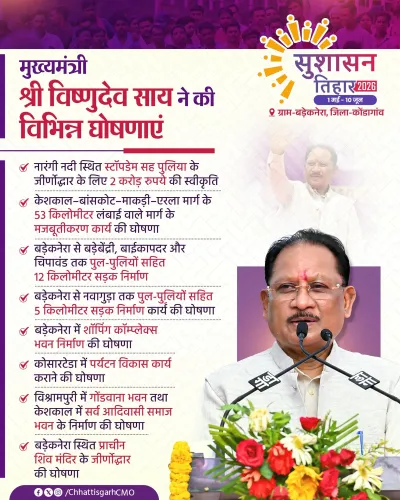
The visit was conducted under the state government's Sushasan Tihar 2026 outreach programme.
Odia was recognised as a classical language by the Government of India in 2014 , lending policy weight to such preservation efforts.
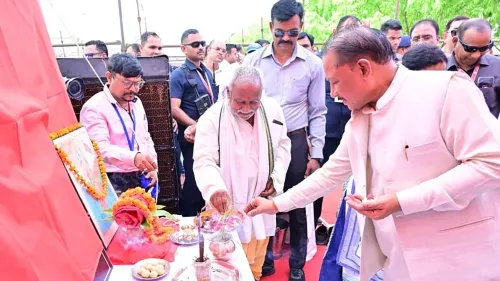
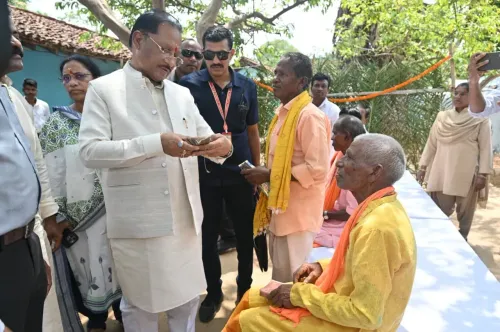
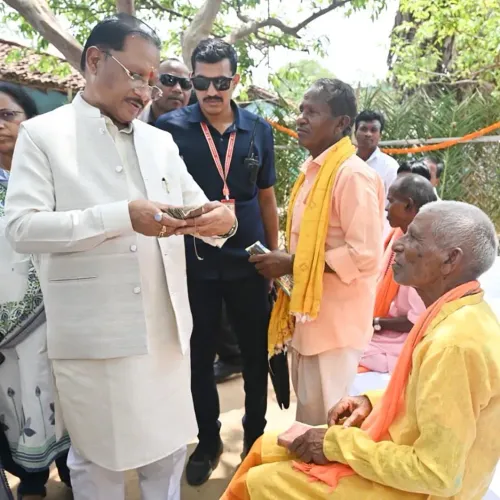
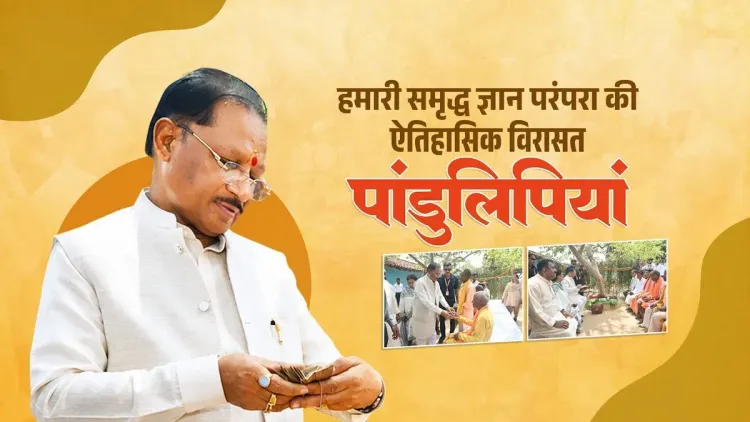
Chhattisgarh Chief Minister Vishnu Deo Sai on Monday, June 1, 2026, visited village Badekaner in Kondagaon district and personally examined ancient manuscripts written in the Odia language, estimated to be approximately 150 years old. The Chief Minister described the manuscripts as a remarkable window into India's civilisational heritage and praised the custodian family that has preserved them across four generations.
Context
Posting on X, CM Sai wrote that the rare manuscripts offered 'samridh sanskriti, sabhyata, gyan parampara aur sanskritik chetna ki adbhut jhalak' — 'a remarkable glimpse of India's rich culture, civilisation, knowledge tradition and cultural consciousness.' He noted that the collections include Panji, Purana and Panchang texts, which together represent the intellectual and ritual heritage of the region's ancestors. The visit was conducted under the banner of the state government's outreach programme #SushasanTihar2026.
The Chief Minister specifically honoured the custodians, calling them 'sachche samvahak' — 'true carriers' — of historical heritage and cultural memory. The acknowledgement of a family preserving such materials across four successive generations underscores the role private custodians play in safeguarding documentary heritage that formal institutions have not yet catalogued.
Policy Backdrop
The visit connects to a long-standing national framework for manuscript conservation. The National Mission for Manuscripts, launched by the Ministry of Culture in 2003, was designed to survey, document and conserve ancient manuscripts across India, with particular attention to private family collections that often hold materials unavailable in public archives. Odia was accorded classical language status by the Government of India in 2014, which brought renewed scholarly and institutional attention to the Odia textual tradition, including manuscripts held in neighbouring states such as Chhattisgarh.
Chhattisgarh's tribal belt, which includes Kondagaon district, has historically been home to communities with deep cultural ties to Odia literary and religious traditions. The presence of Panji genealogical records, Puranic texts and Panchang almanacs in a single private collection points to a layered archival tradition that predates formal state record-keeping in the region.
Stakeholders and Impact
The most immediate stakeholders are the custodian family in Badekaner and the wider community of cultural researchers, archivists and tribal heritage advocates working in Chhattisgarh and Odisha. A chief ministerial visit of this nature typically raises the profile of such collections and can accelerate access to state or central conservation funding. Local manuscript custodians across the region may also be encouraged to bring similar materials to official notice.
For the BJP-led state government, the visit reinforces a governance narrative that links administrative outreach — represented by Sushasan Tihar — with cultural stewardship. The programme, which translates roughly as 'Good Governance Festival', frames field visits by senior officials as a mechanism for direct public engagement alongside policy delivery.
What's Next
Attention will now turn to whether the state government follows the visit with concrete conservation measures, such as digitisation support, formal documentation under the National Mission for Manuscripts framework, or inclusion of the Badekaner collection in a proposed heritage inventory. Similar chief-ministerial visits in other states have preceded announcements on state-funded digitisation drives and district-level manuscript repositories.
The next round of Sushasan Tihar 2026 events will also be watched for further cultural heritage components, as the programme appears to be expanding its scope beyond governance review to include field-level engagement with living heritage traditions across Chhattisgarh's diverse districts.
Point of View
A combination the BJP has deployed effectively in other states to consolidate both governance credibility and civilisational identity politics. The Sushasan Tihar framing is significant: it positions what might otherwise be a ceremonial cultural stop as an act of responsive governance. With Odia having classical language status since 2014, spotlighting Odia manuscripts in Chhattisgarh also subtly reinforces cross-state cultural linkages that carry electoral resonance in border constituencies. The real policy test will come in whether this visit translates into funded digitisation or formal archival action, or remains a well-photographed gesture.
NationPress
21 Oct 2026
Frequently Asked Questions
What manuscripts did CM Vishnu Deo Sai see in Kondagaon?
CM Sai examined approximately 150-year-old manuscripts written in the Odia language in Badekaner village, Kondagaon district, on June 1, 2026. The collection includes Panji genealogical records, Puranic texts and Panchang almanacs preserved by a single family across four generations.
What is Sushasan Tihar 2026?
Sushasan Tihar, which translates as 'Good Governance Festival', is a Chhattisgarh government outreach programme in which senior officials conduct field visits for governance review and direct public interaction. The 2026 edition has included cultural heritage engagements alongside administrative activities.
Why are Odia manuscripts significant in Chhattisgarh?
Kondagaon and surrounding districts in Chhattisgarh have historically maintained cultural and linguistic ties with Odisha. The Government of India granted Odia classical language status in 2014, increasing institutional attention to Odia textual traditions, including manuscripts held in private collections in neighbouring states.
What is the National Mission for Manuscripts?
The National Mission for Manuscripts is a Government of India scheme launched in 2003 under the Ministry of Culture to survey, document and conserve ancient manuscripts across the country, with a focus on private and community collections that hold materials not yet in public archives.
Will the Kondagaon manuscripts be digitised?
No official announcement on digitisation or formal conservation of the Badekaner manuscripts has been made following CM Sai's visit. Observers are watching for any follow-up state or central government action, such as inclusion in the National Mission for Manuscripts framework or a state-funded digitisation drive.