Shekhawat Credits PM Modi for Surge in Antiquities Repatriation
Synopsis
Union Culture and Tourism Minister Gajendra Singh Shekhawat credited Prime Minister Narendra Modi for the large-scale return of Indian antiquities from abroad, calling him the first PM to pursue the issue with seriousness. He linked the effort to public sentiment and shared a Hindi-daily interview on contemporary cultural themes.
Key Takeaways
Shekhawat posted on 3 June 2026 praising PM Modi for driving antiquities repatriation.
He called Modi the first Prime Minister to pursue the issue with seriousness.
India set up a dedicated Cell for Repatriation of Indian Antiquities in 2014 .
More than 300 artefacts were secured between 2015 and 2023 , largely from the US and Australia.
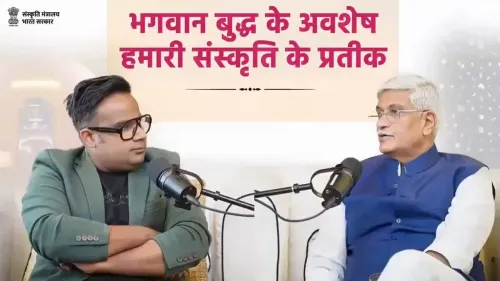
The minister also flagged a Hindi-daily interview on contemporary cultural issues.
Repatriation rests on India's 1976 ratification of the 1970 UNESCO Convention .
Union Culture and Tourism Minister Gajendra Singh Shekhawat on 3 June 2026 credited Prime Minister Narendra Modi with driving the large-scale return of Indian antiquities from abroad, calling it a result of the Prime Minister's personal attachment to the motherland and his reading of public sentiment. In a post on X, the minister also shared an interview he gave to a leading Hindi daily on contemporary cultural issues.
Translating the core of his post, Shekhawat wrote that 'the return to India of such a large number of heritage objects that anchor our eternal identity is the result of Modiji's understanding of public sentiment and his own profound attachment to the motherland.' He added that Modi is 'the first Prime Minister to have thought so seriously about this subject and made determined efforts', arguing that earlier governments of other parties 'had no concern' for these artefacts and ignored the great Indian past linked to them.
Context
The minister's remarks tie into a sustained government messaging push around the recovery of idols, sculptures and manuscripts taken out of India over the colonial and post-Independence decades. Shekhawat, a senior Bharatiya Janata Party leader and Lok Sabha MP from Jodhpur, holds the combined Culture and Tourism portfolios at the Centre.
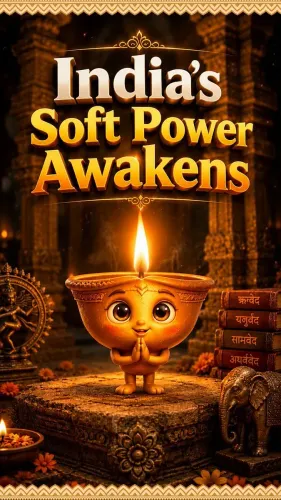
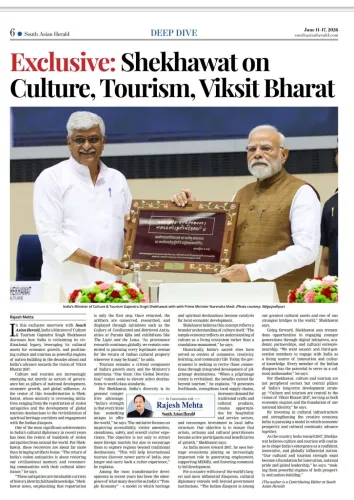
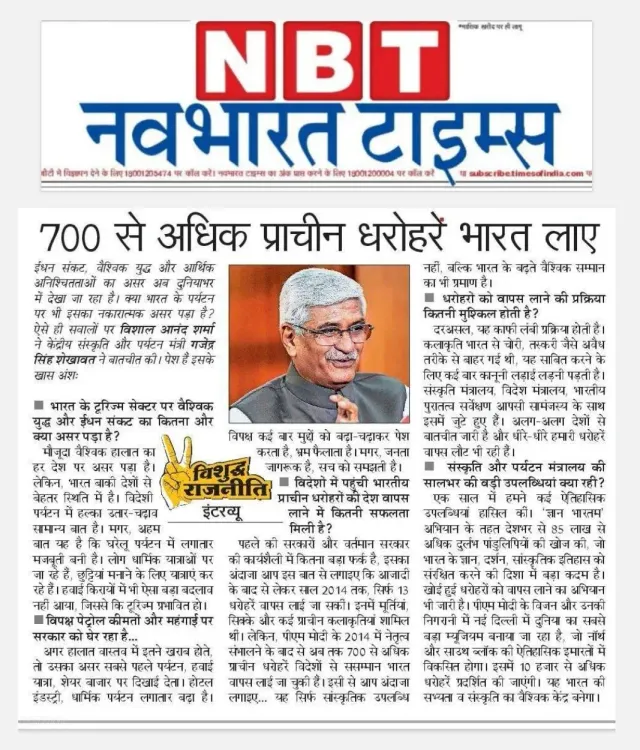
His post tags the Prime Minister's Office, the Ministry of Culture and the Ministry of Tourism, signalling a coordinated communication around heritage diplomacy. The accompanying image points readers to a longer print interview in a popular Hindi daily on current cultural affairs.
Policy backdrop
India ratified the 1970 UNESCO Convention on the means of prohibiting illicit import, export and transfer of ownership of cultural property in 1976, providing the legal scaffolding for repatriation claims. In 2014, the Ministry of Culture set up a dedicated Cell for Repatriation of Indian Antiquities to coordinate with foreign governments, museums and auction houses.
Between 2015 and 2023, the Government of India secured the return of more than 300 artefacts through diplomatic channels and court proceedings, most notably from the United States and Australia. Bilateral cultural property agreements signed during Prime Minister Modi's visits abroad have been a recurring vehicle for these handovers.
Stakeholders and impact
The repatriation programme involves a wide ecosystem: the Archaeological Survey of India, the National Museum, state archaeology departments, heritage lawyers, and overseas Indian missions. Independent provenance researchers and museum authorities abroad have also been central to identifying contested objects.
For temple trusts and local communities, the return of presiding deities and ritual objects carries religious as well as civilisational weight. Shekhawat's framing positions the issue as a marker of shashwat pehchaan (eternal identity), aligning cultural recovery with a broader narrative of post-colonial assertion that successive governments have pursued, though at varying pace.
What's next
Parliamentary questions on the status of pending repatriation cases are expected during the forthcoming Monsoon Session, alongside scrutiny of fresh bilateral agreements that may be announced at upcoming UNESCO and G20 culture ministerial meetings. The Ministry of Culture is also expected to publish updated figures on artefacts received since 2023.
Shekhawat's intervention, paired with a long-form Hindi interview, suggests the government intends to keep heritage recovery high in its public messaging through the year, linking cultural diplomacy to its wider claim on stewardship of India's civilisational legacy.
Point of View
Folding heritage recovery into the ruling party's larger civilisational narrative. By contrasting the present government's record with that of 'other parties', he frames repatriation as a partisan achievement rather than a continuum of Indian cultural diplomacy that began with the 1976 UNESCO ratification. The pairing with a Hindi-daily interview signals a deliberate push into the Hindi-belt cultural conversation. Expect this messaging to intensify ahead of the next round of UNESCO and G20 culture engagements.
NationPress
18 Oct 2026
Frequently Asked Questions
What did Gajendra Singh Shekhawat say about PM Modi?
He credited Prime Minister Narendra Modi with the large-scale return of Indian heritage objects from abroad, calling him the first PM to pursue the issue seriously and linking it to Modi's attachment to the motherland and reading of public sentiment.
How many antiquities has India brought back?
The Government of India secured the return of more than 300 artefacts between 2015 and 2023 through diplomatic channels and court proceedings, primarily from the United States and Australia.
Which ministry handles antiquities repatriation in India?
The Ministry of Culture coordinates antiquities repatriation through a dedicated Cell for Repatriation of Indian Antiquities established in 2014, working with the Archaeological Survey of India and Indian missions abroad.
What is the legal basis for India's repatriation claims?
India's claims rest largely on the 1970 UNESCO Convention on the means of prohibiting illicit import, export and transfer of ownership of cultural property, which India ratified in 1976, supplemented by bilateral agreements.
Who is Gajendra Singh Shekhawat?
He is the Union Minister of Culture and Tourism, a senior BJP leader and Lok Sabha MP from Jodhpur, Rajasthan, holding both portfolios at the Centre.