Shekhawat: Buddha Relic Return Is Modi's Bhagirath Effort
Synopsis
Union Culture and Tourism Minister Gajendra Singh Shekhawat has attributed the return of Lord Buddha's sacred relics to India to Prime Minister Modi's sustained diplomatic efforts, framing it as a defining achievement in India's Buddhist cultural diplomacy and heritage repatriation agenda.
Key Takeaways
Union Culture and Tourism Minister Gajendra Singh Shekhawat credited PM Modi with securing the return of Lord Buddha's sacred relics to India.
Shekhawat used the phrase 'Bhagirath prayas' — invoking the legendary king who brought the Ganga to earth — to describe the Prime Minister's diplomatic efforts.
The repatriation aligns with India's Buddhist cultural diplomacy framework active since 2014 , including the Swadesh Darshan Buddhist Circuit .
Key pilgrimage sites including Bodh Gaya , Sarnath , and Kushinagar have received infrastructure investment under this policy arc.
India has hosted International Buddhist Conclaves since 2015 to strengthen heritage ties with Buddhist-majority nations across Asia.
The event carries significance for Buddhist pilgrims , the heritage tourism sector, and India's broader soft-power positioning in Asia.
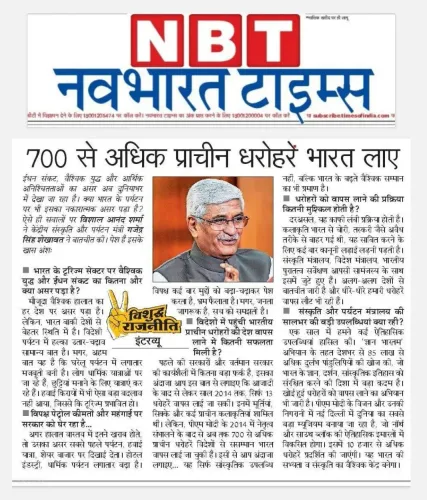
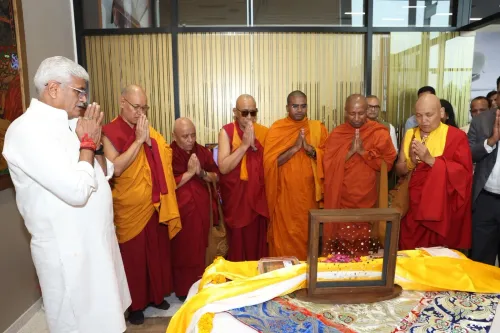
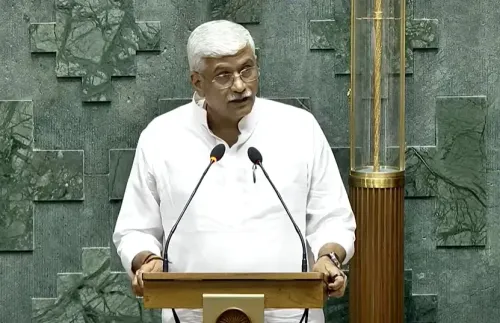
Union Culture and Tourism Minister Gajendra Singh Shekhawat on Tuesday, 9 June 2026 credited Prime Minister Narendra Modi with what he called a 'Bhagirath effort' — a reference to the mythological king who brought the Ganges to earth — for securing the return of sacred relics of Lord Buddha to India, describing the homecoming as a landmark achievement in cultural diplomacy.
Context
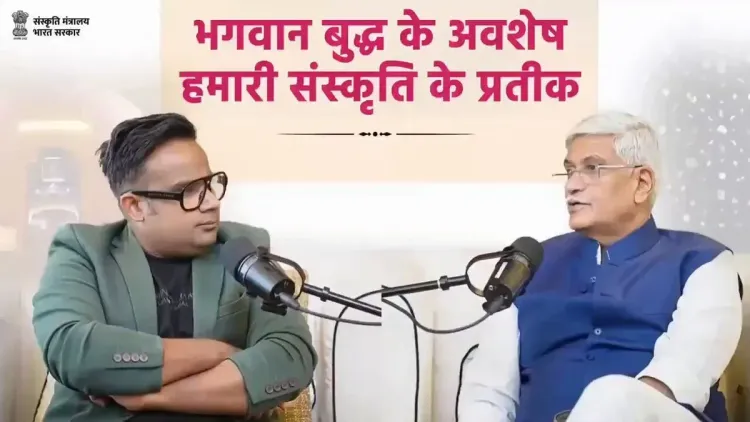
Shekhawat posted on X in Hindi: 'Bhagwan Buddha ke pavitra avasheshon ki Bharat wapasi Modi ji ke Bhagirath prayas ka parinaam hai' — translating to 'The return of the sacred relics of Lord Buddha to India is the result of Modi ji's Bhagirath efforts.' The post was accompanied by a video, underscoring the ceremonial significance the government attaches to the event. The minister's framing positions the relic repatriation not merely as a cultural milestone but as evidence of sustained diplomatic engagement at the highest level.
Policy Backdrop
The return of Buddha's relics fits within a broader pattern of heritage repatriation and Buddhist cultural diplomacy that the Modi government has pursued since 2014. The Swadesh Darshan scheme, launched in 2014-15, included a dedicated Buddhist Circuit for the development of pilgrimage sites including Bodh Gaya, Sarnath, and Kushinagar. India has also hosted a series of International Buddhist Conclaves beginning in 2015, designed to strengthen heritage and people-to-people linkages with Buddhist-majority nations across Asia. These efforts have been consistently framed by the government as restoring India's historical identity as the birthplace of Buddhism.
The use of the phrase 'Bhagirath prayas' — invoking the legendary king Bhagirath whose penance brought the sacred river Ganga to earth — signals the weight the ruling establishment places on this event, equating the Prime Minister's diplomatic persistence with a feat of near-mythological scale.
Stakeholders and Impact
The repatriation of Buddha's relics carries significance for millions of Buddhist pilgrims across India and the wider Asian region, for whom such physical remains represent objects of deep veneration. The heritage tourism sector, particularly operators and infrastructure around the Buddhist Circuit sites, stands to benefit from the heightened attention such an event draws to pilgrimage destinations. For the Ministry of Culture and Tourism, the return reinforces the ministry's positioning of India as the spiritual and cultural heartland of Buddhism — a narrative that supports both inbound tourism and soft-power diplomacy with neighbours such as Sri Lanka, Thailand, Myanmar, and Japan.
The minister's public statement also serves a domestic political function, reinforcing the BJP's cultural-nationalist credentials ahead of any upcoming electoral cycles and consolidating the party's image as a guardian of India's ancient civilisational heritage.
What's Next
Attention will now turn to whether the government convenes a special public display or religious ceremony around the relics, and whether a formal parliamentary statement follows. The next International Buddhist Conclave — a periodic platform the government uses to consolidate Buddhist heritage diplomacy — would be a natural occasion for further announcements on pending repatriation agreements or site development investments. Observers will also watch for any bilateral diplomatic communiqués that detail the source country and terms of the relic's return, which would provide the formal diplomatic context behind Shekhawat's post.
Point of View
A messaging pattern the BJP has consistently deployed to consolidate its civilisational-nationalist brand. The 'Bhagirath prayas' metaphor is carefully chosen: it elevates the Prime Minister's role from statesman to near-mythological restorer of India's sacred heritage. Coming from the Culture and Tourism Minister, the statement also signals that relic repatriation will continue to be weaponised as soft-power currency in India's relationships with Buddhist-majority neighbours. The broader arc — Swadesh Darshan, International Buddhist Conclaves, site upgrades — shows this is not an isolated gesture but part of a long-run strategy to anchor India's regional identity around its Buddhist civilisational legacy.
NationPress
26 Oct 2026
Frequently Asked Questions
What are the sacred relics of Lord Buddha that returned to India?
The sacred relics of Lord Buddha are physical remains — typically bone fragments — venerated by Buddhists worldwide as objects of deep spiritual significance. Their return to India has been described by Culture Minister Gajendra Singh Shekhawat as a result of PM Modi's sustained diplomatic efforts.
What did Gajendra Singh Shekhawat say about Buddha relics?
Minister Shekhawat posted on X that 'the return of the sacred relics of Lord Buddha to India is the result of Modi ji's Bhagirath efforts,' using the mythological reference to underscore the scale of the Prime Minister's diplomatic achievement.
What is India's Buddhist Circuit under Swadesh Darshan?
The Buddhist Circuit is a dedicated theme under the Swadesh Darshan scheme launched in 2014-15, focused on developing pilgrimage and tourism infrastructure at key Buddhist heritage sites including Bodh Gaya, Sarnath, and Kushinagar.
What is the International Buddhist Conclave?
The International Buddhist Conclave is a government-organised platform launched in 2015 that brings together Buddhist leaders, scholars, and dignitaries from across Asia to strengthen India's heritage linkages and promote Buddhist tourism.
Why is Buddha relic repatriation important for India?
Repatriation of Buddha relics reinforces India's identity as the birthplace of Buddhism, supports pilgrimage tourism at sites like Bodh Gaya and Sarnath, and serves as a soft-power tool in India's diplomatic relationships with Buddhist-majority nations in Asia.