Shekhawat highlights India's rising global cultural stature

Synopsis
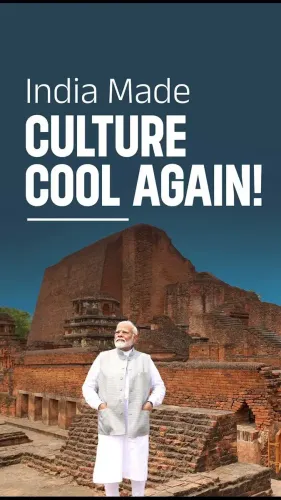
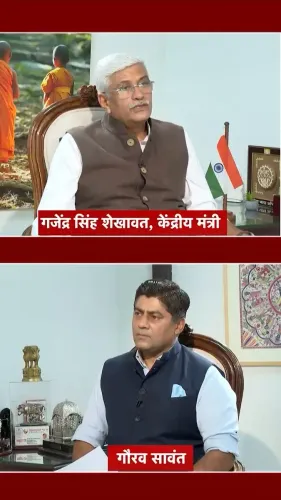
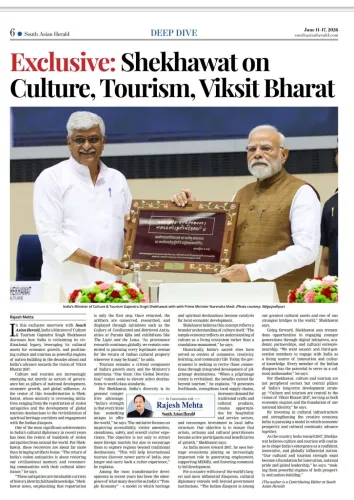
Union Culture and Tourism Minister Gajendra Singh Shekhawat has highlighted India's growing global cultural presence, citing the hosting of the 46th World Heritage Committee, international recognition of Diwali, and the return of Lord Buddha's sacred relics after 127 years as landmark achievements under PM Modi.
Key Takeaways
Minister Gajendra Singh Shekhawat posted on 31 May 2026 citing India's expanding global cultural footprint.
India hosted the 46th World Heritage Committee session, gaining an international platform for heritage diplomacy.
Lord Buddha's sacred relics were returned to India after 127 years , a significant moment for Buddhist communities.
Diwali received international recognition as part of India's intangible cultural heritage promotion.
The government's 'Vikas bhi, Virasat bhi' framework positions cultural conservation and economic development as complementary goals.
Shekhawat described current milestones as 'only the beginning,' signalling further cultural diplomacy initiatives ahead.
Union Culture and Tourism Minister Gajendra Singh Shekhawat on Sunday, 31 May 2026, highlighted what he described as India's expanding cultural presence on the world stage, citing a series of recent diplomatic and heritage milestones achieved under Prime Minister Narendra Modi.
Context
In a post in Hindi on X, Minister Shekhawat wrote: 'अमूल्य विरासतों से वैश्विक पहचान तक; भारत की संस्कृति आज पूरी दुनिया को अपने रंग में रंग रही है' — 'From priceless heritage to global identity; India's culture is today colouring the entire world in its hues.' He credited Prime Minister Modi's leadership for enabling India to present its diverse heritage 'in its true form in a new way.'
The minister pointed to three specific achievements: India hosting the 46th World Heritage Committee session, international recognition of Diwali, and the return of Lord Buddha's sacred relics to India after 127 years. He described these as evidence of India's steadily growing cultural aura on the world stage.
Policy Backdrop
The post reflects a broader policy framework that successive BJP-led governments have pursued — framing cultural heritage as a pillar of soft-power diplomacy. Schemes such as Swadesh Darshan and PRASAD, both launched in 2014-15, were designed to develop thematic heritage tourism circuits and upgrade pilgrimage destinations respectively.
India has also steadily expanded its UNESCO World Heritage footprint, with inscriptions such as the Ramappa Temple in 2021 adding to a growing list. Repatriation of antiquities and relics from overseas collections — a process that gained significant momentum in the early 2020s — has been presented as a reclamation of India's civilisational identity.
The overarching slogan 'Vikas bhi, Virasat bhi' ('Development also, Heritage also') has been consistently deployed to signal that economic progress and cultural conservation are complementary, not competing, national priorities.
Stakeholders and Impact
The milestones cited by Shekhawat carry significance for several constituencies. Buddhist communities across India and the wider Asian region have long awaited the repatriation of sacred relics, and their return after 127 years carries deep religious and symbolic weight. Heritage conservation bodies and archaeologists stand to benefit from elevated international attention to India's tangible and intangible cultural assets.
The tourism industry is a direct beneficiary of this cultural diplomacy push. Greater global visibility for Indian heritage sites and festivals translates into inbound tourist interest, supporting livelihoods across hospitality, transport, and crafts sectors. India's hosting of the 46th World Heritage Committee session also provided an international platform to showcase the country's conservation credentials.
What's Next
Minister Shekhawat closed his post with an aspirational note, stating that India would, through a 'cultural renaissance,' play the role of a 'guru' — a teacher or guide — in making the world 'peaceful, measured, cooperative and warm.' He called this moment merely a beginning: 'Yeh toh shubharambh hai' ('This is only the beginning').
Observers will watch for further UNESCO World Heritage nominations from India, additional artifact repatriation agreements, and the expansion of cultural tourism circuits under existing central schemes. The government's positioning of India as a civilisational anchor in multilateral forums — from UNESCO to the G20 — suggests cultural diplomacy will remain a prominent instrument of foreign and domestic policy in the months ahead.
Point of View
Timed to reinforce the BJP's 'Vishwaguru' narrative ahead of a period of active multilateral engagement. By linking the Buddha relic repatriation, Diwali recognition, and the World Heritage Committee hosting in a single frame, the minister is constructing a coherent civilisational arc rather than presenting isolated events. This approach mirrors the government's G20 presidency playbook, where cultural assertion was woven into every diplomatic touchpoint. The forward-looking 'guru' framing signals that cultural soft power will be a sustained electoral and diplomatic asset, not merely a ceremonial talking point.
NationPress
16 Sept 2026
Frequently Asked Questions
Why did India host the 46th World Heritage Committee session?
India hosted the 46th World Heritage Committee session to showcase its conservation credentials and heritage assets on an international platform, as part of its broader cultural diplomacy push under the Modi government.
When were Lord Buddha's relics returned to India?
Lord Buddha's sacred relics were returned to India after 127 years , a repatriation milestone highlighted by Minister Shekhawat in his post on 31 May 2026 .
What is the significance of Diwali getting international recognition?
The international recognition of Diwali is part of India's efforts to promote its intangible cultural heritage globally, aligning with UNESCO's frameworks for safeguarding living traditions.
What is the 'Vikas bhi, Virasat bhi' policy?
'Vikas bhi, Virasat bhi' — meaning 'Development also, Heritage also' — is a government slogan signalling that economic growth and cultural heritage conservation are treated as complementary, not competing, national priorities.
What are India's main cultural tourism schemes?
India's key cultural tourism schemes include Swadesh Darshan , which develops thematic heritage circuits, and PRASAD , which upgrades pilgrimage and heritage destinations — both launched in 2014-15 .