CM Himanta secures bullet train extension to Guwahati
Synopsis
Assam CM Himanta Biswa Sarma announced the Northern bullet train corridor will now extend to Guwahati instead of ending at Siliguri, promising Delhi–Guwahati travel in under 8 hours after a personal request to Railway Minister Ashwini Vaishnaw.
Key Takeaways
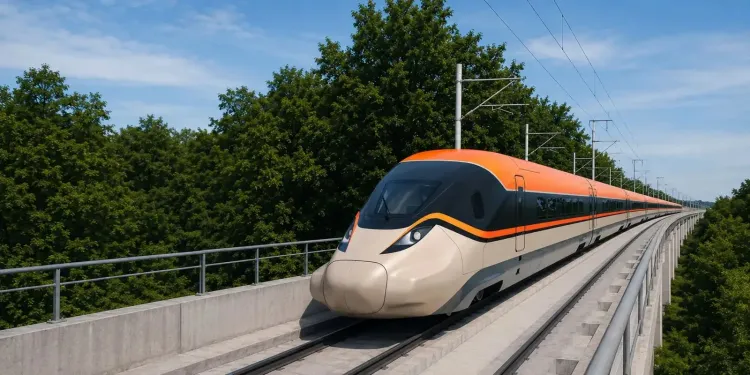
The Northern bullet train corridor has been extended to Guwahati , shifting the terminus from the previously planned Siliguri endpoint.
CM Himanta Biswa Sarma says a written request and a meeting with Railway Minister Ashwini Vaishnaw in July secured the extension.
The corridor will bring Delhi–Guwahati travel time to under 8 hours , offering 'flight-like connectivity' at lower cost.
India's bullet-train programme started with the Mumbai–Ahmedabad corridor in 2015 ; the National Rail Plan 2030 (released 2021) laid out further corridor expansion including eastern India.
Next steps include a detailed project report and land-acquisition and funding announcements from the Ministry of Railways .
Sarma linked the project to Assam's broader pitch to attract high-tech industries to the region.
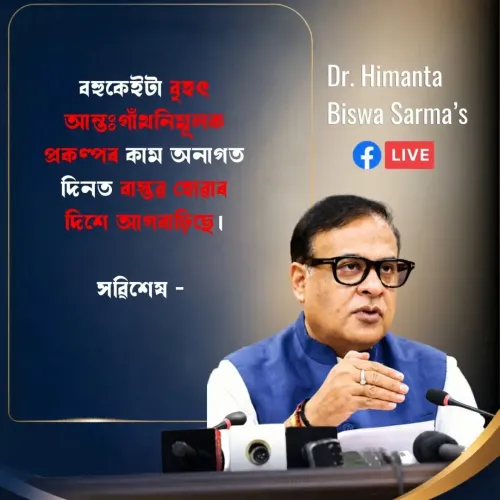
A journey that once took the better part of a day is now on track to shrink to under eight hours. Assam Chief Minister Himanta Biswa Sarma announced on Sunday, November 1, 2026, that the Northern bullet train corridor has been extended to Guwahati — a move he called 'a pivotal moment for East India' — crediting a personal written request and a meeting with the Railway Minister as the turning point.
From Siliguri terminus to Guwahati endpoint — how the extension happened
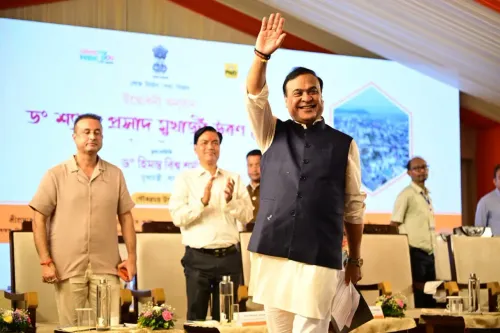
The corridor was originally planned to terminate at Siliguri, the West Bengal rail hub that sits just outside the North-East's gateway. CM Sarma revealed that after submitting a formal written request and meeting Union Railway Minister Ashwini Vaishnaw in July, the minister 'saw merit in our proposal and approved its extension into the North East.' The Chief Minister expressed gratitude to both Prime Minister Narendra Modi and Vaishnaw for greenlighting the change.
The shift from Siliguri to Guwahati may look modest on a map, but it is enormous in consequence — it pulls the region's largest commercial city directly onto India's emerging high-speed network, rather than leaving it a further road or slow-rail leg away from the nearest bullet-train station.
India's high-speed rail arc reaches the North-East
India's bullet-train ambitions began with the Mumbai–Ahmedabad corridor, approved in 2015 as the country's first such project under the Modi government. The National Rail Plan 2030, released in 2021, mapped out further corridors across multiple regions including eastern India. The Guwahati extension is the clearest sign yet that the high-speed network is tracking east and north-east, not simply connecting the country's traditional commercial poles.
The broader pattern is one of state governments actively negotiating with the Railway Ministry — not simply receiving projects from above, but lobbying for regional nodes to be pulled into the network. CM Sarma's account of the July intervention is a textbook case of that dynamic in action.
What 'flight-like connectivity' could mean for Assam's industrial ambitions
Sarma framed the corridor explicitly as an economic accelerant, describing 'fast, affordable flight-like connectivity to Delhi and two state capitals' as capable of opening 'enormous opportunities for businesses and livelihoods' as Assam prepares for a 'new wave of high-tech industries.' The logic is straightforward: time-cost compression at scale makes a region investable in ways that incremental road or conventional rail improvements simply cannot match.
He underlined the psychological shift too. 'A bullet train to Assam once seemed so far-fetched that it never even became a public demand,' he wrote, before adding the Hindi phrase 'Isiliye, Modi kahin nahi jayega!' — 'That is why Modi is not going anywhere!' — a sharp political punctuation mark on a policy announcement.
What comes next for the Guwahati corridor
The immediate next steps will be a detailed project report from the Ministry of Railways, followed by land-acquisition planning and funding announcements for the Guwahati leg. The timelines for those stages will determine how quickly today's approval translates into construction on the ground — and into the sub-eight-hour Delhi–Guwahati journey Sarma has already put on the record.
For a region long accustomed to being at the tail end of national infrastructure timelines, the extension is both a logistical upgrade and a signal: the North-East is no longer an afterthought on India's high-speed map.
Point of View
Landing the corridor is both a concrete development win and a template for the BJP's north-east consolidation story — demonstrating responsiveness at the Centre to regional demands. The move also accelerates the central government's strategic logic of tying the North-East more tightly into the national economic mainstream, reducing the region's geographic isolation through hard infrastructure rather than just policy incentives. Whether the project moves from approval to ground-breaking on a credible timeline will be the real test of that narrative.
NationPress
1 Nov 2026
Frequently Asked Questions
What is the Northern bullet train corridor and where will it now end?
The Northern bullet train corridor is a planned high-speed rail route that was originally set to terminate at Siliguri in West Bengal. Following Assam CM Himanta Biswa Sarma's intervention with Railway Minister Ashwini Vaishnaw, the endpoint has been extended to Guwahati, the largest city in Assam.
How long will it take to travel from Delhi to Guwahati by bullet train?
CM Sarma stated that the bullet train will cover the Delhi–Guwahati route in under 8 hours, compared to the roughly 17-plus hours currently required by conventional express rail services.
How did the Guwahati bullet train extension get approved?
CM Sarma submitted a formal written request and held a meeting with Union Railway Minister Ashwini Vaishnaw in July 2026. Vaishnaw subsequently approved the extension of the corridor to Guwahati.
What is India's history with bullet train projects?
India's first bullet train project, the Mumbai–Ahmedabad high-speed rail corridor, was approved in 2015 under the Modi government. The National Rail Plan 2030, released in 2021, outlined expansion of high-speed corridors to multiple regions including eastern India.
What are the next steps for the Guwahati bullet train project?
The Ministry of Railways is expected to release a detailed project report for the Guwahati extension, followed by land-acquisition planning and formal funding announcements before construction can begin.