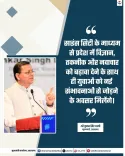
CM Conrad Sangma Thanks PM Modi for Advance Tax Devolution

Synopsis
Meghalaya Chief Minister Conrad Sangma publicly thanked PM Narendra Modi and Finance Minister Nirmala Sitharaman for releasing an advance instalment of tax devolution, calling the move timely support that will help states meet financial commitments and accelerate citizen welfare spending.
Key Takeaways
Meghalaya CM Conrad Sangma thanked PM Narendra Modi and FM Nirmala Sitharaman on 1 November 2026 for releasing an advance instalment of tax devolution to states.
Tax devolution to states is constitutionally mandated under Articles 270 and 280 ; the 15th Finance Commission fixed the states' share at 41 per cent of the divisible pool for 2021–26.
Advance releases are a periodic tool used by the Centre to ease state liquidity stress and enable front-loading of development and welfare spending.
For revenue-constrained states like Meghalaya, central transfers form the backbone of the state budget, making the timing of each release critical.
Sangma's public acknowledgement reflects both gratitude and the institutional diplomacy that defines Centre-state financial relations, especially for smaller Northeast-based parties.
The post-2026 Finance Commission recommendations will be the next major determinant of states' devolution shares.
When the central government releases an advance instalment of tax devolution, states feel it immediately — in cash flows, in contractor payments, in schemes that can finally move. Meghalaya Chief Minister Conrad Sangma publicly acknowledged that shot in the arm on Sunday, 1 November 2026, thanking Prime Minister Narendra Modi and Union Finance Minister Nirmala Sitharaman for the early release.
What the advance instalment actually means for states
Tax devolution is not a favour — it is a constitutional obligation. Under Articles 270 and 280 of the Constitution, the Centre is required to share a portion of its tax revenues with states, with the quantum fixed by successive Finance Commissions. The 15th Finance Commission set that share at 41 per cent of the divisible pool for the period 2021–26. Instalments are typically released on a monthly schedule, but the Centre periodically advances a future tranche when states signal liquidity stress or when development spending needs to be front-loaded.
For smaller, revenue-constrained states like Meghalaya, that timing is everything. The gap between a state's own tax revenues and its expenditure commitments is wide, making each central transfer a direct trigger for on-ground spending — salaries, capital works, welfare transfers. An advance instalment means those commitments do not slip into the next quarter.
Sangma's message and the politics of fiscal federalism
Conrad Sangma, who also serves as national president of the National People's Party, framed the Centre's move in cooperative terms, calling it 'timely support' that will 'strengthen the States' financial position, enable governments to meet their financial commitments and accelerate development initiatives for the welfare of citizens.' He separately acknowledged Finance Minister Nirmala Sitharaman for her 'continued understanding and consideration of the needs and financial requirements of the States.'
The phrasing is deliberate. State chief ministers — particularly those from smaller parties in the Northeast who maintain a working alliance with the ruling coalition at the Centre — routinely use such public acknowledgements both to signal solidarity and to keep the channel open for future financial requests. It is gratitude, yes, but it is also institutional diplomacy.
A routine mechanism with non-routine stakes
Advance devolution releases are not new. Successive central governments have used them as a pressure valve during periods of revenue stress, GST collection volatility, or pre-election spending pushes. What makes each release notable is the timing: an advance released before the fiscal mid-year review signals that the Centre is alive to state cash-flow pressures and willing to act proactively.
For Meghalaya — and by extension, the Northeast more broadly — where central transfers routinely account for the majority of state budgets, the health of this pipeline is not an abstraction. It is the budget itself.
The next test will come in the Union Budget and in any revised terms the incoming Finance Commission sets for the post-2026 devolution cycle. How generously that formula is drawn will define the financial headroom of every state government for the next five years.
Point of View
Thereby reinforcing his alliance credentials while also articulating a legitimate fiscal need. The timing matters: with the 15th Finance Commission's mandate expiring in 2026, states are quietly lobbying for a more generous formula in the next cycle, and every goodwill gesture now is a down payment on that negotiation. Advance devolution releases, while routine in mechanism, carry outsized political weight for smaller, transfer-dependent states in the Northeast. Watching whether other non-BJP chief ministers echo Sangma's tone — or frame the same release as overdue — will reveal the true political temperature of Centre-state fiscal relations heading into the next budget cycle.
NationPress
1 Nov 2026
Frequently Asked Questions
What is tax devolution to states in India?
Tax devolution is the constitutionally mandated sharing of central tax revenues with state governments under Articles 270 and 280 of the Constitution. The Finance Commission periodically determines each state's share; the 15th Finance Commission set it at 41 per cent of the divisible pool for 2021–26.
Why did the Centre release an advance instalment of tax devolution?
The Centre periodically releases advance instalments of tax devolution to ease state liquidity pressures, help governments meet immediate financial commitments, and front-load development and welfare spending. Meghalaya CM Conrad Sangma described this release as 'timely support.'
What is Conrad Sangma's role and party?
Conrad Sangma is the Chief Minister of Meghalaya and the national president of the National People's Party (NPP), a regional party with a significant presence in Northeast India.
How important is central tax devolution for Meghalaya?
Central transfers, including tax devolution and grants, form the dominant share of Meghalaya's state budget. The state's own tax revenues are limited, making timely receipt of central funds critical for salaries, infrastructure, and welfare schemes.
What comes next after the 15th Finance Commission's term ends?
A new Finance Commission will recommend the devolution formula for the post-2026 period. Its recommendations on the percentage share and distribution criteria will set the financial headroom for all state governments for the following five years.