CM Office: Kumbh Mela Prep Accelerates in Haridwar

Synopsis
The Uttarakhand CMO announced that the Mela Adhikari inspected ongoing development works in Haridwar's Pantdweep zone and directed timely completion, signalling an acceleration of Kumbh Mela preparatory infrastructure.
Key Takeaways
The Chief Minister's Office of Uttarakhand confirmed Kumbh Mela preparations have intensified in Haridwar as of November 1, 2026 .
The Mela Adhikari personally inspected ongoing development works in the Pantdweep zone of Haridwar.
Strict directives were issued to ensure all projects in the area are completed on time .
Uttarakhand followed a similar inspection-driven model ahead of the 2010 and 2021 Haridwar Kumbh Melas.
Pantdweep is a critical riverfront zone where temporary and permanent mela facilities are developed to manage pilgrim inflow.
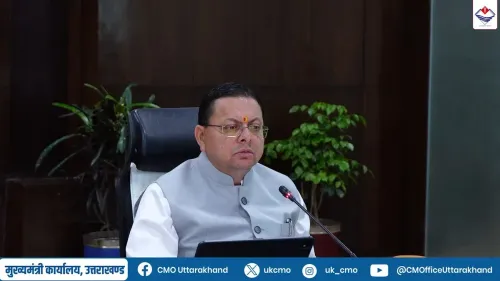
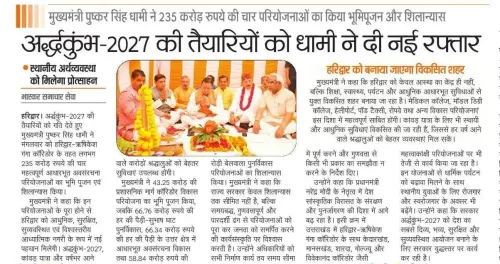
With the Kumbh Mela clock ticking, Haridwar is already in construction mode. The Chief Minister's Office of Uttarakhand announced on Sunday, November 1, 2026, that the Mela Adhikari — the designated administrative officer overseeing ground-level execution — has personally inspected ongoing development works in the Pantdweep zone and issued strict directives to complete them on schedule.
The post, shared in Hindi, states: 'Haridwar mein Kumbh Mela ki taiyariyan tez, Meladhikari ne Pantdweep kshetra mein jaari vikas karyon ka nirikshan kar samay par poora karne ke diye nirdesh' — 'Kumbh Mela preparations intensify in Haridwar; the Mela Adhikari inspected ongoing development works in the Pantdweep area and directed their timely completion.'
What is at stake in Pantdweep
The Pantdweep area sits within Haridwar's riverfront belt — a critical zone for managing the temporary infrastructure that must absorb millions of pilgrims during the mela. State governments have historically treated this zone as a pressure point: ghats, access roads, sanitation facilities, and crowd-management corridors all funnel through it. The Uttarakhand administration followed a similar inspection-and-directive model ahead of both the 2010 and 2021 Haridwar Kumbh Melas, reflecting a repeating cycle of last-mile acceleration.
A pattern Uttarakhand knows well
Haridwar, one of four rotating host cities for the Kumbh Mela alongside Prayagraj, Nashik, and Ujjain, sits on the Ganges and draws some of the largest single-site pilgrim gatherings on earth. Managing that scale demands infrastructure that is both permanent — upgraded ghats and roads — and temporary — pontoon bridges, makeshift camps, field sanitation. The state has consistently ramped up this dual-track build-out in the months preceding each mela cycle, and Sunday's inspection signals that rhythm is now firmly underway again.
The Mela Adhikari's on-site presence matters: it moves accountability from the secretariat to the riverbank, making timeline slippage politically and administratively visible. That is precisely the kind of pressure the state machinery appears to be applying right now.
Point of View
The deadline directive — to signal seriousness to both the public and project contractors. With the Kumbh Mela representing one of the state's biggest reputational and logistical tests, early momentum messaging also serves to pre-empt criticism if timelines slip later. The focus on Pantdweep suggests the riverfront corridor remains the administrative chokepoint it has been in previous cycles, and how quickly works there progress will be the real measure of preparedness.
NationPress
1 Nov 2026
Frequently Asked Questions
When is the next Kumbh Mela in Haridwar?
Haridwar hosts the Kumbh Mela every twelve years. The November 2026 preparations signal the upcoming mela cycle is approaching, though the exact dates have not been officially confirmed in the available information.
What is the Pantdweep area in Haridwar?
Pantdweep is a specific zone within Haridwar's riverfront where temporary and permanent infrastructure — including ghats, roads, and sanitation facilities — is developed ahead of the Kumbh Mela to manage the massive influx of pilgrims.
What does a Mela Adhikari do?
The Mela Adhikari is the designated administrative officer responsible for ground-level execution and oversight of all Kumbh Mela arrangements, from construction supervision to crowd management logistics.
How has Uttarakhand prepared for previous Kumbh Melas in Haridwar?
Uttarakhand carried out extensive infrastructure works including ghat upgrades, road improvements, and sanitation builds ahead of both the 2010 and 2021 Haridwar Kumbh Melas, following a similar inspection-and-directive model.
Why is the Kumbh Mela significant for Haridwar?
Haridwar, one of the four rotating host cities for the Kumbh Mela, sits on the Ganges and draws among the largest single-site pilgrim gatherings on earth, making it a massive logistical, economic, and reputational event for Uttarakhand.