CM Conrad Sangma Disburses CMSDF Grants to Entrepreneurs, Women Groups
Synopsis
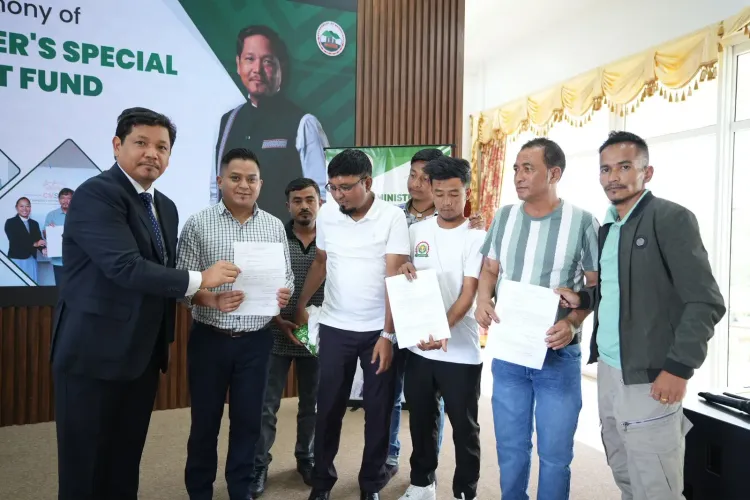
Meghalaya Chief Minister Conrad Sangma disbursed sanctions under the Chief Minister's Special Development Fund (CMSDF) on 1 July 2026, benefiting entrepreneurs, educational institutions, women organisations, and community groups — continuing the NPP government's grassroots welfare delivery approach.
Key Takeaways
Conrad Sangma , Chief Minister of Meghalaya and NPP national president, handed over CMSDF sanctions on 1 July 2026 .
Beneficiaries included entrepreneurs, educational institutions, women organisations, and community members .
The CMSDF is a state discretionary fund used to channel grants directly to grassroots projects in Meghalaya .
The NPP-led government has prioritised CM-level fund disbursements for targeted welfare delivery since 2018 .
Women's organisations are a distinct beneficiary category, reflecting the government's focus on women's economic empowerment.
CMSDF utilisation and audit outcomes are expected to face scrutiny in the next Meghalaya Legislative Assembly session.
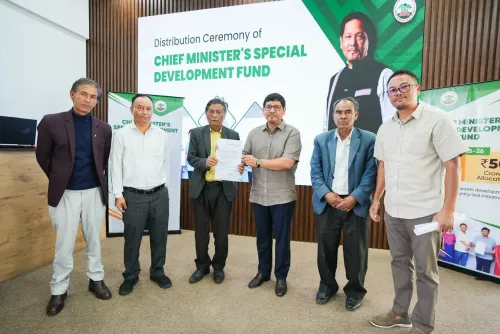
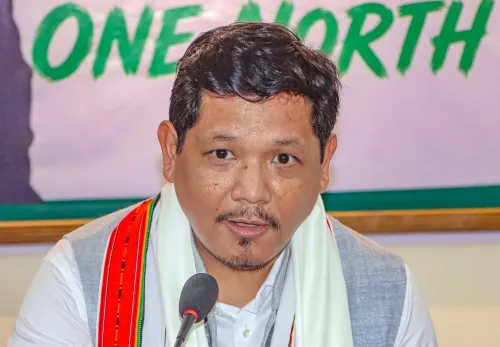
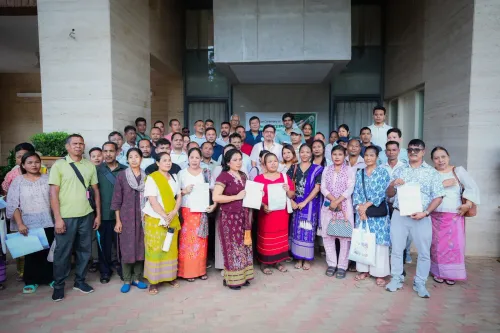
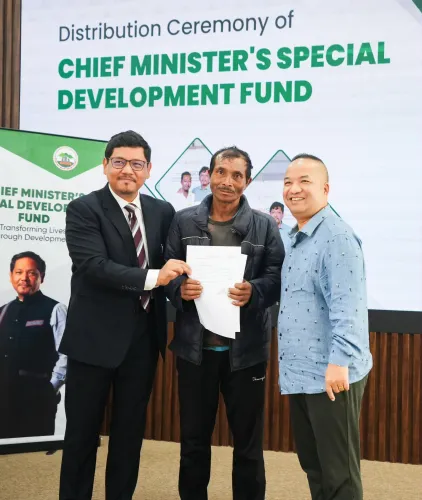
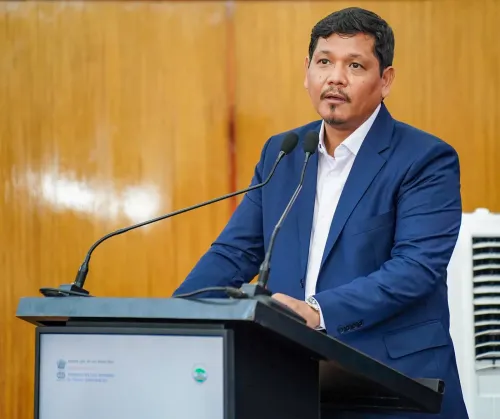
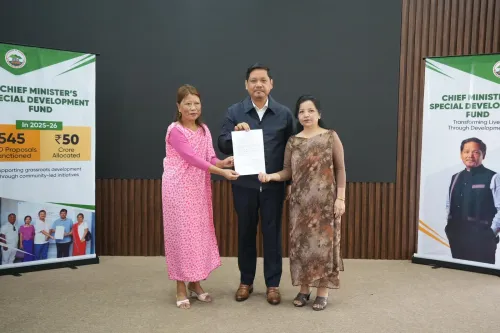
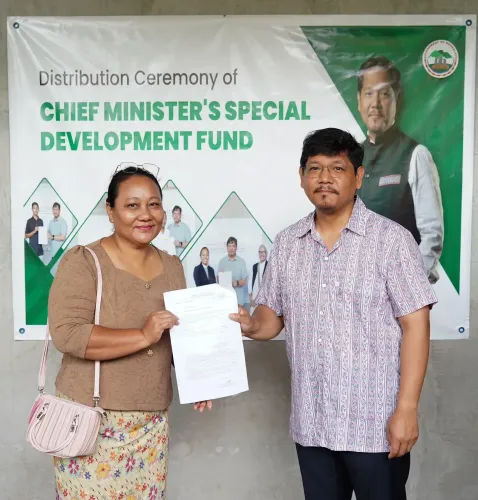
Meghalaya Chief Minister Conrad Sangma on Wednesday, 1 July 2026, handed over sanctions under the Chief Minister's Special Development Fund (CMSDF) to a cross-section of beneficiaries including entrepreneurs, educational institutions, women organisations, and community members.
Context
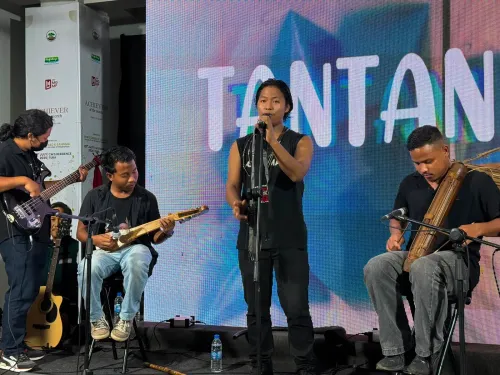
The CMSDF is a state-level discretionary fund that allows the Chief Minister's office to channel grants directly to grassroots projects across Meghalaya. Sangma shared the development on his official X account, accompanied by four photographs from the sanction handover event. The post confirmed that beneficiaries spanned multiple categories — entrepreneurship, education, women's empowerment, and broader community development.
Policy Backdrop
Since forming the National People's Party (NPP)-led coalition government in 2018, Conrad Sangma's administration has consistently used CM-level discretionary funds as a mechanism for targeted, visible welfare delivery at the grassroots. In India's northeastern states, such funds play a particularly significant role in supplementing central government schemes, addressing gaps in infrastructure, education, and women's empowerment where larger programme pipelines may not reach quickly enough. The CMSDF fits this broader pattern of state-driven, community-responsive governance that has been a hallmark of the NPP administration in Shillong.
Across Indian states, Chief Minister-controlled funds have long served as a flexible instrument for direct delivery, enabling swift sanction of grants without the procedural delays associated with larger departmental schemes. The inclusion of women organisations as a distinct beneficiary category reflects the Meghalaya government's stated priority of mainstreaming women in economic and civic life.
Stakeholders and Impact
The beneficiaries of this round of CMSDF sanctions represent four distinct segments: entrepreneurs seeking startup or business expansion support, educational institutions requiring infrastructure or operational funding, women organisations working on livelihood and empowerment programmes, and community members with local development needs. Each category addresses a different dimension of Meghalaya's development agenda. For entrepreneurs, such grants can bridge the gap between a viable idea and access to formal credit, particularly in a state where banking penetration and venture ecosystems remain limited compared to larger metros.
Women's organisations in Meghalaya, many of which operate within the state's matrilineal social structure, have historically been active participants in community governance and economic activity. Direct CMSDF sanctions to such groups reinforce their institutional role and provide resources for programmes that may not qualify under rigid central scheme guidelines.
What's Next
Scrutiny of the CMSDF's utilisation and audit outcomes is expected to feature in the Meghalaya Legislative Assembly's upcoming sessions, where opposition members routinely raise questions about the fund's allocation criteria and beneficiary selection process. Transparency in disbursement records will be key to public accountability. As Conrad Sangma continues his tenure as both Chief Minister and national president of the NPP, the party's governance record in Meghalaya — including the reach and efficiency of schemes like the CMSDF — will carry weight in shaping the party's regional and national profile ahead of future electoral cycles.
Point of View
Reinforcing the NPP's image as a hands-on, community-rooted administration. In the Northeast, where central scheme pipelines can be slow and uneven, CM-level discretionary funds serve both a developmental and an electoral purpose, keeping the ruling party's footprint embedded in local institutions. The inclusion of women organisations is particularly notable in Meghalaya's matrilineal context, signalling that the government is channelling resources through socially influential community structures. As Sangma consolidates the NPP's national ambitions, a visible governance record in Meghalaya — built partly through such direct disbursements — remains his strongest credential.
NationPress
30 Sept 2026
Frequently Asked Questions
What is the Chief Minister's Special Development Fund (CMSDF) in Meghalaya?
The CMSDF is a state-level discretionary fund that allows Meghalaya's Chief Minister to sanction grants directly to local entrepreneurs, educational institutions, women organisations, and community groups for grassroots development projects.
Who received CMSDF sanctions from Conrad Sangma on 1 July 2026?
Beneficiaries included entrepreneurs, educational institutions, women organisations, and community members, as confirmed by Chief Minister Conrad Sangma's post on X on 1 July 2026.
What is Conrad Sangma's role in Meghalaya and the NPP?
Conrad Sangma is the Chief Minister of Meghalaya, serving since 2018, and is also the national president of the National People's Party (NPP), a regional party founded by his father P.A. Sangma.
How does the CMSDF differ from central government schemes in Meghalaya?
Unlike central schemes with rigid eligibility criteria and departmental processes, the CMSDF is a flexible, CM-controlled fund that can be disbursed quickly to fill local development gaps not covered by larger programmes.
Will CMSDF disbursements be audited or reviewed by the Meghalaya assembly?
Yes, CMSDF utilisation and audit outcomes are expected to be raised through questions in the Meghalaya Legislative Assembly, where opposition members routinely seek accountability on the fund's allocation and beneficiary selection.