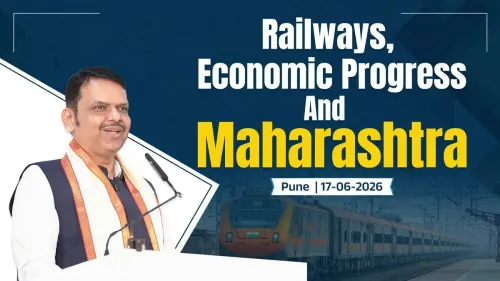
CM Fadnavis calls Pune India's 'Growth Engine'
Synopsis
Chief Minister Devendra Fadnavis has described Pune as India's 'growth engine', with the CMO Maharashtra post tagging Union Minister Nitin Gadkari — signalling coordinated state-Centre focus on connectivity and infrastructure investment in the city.
Key Takeaways
CM Devendra Fadnavis publicly described Pune as the country's 'growth engine' on 19 July 2026 .
The statement was shared by the Chief Minister's Office of Maharashtra on X and tagged Union Minister Nitin Gadkari , indicating Centre-state coordination.
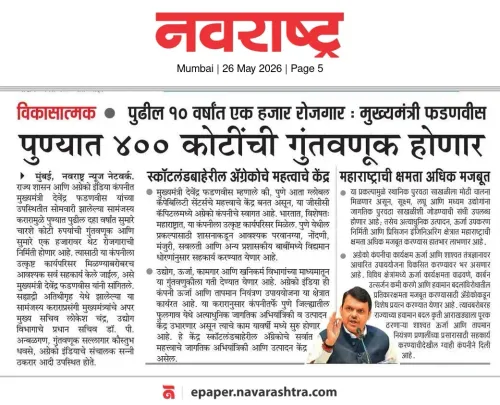
Pune is a major hub for IT, manufacturing, and automobile ancillary industries, making it central to Maharashtra's economic output.
Pending projects including Pune-Mumbai Expressway upgrades and new ring-road phases are key infrastructure items to watch.
Both urban commuters and industrial clusters in areas like Chakan and Talegaon stand to benefit from improved connectivity.
The post continues a pattern of state governments framing high-growth cities as economic multipliers to justify large infrastructure investment.
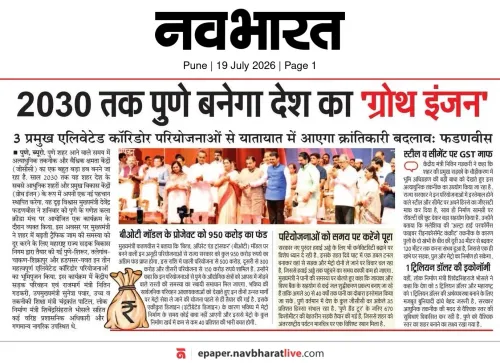
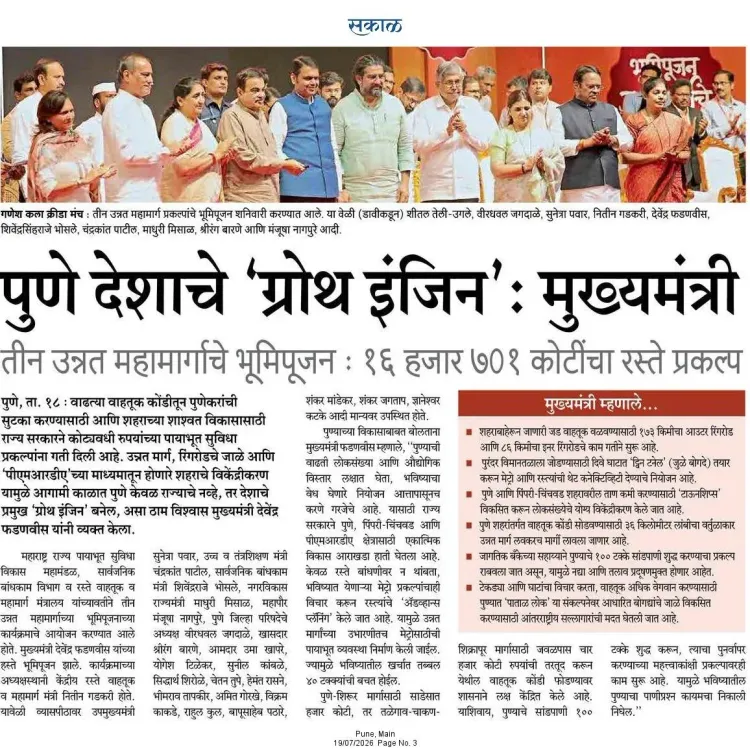
The Chief Minister's Office of Maharashtra on Sunday, 19 July 2026 shared a statement from Chief Minister Devendra Fadnavis describing Pune as the country's 'growth engine', underscoring the state government's focus on positioning the city as a national economic hub through enhanced connectivity.
The post, which tagged Union Minister for Road Transport and Highways Nitin Gadkari, carried the Hindi headline 'Pune deshache growth engine' ('Pune is the country's growth engine'), signalling active coordination between the state government and the Centre on infrastructure priorities for the city.
Context
Pune is Maharashtra's second-largest urban economy and a significant contributor to the state's GDP, anchored by a dense cluster of manufacturing units, information technology parks, and automobile ancillary industries. The city's strategic location between Mumbai and the Deccan plateau has long made it a focal point for logistics and industrial policy in western India.
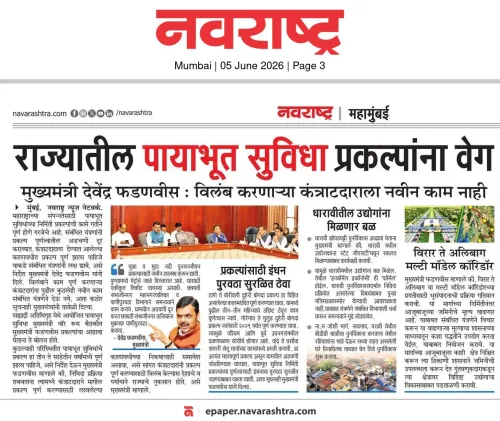
Chief Minister Devendra Fadnavis, who also held the office between 2014 and 2019, has consistently prioritised Pune-centric infrastructure in successive state budgets, including metro rail expansion and road widening projects tied to national highway corridors.
Policy Backdrop
The framing of Pune as a 'growth engine' fits into a broader national pattern in which state governments have sought to present tier-1 and high-growth tier-2 cities as economic multipliers, justifying large-scale investment in road, rail, and logistics infrastructure. Central-state coordination on expressways and logistics parks has been a defining feature of infrastructure policy since the mid-2010s.
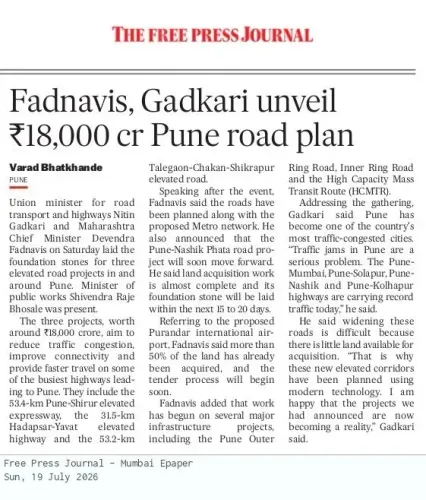
Union Minister Nitin Gadkari's ministry oversees the national highway network that links Pune to Mumbai, Nashik, Solapur, and beyond. The tagging of Gadkari in the post suggests that ongoing or forthcoming connectivity projects may involve joint planning between the Maharashtra government and the Ministry of Road Transport and Highways.
Pending upgrades to the Pune-Mumbai Expressway and new ring-road phases announced in earlier state budgets remain among the most-watched projects for the region.
Stakeholders and Impact
The immediate beneficiaries of improved Pune connectivity include the city's large IT and technology sector, which employs hundreds of thousands of workers and depends on reliable commuter infrastructure. The automobile and manufacturing clusters on Pune's outskirts — in areas such as Chakan and Talegaon — stand to gain from smoother freight logistics tied to upgraded national highway links.
Urban commuters within Pune Metropolitan Region are also key stakeholders, given persistent congestion on arterial roads connecting the city core to its rapidly expanding peripheral townships. Any acceleration of metro or road projects would directly affect daily travel patterns for millions of residents.
What's Next
The public framing of Pune as India's 'growth engine' by CM Fadnavis is likely to be followed by formal announcements or project reviews involving Minister Gadkari's ministry, given the explicit tagging. Observers will watch for specific project timelines, funding allocations, or joint press events that translate this political framing into on-ground infrastructure commitments.
Maharashtra's ability to sustain Pune's economic momentum will hinge on how quickly pending connectivity projects — from ring roads to metro extensions — move from planning to execution, a challenge that has historically tested the state's administrative bandwidth.
Point of View
CM Fadnavis is doing more than making a rhetorical claim — he is signalling an active lobbying posture toward the Centre for highway and logistics funding. This fits a well-established playbook in which state chief ministers use social media to build political momentum for infrastructure asks ahead of formal budget or project-approval cycles. For Fadnavis, Pune is also a politically significant city, and visible infrastructure wins there carry electoral weight. The move reflects the growing importance of digital statecraft as a tool for shaping central government priorities.
NationPress
19 Jul 2026
Frequently Asked Questions
Why did CM Fadnavis call Pune India's growth engine?
CM Devendra Fadnavis used the phrase to highlight Pune's central role in Maharashtra's economy, driven by its IT, manufacturing, and automobile sectors, and to build political momentum for further infrastructure investment in the city.
What is Nitin Gadkari's role in Pune's infrastructure?
As Union Minister for Road Transport and Highways, Nitin Gadkari oversees national highway projects that connect Pune to Mumbai, Nashik, and Solapur. His tagging in the CMO Maharashtra post suggests active Centre-state coordination on connectivity.
What infrastructure projects are planned for Pune?
Key projects include upgrades to the Pune-Mumbai Expressway and new ring-road phases that have been announced in Maharashtra state budgets, though specific timelines remain subject to government confirmation.
How does Pune contribute to Maharashtra's economy?
Pune is Maharashtra's second-largest urban economy, home to major IT parks, automobile manufacturing clusters in areas like Chakan and Talegaon, and a large services sector that together make it a significant driver of state GDP.
What does 'growth engine' mean in the context of Indian infrastructure policy?
State governments use the term to frame high-growth cities as economic multipliers, justifying large-scale investment in roads, metro rail, and logistics infrastructure — often as part of coordinated pitches to the central government for funding.