CM Sukhu flags cooling costs to pitch HP for data centres
Synopsis
Chief Minister Sukhvinder Singh Sukhu has publicly argued that data centres in hot-climate states like Andhra Pradesh face soaring electricity bills due to temperatures reaching 48°C, positioning Himachal Pradesh's natural cooling as a strategic and cost-efficient advantage for India's booming data centre sector.
Key Takeaways
CM Sukhu stated that temperatures in Andhra Pradesh and other hot-climate states already reach 48°C , driving up electricity consumption for data centre cooling.
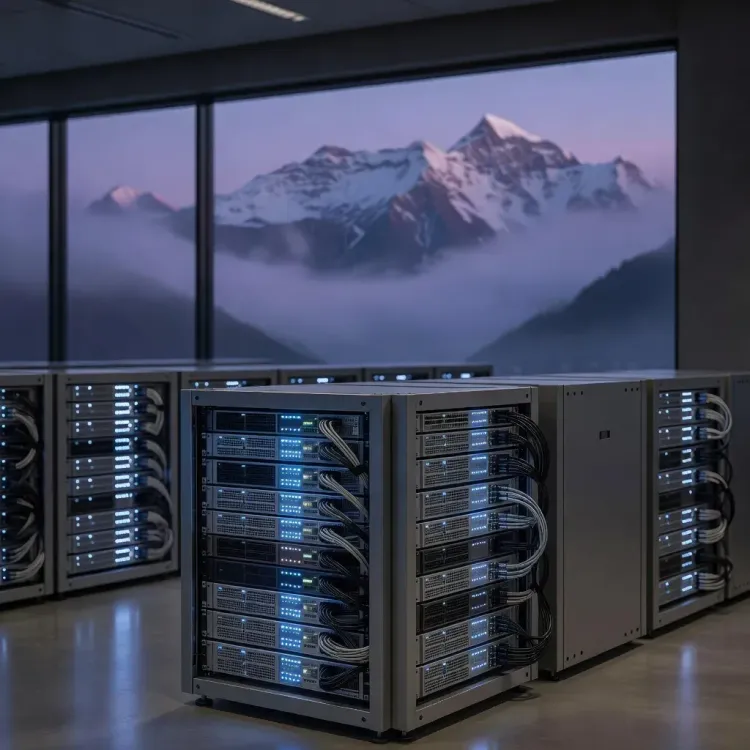
Himachal Pradesh is positioning its naturally cooler, high-altitude climate as a competitive advantage for attracting data centre investments.
Cooling typically accounts for 30 to 40 per cent of total data centre energy use — a figure that rises sharply in high-ambient-temperature locations.
India's data centre sector has grown rapidly due to cloud adoption, AI workloads, and rising digital services demand, intensifying inter-state competition for investments.
The Government of India released a draft Data Centre Policy in 2020 , but detailed energy-efficiency siting norms remain under discussion.
Himachal Pradesh's IT investment policies and any forthcoming central green data centre guidelines will be key to watch in coming fiscal cycles.
The Chief Minister's Office of Himachal Pradesh, citing remarks by Chief Minister Thakur Sukhvinder Singh Sukhu, on Sunday, 19 July 2026, made a pointed case for siting data centres in cooler hill states rather than hot-climate regions, arguing that extreme ambient temperatures drive up electricity consumption substantially.
Context
In the post, CM Sukhu stated: 'यदि आंध्र प्रदेश और अन्य गर्म जलवायु वाले राज्यों में डेटा सेंटर स्थापित किए जाते हैं, तो वहाँ का तापमान पहले से ही 48°C तक रहता है।' ('If data centres are established in Andhra Pradesh and other hot-climate states, temperatures there already reach up to 48°C.'). He added that in such conditions, electricity consumption to maintain lower operating temperatures increases even further. The statement was framed as a reply to the CMO's own handle, suggesting it forms part of a broader public argument being advanced by the Himachal government.
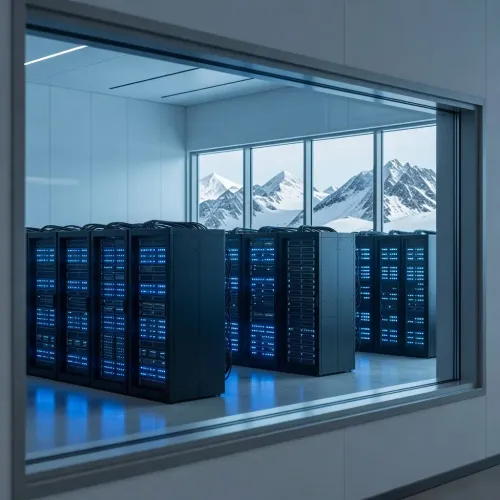
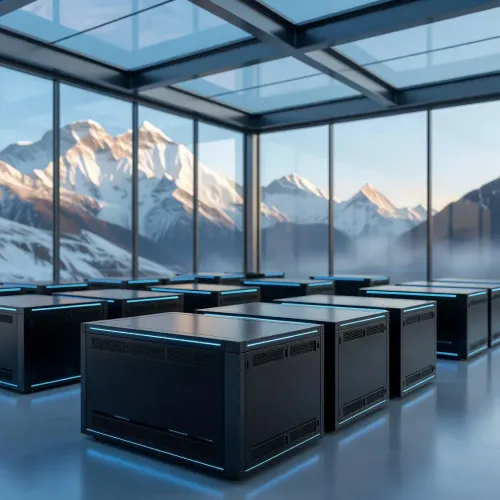
Himachal Pradesh, situated in the western Himalayas, enjoys ambient temperatures that are significantly lower than those of peninsular and coastal Indian states for most of the year. This natural cooling advantage directly reduces the mechanical cooling load that data centres must run continuously to protect servers and storage hardware.
Policy Backdrop
India's data centre sector has expanded rapidly on the back of rising cloud adoption, AI workloads, and growing demand for digital services. States across the country have competed to attract these capital-intensive investments, which promise jobs, tax revenue, and anchor tenants for broader IT ecosystems. The Government of India released a draft Data Centre Policy in 2020 to provide a national framework for such investments, though detailed energy-efficiency norms for siting decisions have remained a subject of ongoing debate.
Andhra Pradesh, with its aggressive industrial outreach and large land parcels, has positioned itself as a destination for technology and data infrastructure. However, its tropical coastal climate means that cooling infrastructure — typically the single largest operational cost for a data centre — must work considerably harder than in temperate or sub-alpine locations. Industry benchmarks indicate that cooling can account for 30 to 40 per cent of total data centre energy use, a figure that rises sharply when outside air temperatures are high.
Stakeholders and Impact
For technology companies and hyperscale cloud operators evaluating Indian locations, energy cost and availability are decisive factors. A site where ambient cooling reduces the need for mechanical chillers translates directly into lower power usage effectiveness (PUE) ratios and, therefore, lower operating expenditure. State power utilities in hot regions also face the compounded burden of serving data centres whose demand spikes during summer months when grid stress is already high.
For Himachal Pradesh, attracting even a handful of mid-to-large data centres would represent a significant revenue and employment opportunity for a state whose economy has traditionally relied on horticulture, hydropower, and tourism. CM Sukhu's government has signalled that IT-sector growth is a priority, and the cooling-cost argument gives the state a concrete, quantifiable edge in investor conversations.
What's Next
The Himachal Pradesh government is expected to sharpen its data centre pitch through dedicated IT investment policies and possible incentive structures in coming budget cycles. Observers will watch whether the state formalises energy-efficiency metrics — such as PUE targets or green data centre certifications — as part of its investment framework. At the national level, any central guidelines on climate-appropriate or green data centre siting could either reinforce or complicate the hill-state advantage that CM Sukhu is now publicly articulating. The debate also adds a new dimension to India's broader push for sustainable digital infrastructure as AI-driven compute demand accelerates energy consumption across the sector.
Point of View
Limited flat land, cooler temperatures — as a structural economic asset in the age of energy-hungry AI and cloud infrastructure. By invoking the 48°C figure for Andhra Pradesh, he is not merely making a technical point but entering a competitive inter-state narrative about who gets to host India's next wave of digital infrastructure investment. The move reflects a broader pattern of smaller or traditionally agrarian states seeking to leapfrog into the technology economy by leveraging niche natural advantages. If Himachal Pradesh follows through with a credible policy framework, the cooling-cost argument could prove persuasive to hyperscalers under pressure to reduce their carbon and energy footprints.
NationPress
18 Oct 2026
Frequently Asked Questions
Why does CM Sukhu want data centres in Himachal Pradesh instead of Andhra Pradesh?
CM Sukhu argues that Himachal Pradesh's naturally cooler climate significantly reduces the electricity needed to cool data centres, lowering operational costs compared to hot-climate states like Andhra Pradesh where temperatures can reach 48°C.
How does temperature affect data centre electricity costs in India?
Cooling systems are among the largest energy consumers in a data centre, often accounting for 30 to 40 per cent of total power use. Higher ambient temperatures force cooling equipment to work harder, increasing electricity consumption and operational expenditure substantially.
What is India's Data Centre Policy?
The Government of India released a draft Data Centre Policy in 2020 to create a national framework for attracting investments and developing data centre infrastructure, though detailed norms on energy-efficient or climate-appropriate siting are still being developed.
What is Himachal Pradesh doing to attract IT investments?
The Himachal Pradesh government under CM Sukhvinder Singh Sukhu has signalled IT-sector growth as a priority, and is publicly highlighting the state's natural cooling advantage as a cost-efficient and sustainable location for data centres and related digital infrastructure.
Which states in India are competing for data centre investments?
Multiple Indian states are competing for data centre investments, including Andhra Pradesh, Maharashtra, and Tamil Nadu among others. Cooler hill states like Himachal Pradesh are now entering this competition by emphasising lower natural cooling costs as a differentiator.