HP CM Sukhu flags e-bus charging depot as green transport pillar
Synopsis
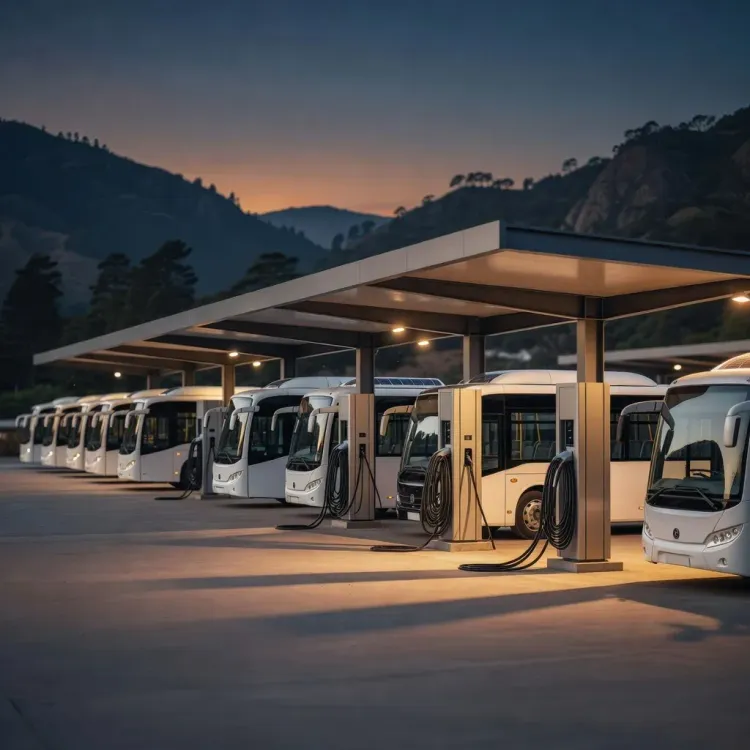
Chief Minister Sukhvinder Singh Sukhu has described Himachal Pradesh's new e-bus charging depot and maintenance centre as a strategic pillar of the state's clean transport push, promising similar facilities at additional locations as the state scales up its electric bus network.
Key Takeaways
CM Thakur Sukhvinder Singh Sukhu on 17 June 2026 declared the e-bus charging depot and maintenance centre a key plank of the state's green transport strategy.
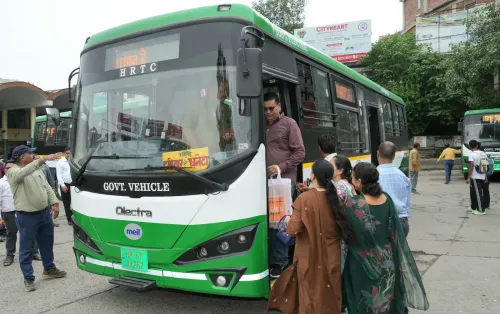
The facility is designed to support Himachal Pradesh's transition to clean, environment-friendly public bus services across high-altitude routes.
The government has announced that similar charging depots will be developed at other locations in the state in the coming period.
Himachal Pradesh EV Policy 2023 provides the policy framework, with the HPTC leading fleet electrification.
The initiative aligns with the national FAME-II push for electric bus adoption and India's broader net-zero commitments.
Commuters, local economies near depot sites, and the state's ecologically sensitive tourism corridors are the primary beneficiaries.
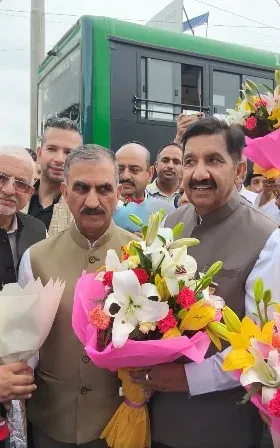
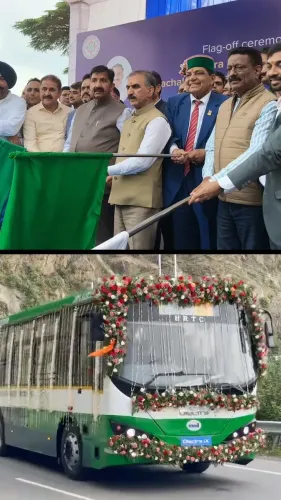
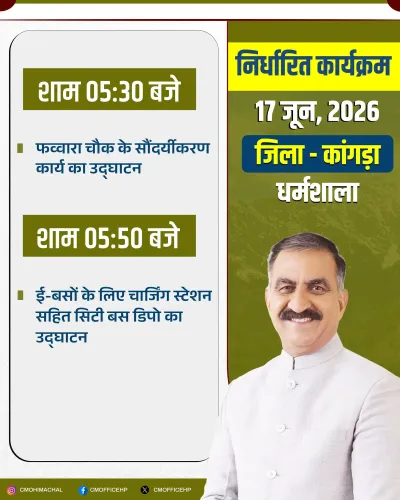
The Chief Minister's Office of Himachal Pradesh on Wednesday, 17 June 2026, shared a statement from Chief Minister Thakur Sukhvinder Singh Sukhu affirming that the state's newly developed e-bus charging depot and maintenance centre is a key component of the government's strategy to promote clean and environment-friendly public transport. The statement signals the administration's intent to replicate the facility model across other locations in the state.
Context
In his statement, CM Sukhu said — 'ई-बस चार्जिंग डिपो एवं अनुरक्षण केंद्र स्वच्छ और पर्यावरण-अनुकूल सार्वजनिक परिवहन को बढ़ावा देने की राज्य सरकार की रणनीति का अहम हिस्सा है' — meaning: 'The e-bus charging depot and maintenance centre is an important part of the state government's strategy to promote clean and environment-friendly public transport.' He added that similar charging facilities will be developed at other locations in the coming period.
The announcement underscores the Himachal Pradesh government's push to build ground-level infrastructure that can sustain a growing electric bus fleet, moving beyond procurement to operational readiness.
Policy Backdrop
Himachal Pradesh's EV Policy 2023 set out explicit targets for electric bus induction and the creation of supporting charging infrastructure along major routes. The state's Himachal Pradesh Transport Corporation (HPTC), which runs public bus services, has been at the centre of this transition, tasked with integrating electric vehicles into a network that spans high-altitude terrain.
Nationally, Indian states have accelerated electric bus deployment under the FAME-II scheme since 2019, aiming to meet air quality benchmarks and long-term net-zero commitments. For Himachal Pradesh, the Himalayan geography makes depot-based charging and maintenance hubs especially critical — high-altitude routes demand reliable charge cycles and on-site servicing that roadside infrastructure alone cannot provide.
Stakeholders and Impact
Urban commuters and intercity bus users across Himachal Pradesh stand to benefit most directly, as a robust charging and maintenance network reduces service disruptions and extends the operational range of the electric fleet. Local economies near depot sites may also see ancillary employment in maintenance and operations.
The environment dividend is particularly significant given the state's ecological sensitivity. Replacing diesel buses with electric alternatives reduces tailpipe emissions in valleys and mountain corridors where air quality directly affects both residents and the tourism sector that underpins much of the state's economy.
What's Next
CM Sukhu explicitly stated that 'similar charging facilities will be developed at other locations in the coming period,' pointing to a phased rollout rather than a one-off installation. The pace and geography of that expansion — which districts receive depots first and how many buses are assigned — will likely feature in upcoming state budget announcements and transport department tenders.
Observers will watch whether the Himachal Pradesh government accelerates fleet size targets alongside infrastructure growth, and whether additional central government support under successor EV schemes supplements state funding for the expansion.
Point of View
The electric depot model carries both ecological and electoral logic. The announcement fits a broader pattern of Congress-governed states using EV infrastructure to project developmental credibility. The real test will be the speed and geographic spread of the promised rollout: announcements of 'future facilities' in Indian state politics frequently outpace actual commissioning.
NationPress
16 Sept 2026
Frequently Asked Questions
What is the e-bus charging depot inaugurated in Himachal Pradesh?
It is a dedicated facility for charging and maintaining electric buses operated by the Himachal Pradesh Transport Corporation, described by CM Sukhu as a strategic asset for clean public transport in the state.
What is Himachal Pradesh's EV policy for electric buses?
The Himachal Pradesh EV Policy 2023 sets targets for inducting electric buses into the state fleet and building supporting charging infrastructure, with the HPTC leading implementation.
Will more e-bus charging depots be built in Himachal Pradesh?
Yes. CM Sukhvinder Singh Sukhu has stated that similar charging facilities will be developed at other locations across the state in the coming period.
How does FAME-II support electric buses in Himachal Pradesh?
The central government's FAME-II scheme provides financial support to states for procuring electric buses and developing charging infrastructure, which Himachal Pradesh has drawn on alongside its own EV policy.
Why is depot-based charging important for Himachal Pradesh's e-buses?
The state's high-altitude mountainous terrain makes roadside charging impractical; depot-based facilities ensure buses are fully charged and serviced before routes, making operations reliable on long, demanding hill routes.