Shekhawat Highlights India's Temple Restoration Push in SE Asia
Synopsis
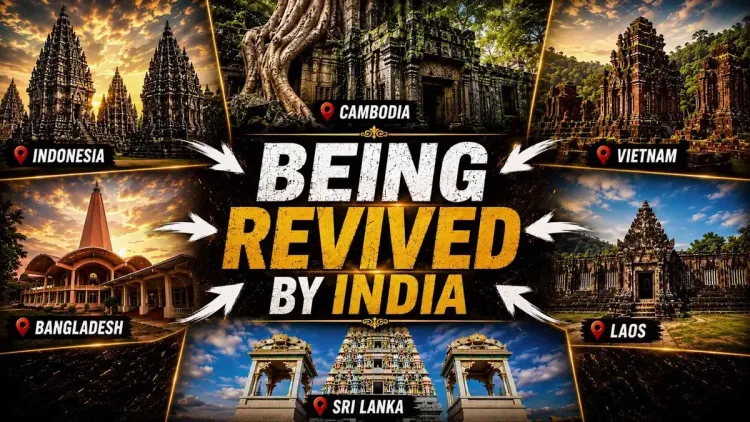
Culture Minister Gajendra Singh Shekhawat highlighted India's sustained effort to restore Hindu temples across Southeast Asia, citing PM Modi's support for Indonesia's Prambanan Temple as the latest step in a decade-long civilisational diplomacy drive spanning Cambodia, Vietnam, Laos, and Indonesia.
Key Takeaways
Union Culture and Tourism Minister Gajendra Singh Shekhawat posted on 10 July 2026 about India's temple restoration work across Southeast Asia.
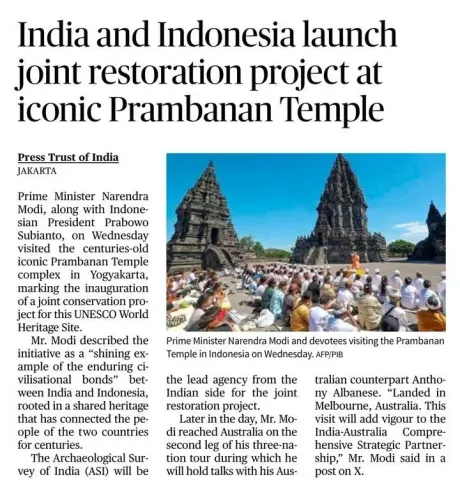
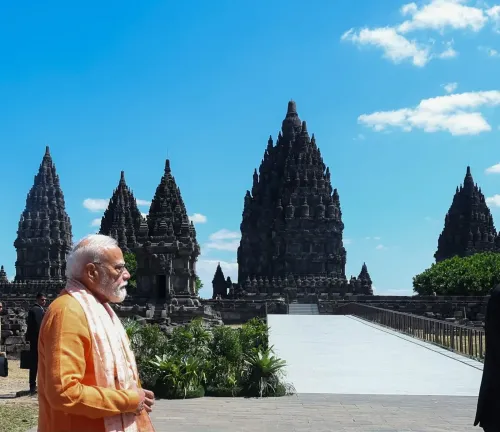
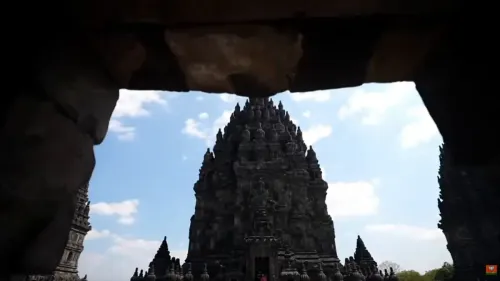
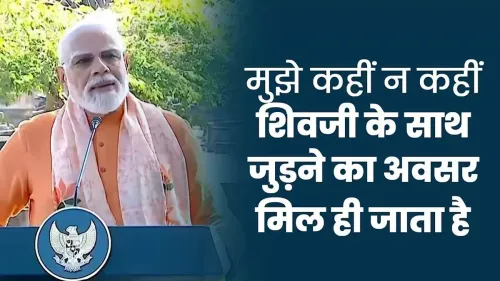
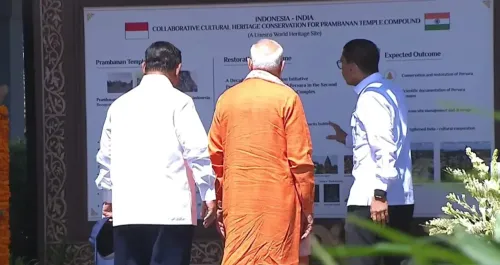
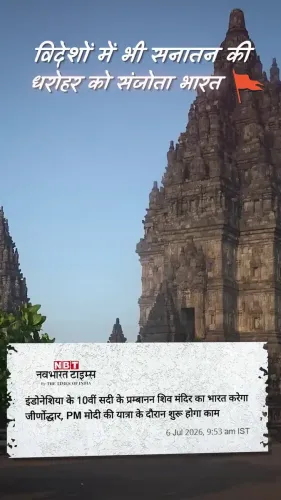
PM Modi recently announced support for the restoration of the Prambanan Temple , a 9th-century UNESCO World Heritage Site in Central Java, Indonesia .
India's Archaeological Survey of India has been active at heritage sites in Cambodia, Vietnam, Laos , and Indonesia since at least 2003 .
A bilateral MoU signed in 2014 covers conservation of Cham monuments at My Son Sanctuary in Vietnam .
The engagement accelerated after India's Look East Policy was upgraded to Act East Policy in 2014 .
The minister framed the projects as strengthening 'timeless civilisational bonds' between India and Southeast Asia .
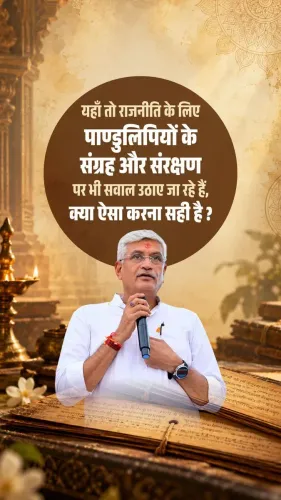
Union Culture and Tourism Minister Gajendra Singh Shekhawat on Friday, 10 July 2026, invoked India's civilisational reach across Southeast Asia, pointing to ongoing temple conservation efforts from Vietnam to Indonesia as evidence of a sustained cultural diplomacy drive. The minister cited Prime Minister Narendra Modi's recent announcement of support for the restoration of the Prambanan Temple in Indonesia as the latest expression of what he called a decade-long commitment to preserving shared heritage.
Context
Shekhawat's post frames India's engagement with Southeast Asian heritage sites not as isolated gestures but as part of a broader civilisational narrative. 'For centuries, the Hindu civilisation extended far beyond the borders of present-day India,' he wrote, noting that temples from the forests of Vietnam to the islands of Indonesia 'continue to stand as enduring symbols of a shared civilisational heritage.' The minister described current restoration work as New India preserving that legacy for future generations.
The Prambanan Temple complex, a 9th-century Hindu monument in Central Java, Indonesia, was designated a UNESCO World Heritage Site in 1991. It is among the largest Hindu temple compounds in Southeast Asia and holds deep religious and historical significance for the region's pre-Islamic past.
Policy Backdrop
India's involvement in Southeast Asian heritage conservation predates the current government. The Archaeological Survey of India (ASI) began restoration work at the Ta Prohm temple in Cambodia as early as 2003 under a bilateral heritage agreement. In 2014, India signed a memorandum of understanding with Vietnam for the conservation of Cham monuments at the My Son Sanctuary, another UNESCO-listed site.
The pace of such engagement visibly accelerated after India's Look East Policy was upgraded to the Act East Policy in 2014, signalling a strategic intent to deepen ties with ASEAN nations across trade, security, and culture. ASI teams have since been deployed at sites across Cambodia, Vietnam, Laos, and Indonesia.
Stakeholders and Impact
The primary beneficiaries of these restoration projects are the heritage agencies and local communities in host countries, alongside the global community of scholars and tourists who visit these sites. For ASEAN governments, Indian technical and financial participation in conservation offers a non-extractive form of bilateral engagement rooted in shared history rather than trade or security calculus.
For India, the projects reinforce its self-positioning as a 'vishwaguru' — a civilisational guide — and extend its soft power footprint across a strategically vital neighbourhood. The framing also resonates domestically, aligning with the ruling BJP's cultural nationalism platform.
What's Next
Attention will now turn to the specifics of the Prambanan restoration commitment — including funding quantum, ASI's technical role, and a proposed timeline — which are yet to be formally detailed. The next ASEAN-India Summit is expected to include cultural cooperation on its agenda, and any follow-up funding announcements for Prambanan or other listed sites will be closely watched by heritage bodies and diplomatic observers. Shekhawat's public framing suggests the Culture Ministry intends to keep this civilisational diplomacy narrative prominent in the months ahead.
Point of View
Using the Prambanan announcement as a peg to narrate a decade of ASI-led conservation as a coherent civilisational project rather than a series of bilateral line-items. The framing — 'New India preserving that legacy' — fuses heritage diplomacy with domestic cultural nationalism, a combination the BJP has deployed consistently since 2014. By situating India's role in Southeast Asia within a Hindu civilisational arc, the minister implicitly contrasts India's soft-power approach with China's infrastructure-led regional engagement. The timing, ahead of likely ASEAN-India diplomatic calendar milestones, suggests the Culture Ministry is positioning heritage cooperation as a distinct and electorally resonant pillar of India's foreign policy identity.
NationPress
8 Oct 2026
Frequently Asked Questions
What is the Prambanan Temple and why is India involved in its restoration?
The Prambanan Temple is a 9th-century Hindu temple complex in Central Java, Indonesia , designated a UNESCO World Heritage Site in 1991 . India has announced support for its restoration as part of a broader cultural diplomacy effort to preserve shared Hindu-Buddhist heritage across Southeast Asia.
Which Southeast Asian heritage sites has India helped restore?
India's Archaeological Survey of India has been involved in restoration at Ta Prohm in Cambodia since 2003 , the My Son Sanctuary in Vietnam under a 2014 MoU , and sites in Laos and Indonesia , including the recently announced Prambanan Temple project.
What is India's Act East Policy and how does it relate to cultural heritage?
India's Act East Policy , launched in 2014 as an upgrade of the earlier Look East Policy, deepened engagement with ASEAN nations across trade, security, and culture. Heritage conservation projects in Southeast Asia are a key soft-power component of this policy.
Who is Gajendra Singh Shekhawat?
Gajendra Singh Shekhawat is India's Union Minister of Culture and Tourism , a senior BJP leader, and a Lok Sabha MP from Jodhpur, Rajasthan .
What did PM Modi announce about Prambanan Temple?
PM Narendra Modi recently announced India's support for the restoration of the Prambanan Temple in Indonesia . Specific funding details and a formal project timeline are yet to be announced by the government.