Modi, Indonesia's Prabowo inaugurate Prambanan Temple restoration in Yogyakarta
Synopsis
Prime Minister Modi's visit to the 10th-century Prambanan Temple wasn't just ceremonial — it was the formal launch of an India-backed UNESCO conservation project, sealed by a Letter of Intent signed after bilateral talks. The move anchors India's cultural diplomacy in Southeast Asia's largest economy at a moment when both nations are deepening their Comprehensive Strategic Partnership across defence, rare earths, and space.
Key Takeaways
PM Narendra Modi and Indonesian President Prabowo Subianto jointly inaugurated the Prambanan Temple restoration project in Yogyakarta on 8 July 2025 .
India and Indonesia signed a Letter of Intent for the India-backed conservation project at the UNESCO World Heritage site on 7 July .
Built in the 10th century , Prambanan is Indonesia's largest Hindu temple complex, originally comprising 240 temples and featuring a 47-metre Shiva shrine.
The two sides also exchanged bilateral documents on defence , space , rare earths , maritime security , and health , among other sectors.
Modi's three-day Indonesia visit included talks with President Prabowo, an address to the Indonesian Parliament , and an Indian community event.
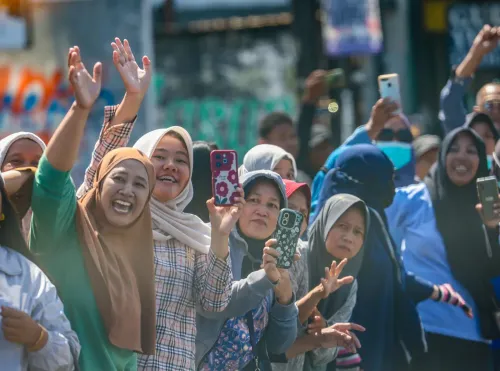
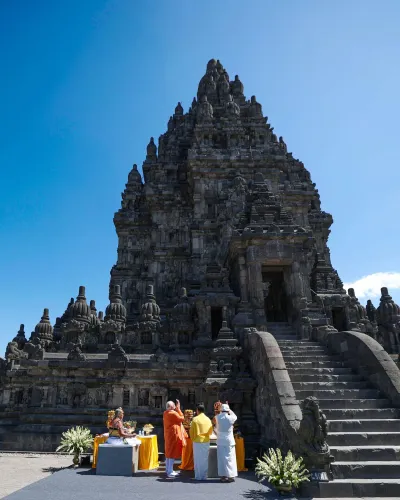
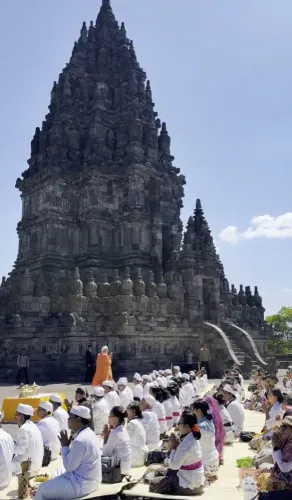
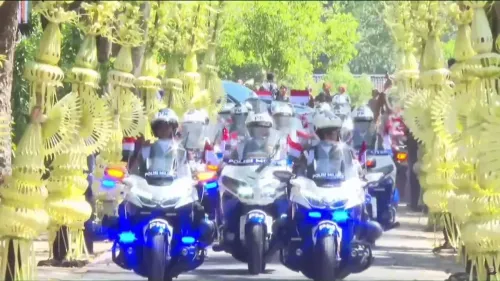
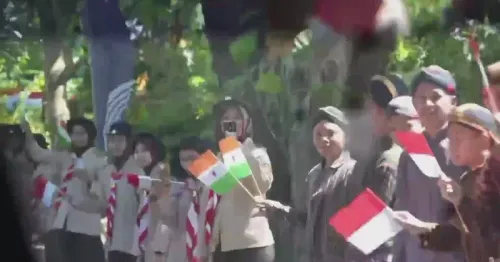
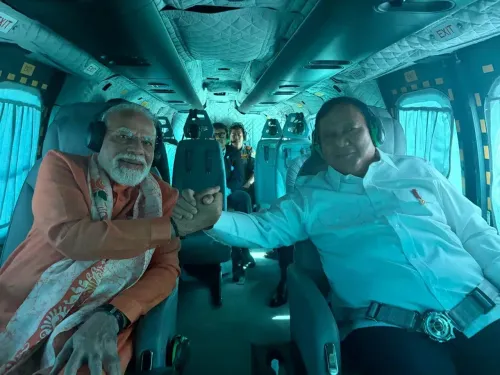
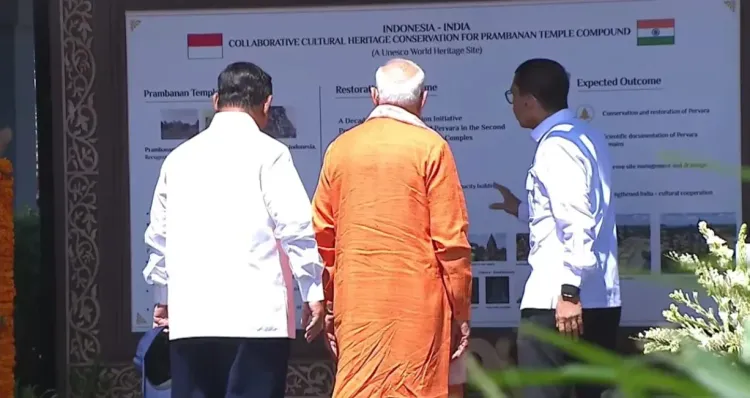
Prime Minister Narendra Modi and Indonesian President Prabowo Subianto jointly inaugurated the UNESCO World Heritage Prambanan Temple restoration project in Yogyakarta on Wednesday, 8 July, marking a landmark moment in the deepening civilisational partnership between India and Indonesia. Modi offered prayers at the ancient temple complex and interacted with officials on site, while large crowds lining the roads waved national flags of both countries to welcome the two leaders.
The Restoration Project
On Tuesday, 7 July, India and Indonesia formalised the conservation initiative through a Letter of Intent exchanged after bilateral talks between Modi and President Prabowo. The India-backed project covers conservation and restoration work across the Prambanan Temple complex, a UNESCO-designated site. The agreement is part of a broader effort by both sides to deepen their Comprehensive Strategic Partnership and advance shared interests in a peaceful Indo-Pacific.
About Prambanan: A Monument to Shared Heritage
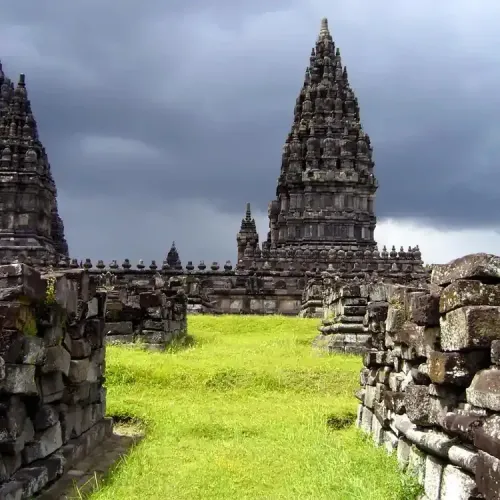
Built in the 10th century, the Prambanan Temple complex is the largest Hindu temple complex in Indonesia, originally comprising 240 temples. The complex is dedicated primarily to Lord Shiva and features towering shrines to the Hindu trinity — Shiva, Vishnu, and Brahma — along with sanctuaries for their divine vehicles. Its stone walls carry intricate reliefs depicting scenes from the Ramayana and other Hindu epics, reflecting centuries of cultural exchange between the Indian subcontinent and Southeast Asia.
At the centre of the complex stands the 47-metre (154-foot) Shiva temple, the tallest structure at Prambanan and widely regarded as one of the finest surviving examples of ancient Hindu architecture. Modi had earlier shared an aerial video of the complex on X, describing it simply as 'The majestic Prambanan Temple.'
What Modi Said on Civilisational Ties
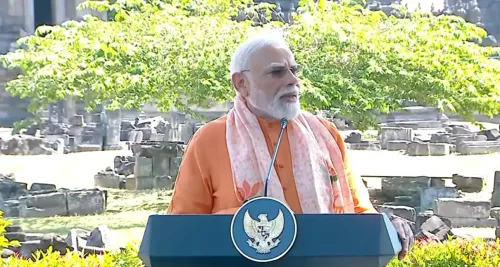
Addressing the depth of the India-Indonesia relationship on Tuesday, Modi said the two nations share far more than geography. 'India and Indonesia do not just share the sea; we also share our history. Our relationship is rooted in the legacy of the Ramayana and the Mahabharata... We are linked through magnificent monuments such as Borobudur and Prambanan. We are connected through Garuda, Indonesia's national emblem. We are connected through the joy and celebrations of the Bali Jatra festival,' he said.
Bilateral Agreements and Strategic Scope
The two leaders also witnessed the exchange of several bilateral documents spanning maritime safety and security, space cooperation, defence, steel supply chains, rare earths, health, agriculture, and science and technology. The Ministry of External Affairs (MEA) said the agreements would 'strengthen bilateral cooperation across key sectors and contribute to further deepening the Comprehensive Strategic Partnership.'
MEA spokesperson Randhir Jaiswal noted that the leaders 'reviewed the full spectrum of the India-Indonesia Comprehensive Strategic Partnership encompassing trade and investment, defence and security, maritime cooperation, energy, healthcare and pharma, space, critical minerals and rare earths, culture, tourism, and people-to-people exchanges.'
Modi's Three-Day Indonesia Visit
The Prambanan inauguration came on the final leg of Modi's three-day visit to Indonesia, during which he held bilateral talks with President Prabowo, addressed the Indonesian Parliament, and attended an event for the Indian community. The visit signals India's intent to anchor its Act East Policy in deeper cultural and strategic partnerships with ASEAN's largest economy. With the restoration project now formally launched, attention turns to the implementation timeline and the scale of India's technical and financial contribution to the conservation effort.
Point of View
India is betting on civilisational soft power to differentiate its partnership offer. The Letter of Intent is a start, but the credibility of this initiative will depend on delivery speed and the scale of India's technical contribution, neither of which has been publicly detailed. Modi's invocation of the Ramayana and Garuda plays well domestically and resonates in Indonesia, but the harder work — rare earths access, defence cooperation, Indo-Pacific alignment — is where the strategic substance of this visit will ultimately be measured.
NationPress
6 Oct 2026
Frequently Asked Questions
What is the Prambanan Temple restoration project inaugurated by PM Modi?
It is an India-backed conservation and restoration initiative at the Prambanan Temple complex in Yogyakarta, Indonesia, formalised through a Letter of Intent signed on 7 July 2025. The project covers the UNESCO World Heritage site, which is the largest Hindu temple complex in Indonesia.
Why is the Prambanan Temple historically significant?
Built in the 10th century, Prambanan is Indonesia's largest Hindu temple complex, originally comprising 240 temples dedicated to the Hindu trinity of Shiva, Vishnu, and Brahma. Its stone reliefs depicting Ramayana scenes reflect centuries of cultural ties between India and Southeast Asia.
What other agreements did India and Indonesia sign during PM Modi's visit?
The two sides exchanged bilateral documents covering maritime safety and security, space cooperation, defence, steel supply chains, rare earths, health, agriculture, and science and technology, according to the Ministry of External Affairs.
What was the broader purpose of PM Modi's Indonesia visit?
Modi's three-day visit included bilateral talks with President Prabowo Subianto, an address to the Indonesian Parliament, and an Indian community event. The visit aimed to deepen the India-Indonesia Comprehensive Strategic Partnership and advance shared interests in a peaceful Indo-Pacific.
What did PM Modi say about India-Indonesia civilisational ties?
Modi said the two countries share history, not just geography, citing the shared legacy of the Ramayana, the Mahabharata, monuments like Borobudur and Prambanan, Indonesia's Garuda emblem, and the Bali Jatra festival as evidence of deep civilisational links.