Rijiju shares PM Modi's remarks at Prambanan Temple restoration
Synopsis
Prime Minister Narendra Modi inaugurated the Prambanan Temple Restoration Project in Yogyakarta, Indonesia, with Union Minister Kiren Rijiju amplifying the remarks on 8 July 2026. The event underscores India's Act East Policy and its use of heritage diplomacy to deepen ties with ASEAN nations through shared civilisational links.
Key Takeaways
Kiren Rijiju shared a broadcast of PM Modi 's remarks at the Prambanan Temple Restoration Project inauguration on 8 July 2026 .
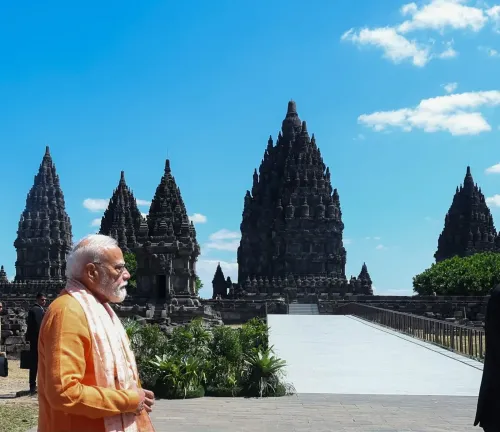
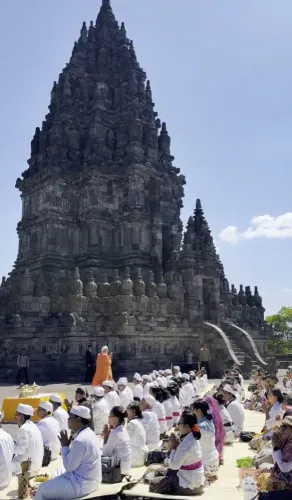
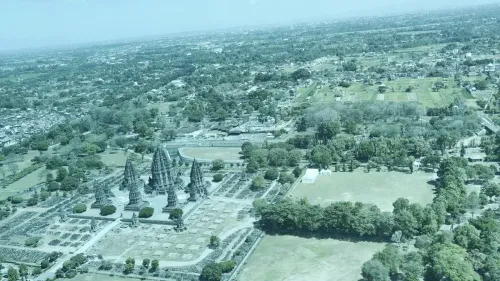
The Prambanan Temple complex in Yogyakarta, Indonesia is a 9th-century UNESCO World Heritage Site representing shared Indic cultural heritage.
India and Indonesia have maintained formal cultural cooperation agreements since the 1950s .
The project aligns with India's Act East Policy , which has intensified heritage and cultural diplomacy with ASEAN nations since 2014 .
Stakeholders include Indonesia 's Hindu community, heritage conservation bodies, and the Indian Ministry of Culture .
Further joint heritage announcements may follow at upcoming ASEAN-India meetings.
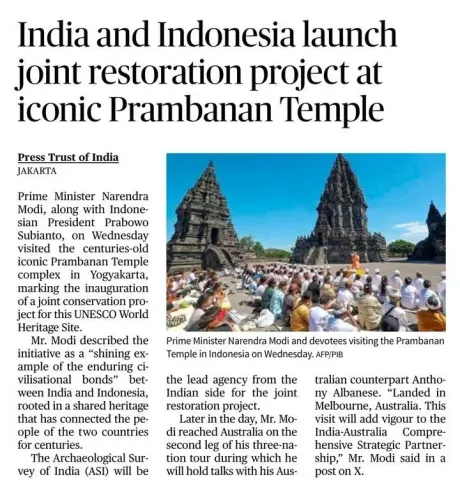
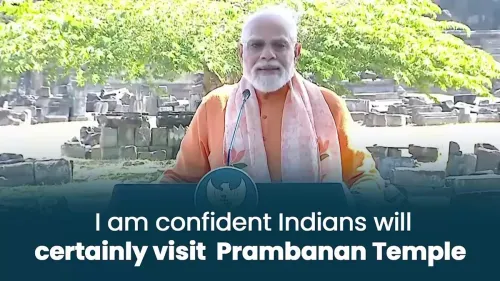
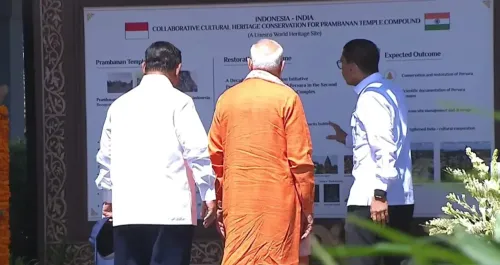
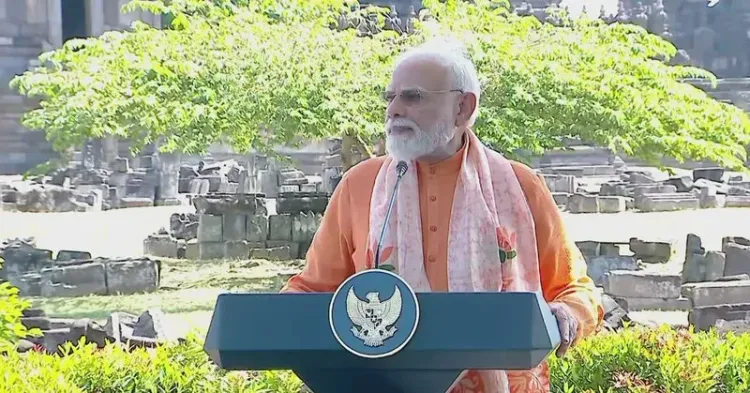
Union Parliamentary Affairs Minister Kiren Rijiju on Wednesday, 8 July 2026, shared a broadcast of Prime Minister Narendra Modi's remarks at the inauguration of the Prambanan Temple Restoration Project in Yogyakarta, Indonesia, drawing attention to a significant moment in India's heritage diplomacy with Southeast Asia.
Context
The Prambanan Temple complex, a 9th-century Hindu shrine on the Indonesian island of Java, is a UNESCO World Heritage Site and one of the most prominent symbols of the ancient Indic cultural footprint across Southeast Asia. Prime Minister Modi, in his remarks at the inauguration, addressed the restoration project that seeks to preserve this shared civilisational legacy. Minister Rijiju amplified the event on his official X account, signalling the significance the Union government attaches to the occasion.
Policy Backdrop
India and Indonesia share formal cultural cooperation agreements dating to the 1950s, periodically renewed through bilateral mechanisms. Since 2014, New Delhi's Act East Policy has intensified engagement with ASEAN nations, weaving together heritage diplomacy, strategic ties, and economic partnerships. Temple restoration and cultural conservation projects in Southeast Asia have become a consistent instrument of this soft-power outreach, underscoring maritime and religious connections that predate modern nation-states.
Prime Minister Modi has regularly invoked civilisational links with Southeast Asian nations in public diplomacy, positioning India not merely as a regional power but as a cultural anchor for the broader Indo-Pacific. The Prambanan inauguration fits squarely within that arc, offering a high-visibility platform to reinforce people-to-people ties with Indonesia, the world's largest Muslim-majority democracy and a country with deep Hindu-Buddhist heritage.
Stakeholders and Impact
The project is of direct significance to Indonesia's Hindu community, heritage conservation bodies in both countries, and the Indian Ministry of Culture. For Yogyakarta, a city already central to Javanese cultural identity, the restoration reinforces the temple complex's status as a living heritage site rather than a static monument. For India, the project provides tangible evidence of its commitment to shared heritage beyond rhetoric.
The broadcast shared by Minister Rijiju ensures domestic audiences in India are aware of the Prime Minister's engagement on the cultural diplomacy front, a dimension of foreign policy that often receives less attention than trade or security dialogues.
What's Next
Observers will watch for follow-up announcements on additional joint heritage or conservation projects between India and Indonesia. Upcoming ASEAN-India ministerial meetings could provide a platform for formalising further cultural cooperation commitments. The Prambanan inauguration may also set a template for similar India-backed restoration initiatives at other historically significant sites across Southeast Asia, deepening the civilisational dimension of the Act East Policy.
Point of View
Minister Rijiju signals that the ruling establishment views heritage diplomacy not as peripheral but as integral to India's foreign policy identity. The choice of Yogyakarta, a city synonymous with Javanese Hindu-Buddhist tradition, is deliberate and resonant. If followed by concrete joint conservation commitments, this moment could mark a meaningful deepening of the India-Indonesia cultural partnership within the Act East framework.
NationPress
7 Oct 2026
Frequently Asked Questions
What is the Prambanan Temple Restoration Project?
The Prambanan Temple Restoration Project is an initiative to conserve and restore the 9th-century Hindu temple complex in Yogyakarta, Indonesia , a UNESCO World Heritage Site that represents ancient Indic cultural links with Southeast Asia.
Why did PM Modi attend the Prambanan inauguration?
Prime Minister Modi attended the inauguration as part of India's heritage diplomacy efforts under the Act East Policy , which uses cultural and civilisational ties to strengthen India's strategic and people-to-people relationships with ASEAN nations including Indonesia .
What is India's Act East Policy?
India's Act East Policy , intensified after 2014 , is a strategic framework that deepens India's engagement with Southeast and East Asian nations through economic, strategic, and cultural partnerships, including heritage conservation projects.
Why did Kiren Rijiju share PM Modi's Prambanan remarks?
Union Minister Kiren Rijiju shared the broadcast on his official X account to highlight the Prime Minister's cultural diplomacy engagement in Indonesia and bring domestic attention to the inauguration of the Prambanan Temple Restoration Project .
What is the significance of Prambanan for India-Indonesia ties?
Prambanan symbolises the deep historical Hindu-Buddhist cultural connections between India and Indonesia . India's involvement in its restoration reinforces bilateral goodwill and demonstrates New Delhi's commitment to shared civilisational heritage beyond trade and security ties.