PM Modi Hails Prambanan Temple, India's Cultural Ties With Indonesia
Synopsis
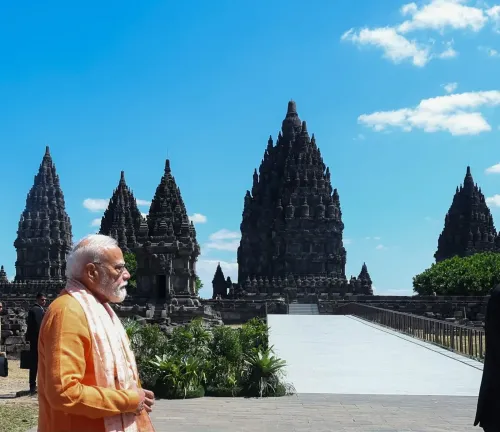
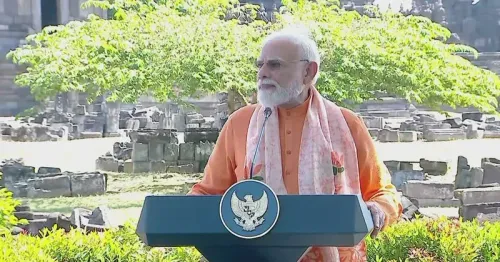
Prime Minister Narendra Modi on 8 July 2026 shared a video of the 9th-century Prambanan Temple in Central Java, Indonesia, calling it 'majestic.' The post reinforces India's Act East Policy and soft-power diplomacy by spotlighting shared Hindu-Buddhist civilizational heritage with Southeast Asia.
Key Takeaways
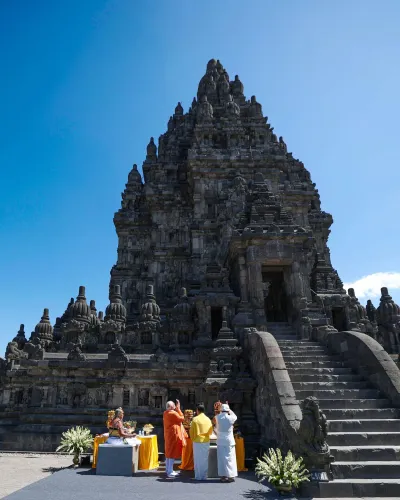
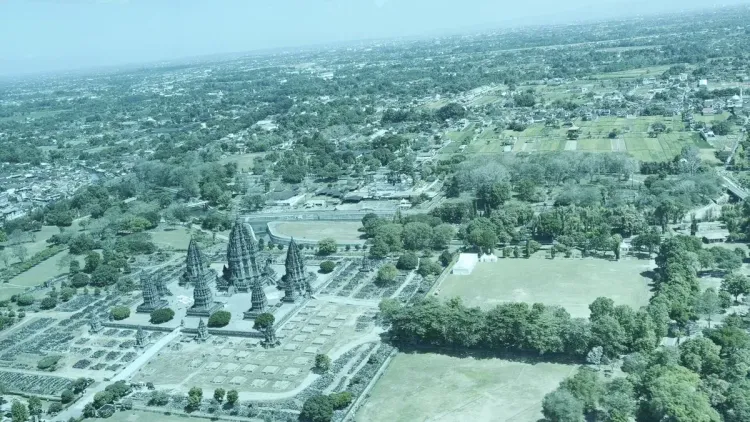
Prime Minister Narendra Modi posted a video of Prambanan Temple , Central Java, on 8 July 2026 , describing it as 'majestic.' Prambanan is a 9th-century Hindu temple complex dedicated to the Trimurti and a UNESCO World Heritage Site since 1991 .
The post aligns with India's Act East Policy , which since 2014 has promoted Hindu-Buddhist cultural linkages with ASEAN nations.
Modi previously visited Indonesia in 2018 , highlighting shared maritime and cultural heritage in a joint statement with President Joko Widodo .
The gesture is seen as soft-power diplomacy, reinforcing India-Indonesia ties within the broader Indo-Pacific strategic framework.
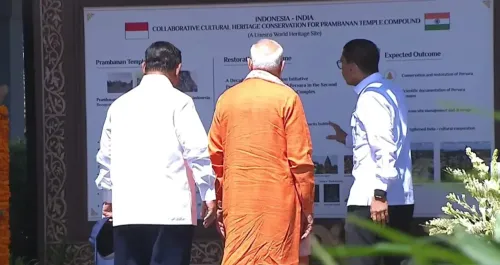
Possible follow-up actions include joint heritage conservation proposals at upcoming India-Indonesia or ASEAN summits.
Prime Minister Narendra Modi on Wednesday, 8 July 2026, shared a video of the Prambanan Temple in Central Java, Indonesia, calling the ancient Hindu complex 'majestic' in a post on X, underscoring India's deep civilizational bonds with Southeast Asia.
Context
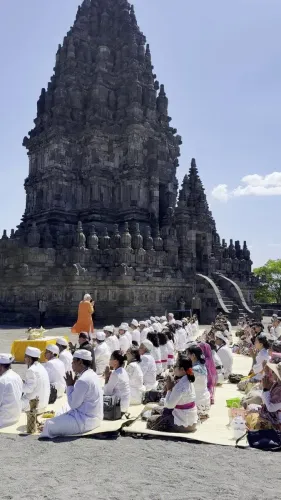
The Prambanan Temple complex is a 9th-century Hindu shrine dedicated to the Trimurti — Brahma, Vishnu, and Shiva — and was designated a UNESCO World Heritage Site in 1991. Located in Central Java, it stands as one of the largest Hindu temple complexes in Southeast Asia and a living testament to the region's pre-Islamic heritage. Indonesia, the world's largest Muslim-majority nation, continues to preserve and celebrate these Hindu-Buddhist monuments as integral to its national identity.
Policy Backdrop
Modi's cultural signalling fits squarely within India's Act East Policy, upgraded in 2014, which explicitly promotes historical Hindu-Buddhist linkages with ASEAN nations as a pillar of soft-power diplomacy. In 2018, Prime Minister Modi visited Indonesia and, during a joint statement with then-President Joko Widodo, highlighted shared maritime and cultural heritage as a foundation for the bilateral relationship. Such posts reinforce that continuity, framing cultural memory as a strategic asset in India's Indo-Pacific outreach.
India and Indonesia are both key actors within ASEAN frameworks and the broader Indo-Pacific security architecture. Shared civilizational roots — from the Ramayana tradition still alive in Javanese performance arts to temple iconography — have long served as a bridge between the two democracies, complementing trade, defence, and maritime cooperation.
Stakeholders and Impact
The post resonates across several constituencies. India's tourism and cultural diplomacy establishment benefits from heightened public awareness of Hindu-Buddhist heritage sites in Southeast Asia, potentially boosting bilateral people-to-people exchanges. Indonesia's Hindu community, concentrated largely in Bali but with a historical presence across Java, sees such acknowledgements from a sitting Indian prime minister as meaningful international recognition. For the broader ASEAN audience, it signals that New Delhi views cultural connectivity as inseparable from its strategic partnerships in the region.
What's Next
Observers will watch for whether this cultural outreach is followed by concrete proposals — joint heritage conservation programmes, cultural exchange agreements, or bilateral statements — at the next India-Indonesia summit or an upcoming ASEAN meeting. Prime Minister Modi has a pattern of using social media posts about iconic regional monuments to set the tone ahead of diplomatic engagements, making this gesture worth tracking in the context of the broader Indo-Pacific diplomatic calendar for 2026.
Point of View
Using a single word — 'majestic' — to invoke centuries of Hindu civilizational reach across Southeast Asia without making any overtly political claim. It fits a well-established pattern in which the Prime Minister deploys social media to frame India's strategic relationships in civilizational rather than purely transactional terms, giving the Act East Policy an emotional resonance that formal communiqués cannot. For Indonesia, the world's largest Muslim-majority democracy and a critical Indo-Pacific partner, such acknowledgement from New Delhi carries symbolic weight that can smooth the ground for harder negotiations on trade and defence. The post is unlikely to be an isolated gesture — it typically presages or accompanies a diplomatic moment worth watching.
NationPress
6 Oct 2026
Frequently Asked Questions
What is the Prambanan Temple and why is it significant?
Prambanan is a 9th-century Hindu temple complex in Central Java, Indonesia, dedicated to the Trimurti — Brahma, Vishnu, and Shiva. It was designated a UNESCO World Heritage Site in 1991 and is one of the largest Hindu temple complexes in Southeast Asia, symbolising the region's deep pre-Islamic Hindu-Buddhist heritage.
Why did PM Modi post about Prambanan Temple?
Prime Minister Modi shared a video of Prambanan Temple on 8 July 2026, calling it 'majestic.' The post reflects India's Act East Policy, which promotes cultural and civilizational ties with ASEAN nations, and is consistent with Modi's broader soft-power diplomacy towards Southeast Asia.
What is India's Act East Policy and how does it relate to Indonesia?
India's Act East Policy, upgraded in 2014, prioritises strategic, economic, and cultural engagement with ASEAN nations. It explicitly promotes India's shared Hindu-Buddhist heritage with Southeast Asia, making countries like Indonesia — home to major sites such as Prambanan — central to the policy's cultural diplomacy dimension.
Has PM Modi visited Indonesia before?
Yes. Prime Minister Modi visited Indonesia in 2018 and issued a joint statement with then-President Joko Widodo that highlighted shared maritime and cultural heritage as a pillar of the bilateral relationship.
What could follow PM Modi's Prambanan Temple post?
Analysts expect possible follow-up in the form of joint heritage conservation proposals or cultural exchange agreements at the next India-Indonesia bilateral summit or an upcoming ASEAN meeting, consistent with Modi's pattern of using cultural social media posts ahead of diplomatic engagements.