Shekhawat Shares Prambanan Temple Echoing Om Namah Shivaya
Synopsis
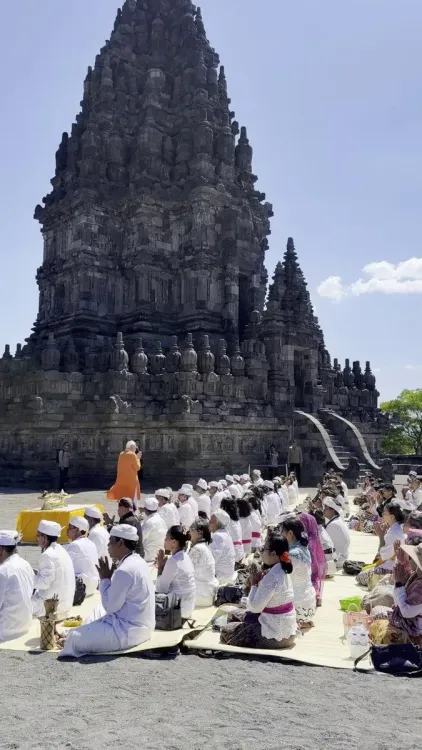
Union Culture and Tourism Minister Gajendra Singh Shekhawat shared a video of Indonesia's Prambanan Temple resonating with the Om Namah Shivaya chant, spotlighting the 9th-century UNESCO World Heritage Site as a symbol of India-Indonesia civilisational ties under the Act East framework.
Key Takeaways
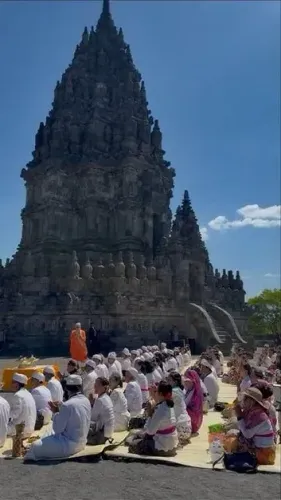
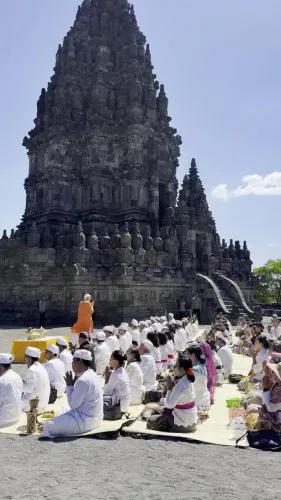
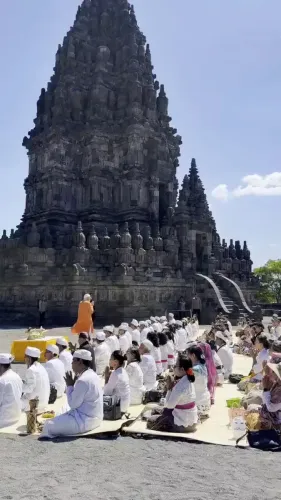
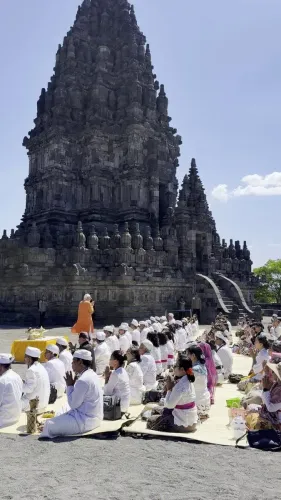
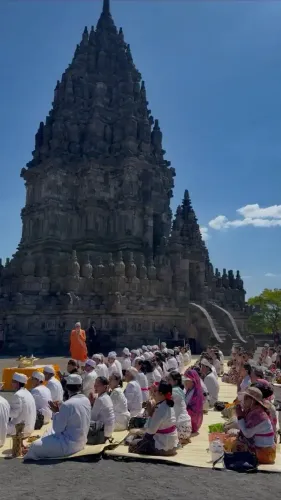
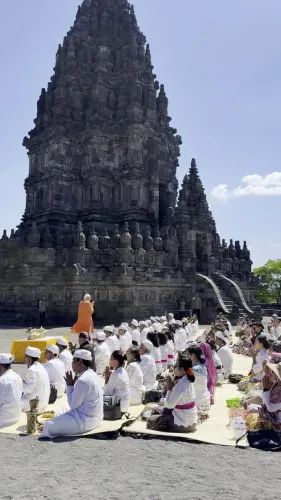
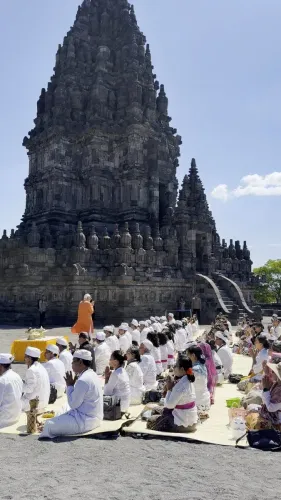
Union Culture and Tourism Minister Gajendra Singh Shekhawat posted a video on 8 July 2026 showing Prambanan Temple in Indonesia echoing with Om Namah Shivaya .
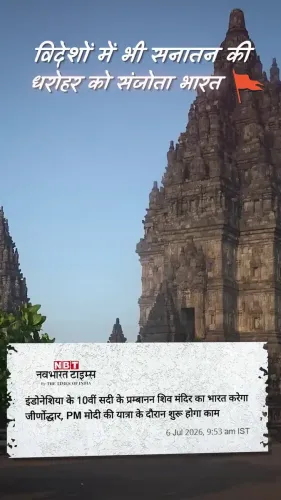
Prambanan is a 9th-century Trimurti Hindu temple complex in Central Java , built by the Sanjaya dynasty and designated a UNESCO World Heritage Site .
India-Indonesia cultural exchanges centred on shared Hindu-Buddhist heritage date back to the 1950s , including Ramayana ballet festivals at Prambanan.
The post aligns with India's Act East Policy , which uses civilisational soft power to deepen ties with ASEAN nations.
Follow-on developments to watch include potential joint heritage conservation projects and cross-border pilgrim tourist circuits linking Indian Shaiva sites with Prambanan.
Union Culture and Tourism Minister Gajendra Singh Shekhawat on Wednesday, 8 July 2026, shared a video of Prambanan Temple in Central Java, Indonesia, resonating with the chant Om Namah Shivaya, drawing attention to the ancient Hindu heritage preserved at the UNESCO World Heritage Site.
Context
Shekhawat posted the video with the caption 'ॐ नमः शिवाय के मंत्र से गूंजा इंडोनेशिया का प्रम्बानन मंदिर' — meaning 'Indonesia's Prambanan Temple resounded with the chant of Om Namah Shivaya.' The post highlights a moment of Shaiva devotion at one of Southeast Asia's most significant Hindu temple complexes, underlining the living cultural thread that connects India and Indonesia.
Prambanan is a 9th-century Trimurti temple complex dedicated to Brahma, Vishnu, and Shiva, built by the Sanjaya dynasty of the ancient Mataram kingdom. It remains one of the largest Hindu temple compounds in the world and draws millions of visitors annually.
Policy Backdrop
India's cultural engagement with Indonesia stretches back to the 1950s, when bilateral exchanges began spotlighting the shared Hindu-Buddhist heritage of Java and Bali. Indian participation in events such as the Ramayana ballet festivals at Prambanan has been a recurring instrument of this diplomacy.
Under India's Act East Policy, the Ministry of Culture and Tourism has actively leveraged civilisational links with ASEAN nations to advance soft-power objectives. Prambanan, as a symbol of pre-Islamic Javanese Shaiva tradition, sits at the heart of this narrative, representing a shared heritage that predates modern national boundaries.
Stakeholders and Impact
The post is likely to resonate with Hindu communities in India and the Indian diaspora in Southeast Asia, for whom Prambanan holds deep religious and cultural significance. Heritage tourists and cultural organisations tracking India-Indonesia ties will also note the minister's public amplification of the site.
For Indonesia, which carefully balances its Islamic majority identity with pride in its Hindu-Buddhist antiquity, such moments of cross-border devotion at Prambanan reinforce the site's status as a living heritage destination rather than merely an archaeological monument.
What's Next
Observers of India-Indonesia cultural diplomacy will watch for follow-on announcements, particularly around joint heritage conservation projects or expanded tourist circuits linking Indian Shaiva pilgrimage sites — such as those in Varanasi or Tamil Nadu — with Prambanan. The Ministry of Culture has previously signalled interest in deepening people-to-people ties through shared religious heritage corridors in the ASEAN region.
As India continues to project civilisational soft power across Southeast Asia, ministerial attention to sites like Prambanan signals that cultural diplomacy will remain a key pillar alongside trade and security in the bilateral relationship with Jakarta.
Point of View
Using the emotional resonance of a Shaiva chant at a 9th-century Indonesian temple to reinforce India's civilisational soft-power narrative in Southeast Asia. It fits a deliberate pattern under the Act East Policy of framing India-ASEAN engagement not merely in trade or strategic terms but through shared pre-Islamic heritage. By amplifying Prambanan, the Culture Ministry signals that Hindu-Buddhist antiquity is a living diplomatic asset, not just a historical footnote. The move is likely to strengthen people-to-people sentiment while laying groundwork for concrete bilateral announcements on heritage tourism.
NationPress
7 Oct 2026
Frequently Asked Questions
What is Prambanan Temple and why is it significant?
Prambanan is a 9th-century Trimurti Hindu temple complex in Central Java, Indonesia, dedicated to Brahma, Vishnu, and Shiva. Built by the Sanjaya dynasty, it is a UNESCO World Heritage Site and one of the largest Hindu temple compounds in the world.
Why did Gajendra Singh Shekhawat post about Prambanan Temple?
Union Culture and Tourism Minister Gajendra Singh Shekhawat shared a video of Prambanan resonating with the Om Namah Shivaya chant on 8 July 2026, highlighting the shared Hindu heritage between India and Indonesia as part of India's cultural diplomacy in Southeast Asia.
What is India's Act East Policy and how does it relate to Prambanan?
India's Act East Policy seeks to deepen engagement with ASEAN nations through trade, security, and cultural ties. Prambanan, as a symbol of shared Hindu-Buddhist civilisational heritage, is used to advance people-to-people links and soft-power objectives under this framework.
Is Prambanan Temple a Hindu pilgrimage site for Indians?
Yes, Prambanan holds deep religious significance for Hindu communities in India and the Indian diaspora in Southeast Asia. India has participated in cultural events at the site, including Ramayana ballet festivals, since the 1950s.
What could follow Shekhawat's post on Prambanan culturally or diplomatically?
Observers are watching for announcements on joint India-Indonesia heritage conservation projects or expanded tourist circuits connecting Indian Shaiva pilgrimage sites with Prambanan, in line with the Ministry of Culture's broader ASEAN engagement strategy.