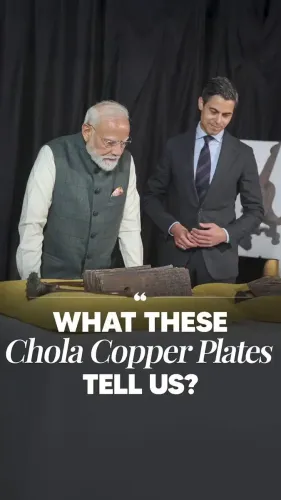
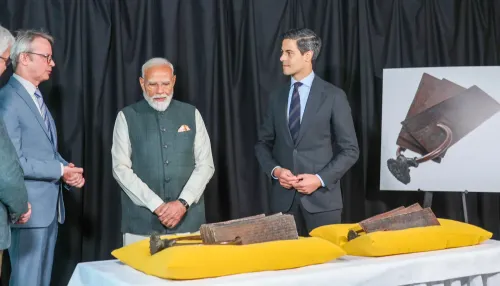
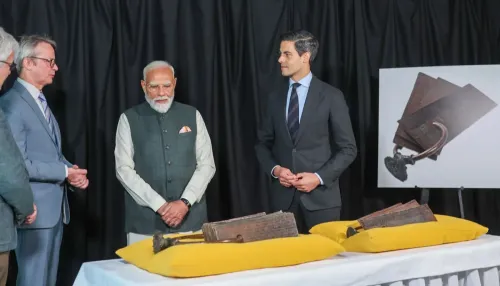
PM Modi highlights Chola Copper Plates return, Chhattisgarh find

Synopsis
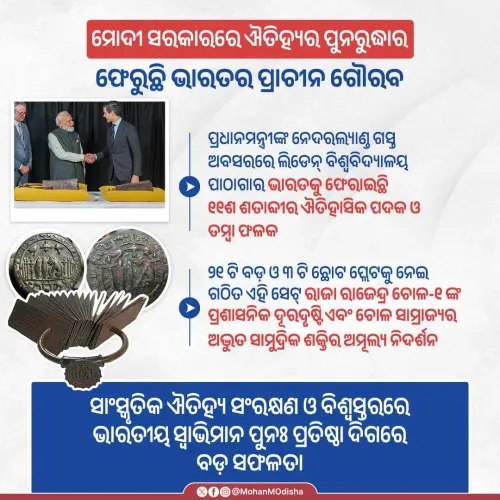
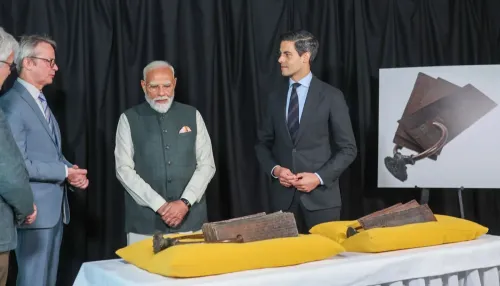
PM Modi used his Mann Ki Baat address to discuss the repatriation of Chola Copper Plates from the Netherlands and spotlight three rare copper plates newly discovered in Chhattisgarh, linking foreign cultural diplomacy with domestic archaeological finds.
Key Takeaways
PM Modi addressed public curiosity about the Chola Copper Plates returned from the Netherlands during his Mann Ki Baat radio programme.
The Prime Minister's visit to the Netherlands was the diplomatic occasion that led to the plates' repatriation to India.
Three rare copper plates were recently discovered in Chhattisgarh , a find highlighted by the Prime Minister in the same address.
India has pursued a systematic policy of recovering antiquities from foreign collections since 2014 through bilateral diplomatic channels.
Mann Ki Baat has been a recurring platform for the Prime Minister to publicise cultural heritage milestones to a mass domestic audience.
Historians, archaeologists, and state authorities in Chhattisgarh are expected to follow up on the newly discovered plates.
Prime Minister Narendra Modi on Sunday, 1 June 2026 shared that public curiosity following his visit to the Netherlands prompted him to speak about the repatriated Chola Copper Plates during his monthly radio address, Mann Ki Baat, where he also drew attention to the recent discovery of three rare copper plates in Chhattisgarh.
Context
In the post, PM Modi wrote: 'Ever since my visit to the Netherlands, there has been great curiosity about the Chola Copper Plates that were returned to India. Thus, talked about it during Mann Ki Baat and also highlighted a recent discovery of three rare copper plates in Chhattisgarh.' The remarks connect a diplomatic milestone — the return of historically significant inscriptions from a European nation — with a fresh domestic archaeological find, weaving both into a single national heritage narrative.
The Chola Copper Plates are inscriptions associated with the medieval Chola dynasty, one of the longest-ruling dynasties in South Indian history, known for its administrative records, land grants, and cultural patronage. Their return from the Netherlands was received with considerable public interest across India.
Policy Backdrop
India's cultural heritage policy since 2014 has prioritised the recovery of antiquities held in foreign collections, using bilateral diplomatic channels to negotiate returns. PM Modi's visit to the Netherlands advanced this agenda, with the repatriation of the Chola Copper Plates standing as one of its tangible outcomes.
Mann Ki Baat, the Prime Minister's monthly radio programme broadcast on All India Radio, has repeatedly served as a platform to amplify such heritage milestones — linking diplomatic achievements abroad with domestic pride in India's ancient civilisational record. Successive episodes have used artifact returns and archaeological discoveries as touchpoints for public education on history.
Stakeholders and Impact
Historians and archaeologists stand to benefit most directly from the renewed attention. The disclosure of three rare copper plates discovered in Chhattisgarh — a state with a rich but comparatively underexplored archaeological landscape — could spur further excavation and documentation work in the region.
For the broader public, the Prime Minister's framing ties together foreign-policy diplomacy and domestic discovery, reinforcing a narrative of active stewardship over India's tangible cultural heritage. Cultural institutions and state archaeology departments in Chhattisgarh are likely to face increased public and administrative interest in the newly found plates.
What's Next
Official announcements detailing the provenance, content, and custodianship of the Chhattisgarh copper plates are expected from state and central archaeology authorities. Scholars will seek access to the inscriptions to decode their historical significance, which could shed new light on the administrative or religious history of the region.
On the diplomatic front, India's ongoing engagement with European institutions over antiquities held abroad suggests that the Netherlands repatriation may serve as a template for future negotiations. Further bilateral cultural agreements tied to upcoming diplomatic visits remain a key area to watch.
Point of View
The government reinforces a dual narrative: India is actively reclaiming its heritage from abroad while simultaneously uncovering it at home. This approach has become a recognisable feature of the current administration's cultural policy arc, using a high-reach public platform to build popular investment in archaeological and heritage issues. The move also signals that cultural diplomacy will remain a pillar of India's bilateral engagements with European nations going forward.
NationPress
14 Oct 2026
Frequently Asked Questions
What are the Chola Copper Plates returned from the Netherlands?
The Chola Copper Plates are ancient inscriptions associated with the medieval Chola dynasty of South India that were held in the Netherlands and returned to India following diplomatic engagement during PM Modi's visit to that country.
What did PM Modi say about the Chola Copper Plates on Mann Ki Baat?
PM Modi said that public curiosity generated by his Netherlands visit prompted him to discuss the repatriated Chola Copper Plates on Mann Ki Baat, where he also highlighted the discovery of three rare copper plates in Chhattisgarh.
What copper plates were found in Chhattisgarh?
Three rare ancient copper plates were recently discovered in Chhattisgarh; PM Modi highlighted this find during his Mann Ki Baat address, though full details of their provenance and content are expected from archaeology authorities.
What is Mann Ki Baat?
Mann Ki Baat is a monthly radio programme hosted by Prime Minister Narendra Modi and broadcast on All India Radio, used to communicate directly with citizens on a wide range of national issues including cultural heritage.
How does India recover ancient artifacts from foreign countries?
India uses bilateral diplomatic channels and cultural agreements to negotiate the return of antiquities held abroad; since 2014, this has been a stated policy priority, with several repatriations secured through high-level diplomatic visits.