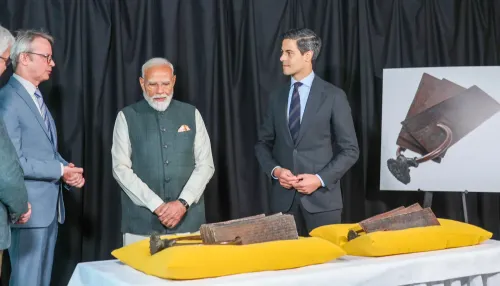
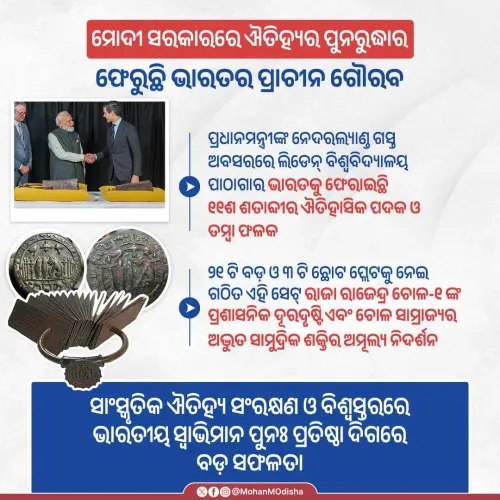
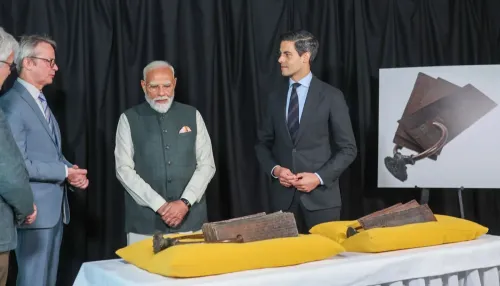
CM Sawant Hails Return of Chola Copper Plates from Netherlands
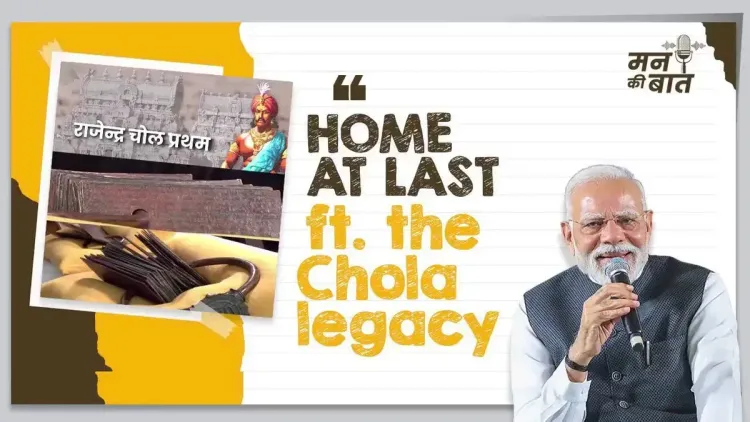
Synopsis
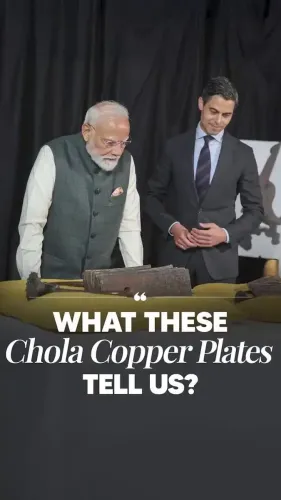
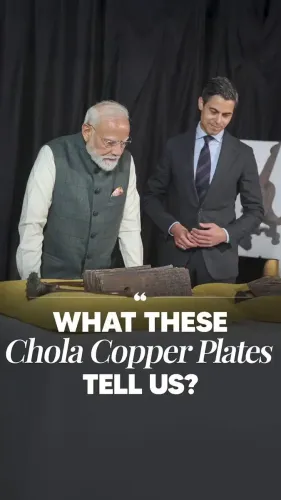
Goa Chief Minister Pramod Sawant has welcomed the repatriation of Chola-era Copper Plates from the Netherlands, echoing PM Modi's remarks on Mann Ki Baat. The inscriptions, dating to the 9th-13th century Chola dynasty, are seen as a landmark in India's ongoing effort to recover dispersed cultural heritage through bilateral diplomacy.
Key Takeaways
Goa CM Pramod Sawant publicly welcomed the return of Chola-era Copper Plates from the Netherlands on May 31, 2026 .
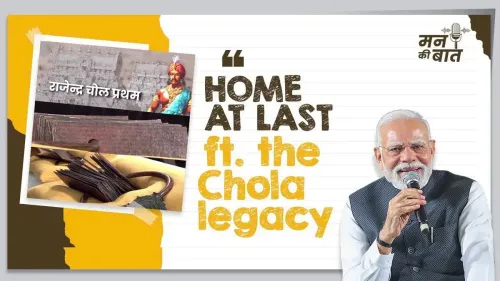
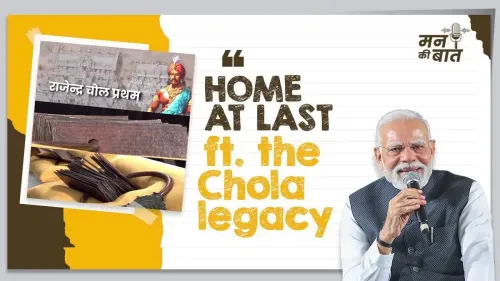
PM Narendra Modi had earlier highlighted the repatriation in his monthly radio programme Mann Ki Baat .
The Chola dynasty (9th-13th century) used copper-plate inscriptions to document land grants and administrative orders, making them key historical records.
India has been systematically pursuing the recovery of cultural artefacts from foreign countries through bilateral diplomacy since 2014 .
Historians and heritage organisations view such repatriations as critical for preserving and studying India's civilizational legacy.
Further bilateral cultural agreements and possible public exhibitions of the returned plates are anticipated.
Goa Chief Minister Pramod Sawant on Sunday, May 31, 2026, welcomed the repatriation of Chola-era Copper Plates from the Netherlands, calling the development a matter of national pride and a significant step in reconnecting future generations with India's civilizational heritage.
Context
Prime Minister Narendra Modi had highlighted the return of these copper plates in his monthly radio address, Mann Ki Baat, drawing national attention to the repatriation. CM Sawant echoed the Prime Minister's sentiments, describing the inscriptions as 'living testimonies of India's glorious past, administrative excellence and cultural legacy.'
The Chola dynasty, which ruled across South India between the 9th and 13th centuries, was renowned for its copper-plate inscriptions that documented land grants, administrative orders, and royal edicts. These records are considered among the most important primary sources for understanding medieval South Indian governance and society.
Policy Backdrop
India has pursued the recovery of dispersed cultural artefacts through sustained bilateral diplomacy since 2014, securing returns from countries including the United States and the United Kingdom. The repatriation of the Chola copper plates from the Netherlands represents the latest in this ongoing effort to reclaim objects of historical and civilizational significance.
The government has consistently framed such returns as assertions of cultural continuity, using platforms like Mann Ki Baat — a monthly programme that PM Modi has hosted since 2014 — to amplify awareness of heritage recovery among a broad domestic audience. These repatriations are typically the result of quiet diplomatic negotiations rather than legal proceedings.
Stakeholders and Impact
Historians and heritage organisations have welcomed the renewed focus on recovering artefacts held in foreign collections, noting that copper-plate inscriptions carry irreplaceable administrative and cultural data. The return of such objects strengthens the archival record available to researchers studying the Chola period.
For the public, the repatriation carries symbolic weight, reinforcing a national narrative around civilizational pride. CM Sawant's post reflects the BJP's broader political messaging that connects heritage diplomacy with the idea of a resurgent India reclaiming its historical identity.
What's Next
The return of the Chola-era Copper Plates could be a precursor to further bilateral cultural agreements and possible museum exhibitions that make these artefacts accessible to the public. Historians and institutions may push for detailed scholarly documentation and display of the plates following their return.
India's ongoing engagement with foreign governments and institutions over dispersed heritage objects suggests that additional repatriation announcements may follow as diplomatic conversations mature across multiple countries.
Point of View
Which uses the return of cultural artefacts as both a foreign-policy achievement and a domestic narrative tool. By amplifying the development on Mann Ki Baat and prompting state leaders like CM Sawant to echo the messaging, the party ensures the story reaches a wide, cross-regional audience. The framing of these returns as civilizational reclamation — rather than purely archival or academic events — signals a deliberate effort to link governance with cultural identity. As India deepens bilateral ties with European nations, such cultural gestures are likely to become an increasingly visible dimension of its soft-power strategy.
NationPress
16 Oct 2026
Frequently Asked Questions
What are the Chola-era Copper Plates returned from the Netherlands?
The Chola-era Copper Plates are ancient inscriptions from the Chola dynasty, which ruled South India between the 9th and 13th centuries. They were used to record royal land grants, administrative orders, and edicts, and are considered primary historical documents of that era. India recently secured their return from the Netherlands through diplomatic channels.
What did PM Modi say about the Chola Copper Plates on Mann Ki Baat?
PM Narendra Modi highlighted the return of the Chola-era Copper Plates from the Netherlands in his Mann Ki Baat radio address, calling them priceless inscriptions that represent India's glorious past and administrative excellence. The broadcast drew national attention to the repatriation.
Why is Goa CM Pramod Sawant commenting on the Chola Copper Plates?
Goa CM Pramod Sawant posted on X to echo PM Modi's remarks and reinforce the BJP's messaging around India's cultural heritage recovery. He described the return as a matter of national pride and a step towards reconnecting future generations with India's history.
How has India been recovering cultural artefacts from abroad?
Since 2014, India has pursued the recovery of dispersed cultural objects through bilateral diplomatic negotiations with countries including the United States, United Kingdom, and the Netherlands. These efforts have resulted in the return of multiple historically significant artefacts without resorting to legal proceedings.
What is Mann Ki Baat?
Mann Ki Baat is a monthly radio programme hosted by Prime Minister Narendra Modi since October 2014. It is broadcast on All India Radio and covers a wide range of national issues, including governance achievements, cultural heritage, and social initiatives, reaching a large domestic audience.