Shekhawat Hails Return of Chola Copper Plates from Netherlands
Synopsis
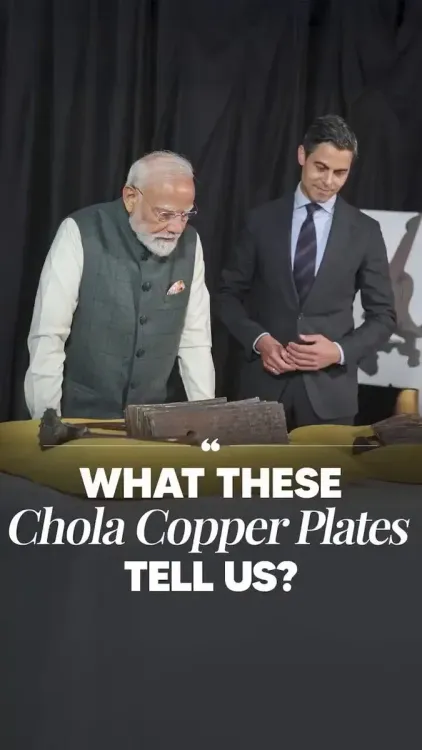
Union Culture Minister Gajendra Singh Shekhawat on 31 May 2026 shared a video of the Netherlands formally returning rare Chola-era copper plates to India, hailing the moment as a source of national pride and underscoring India's ongoing diplomatic push to reclaim lost heritage from abroad.
Key Takeaways
Union Culture and Tourism Minister Gajendra Singh Shekhawat posted on 31 May 2026 about the return of Chola-era copper plates from the Netherlands .
The copper plates originate from the Chola dynasty period and are among the most historically significant categories of medieval Tamil records.
India's repatriation efforts are anchored in the Antiquities and Art Treasures Act, 1972 and international conventions on illicit cultural property trafficking.
The Netherlands handover is part of a broader pattern of European nations returning Indian artefacts following diplomatic engagement since the 2010s .
Heritage conservationists and the archaeological community regard such returns as critical to preserving and studying South India's medieval history.
Further bilateral memoranda of understanding on cultural property with European countries are anticipated as India presses ahead with pending repatriation cases.
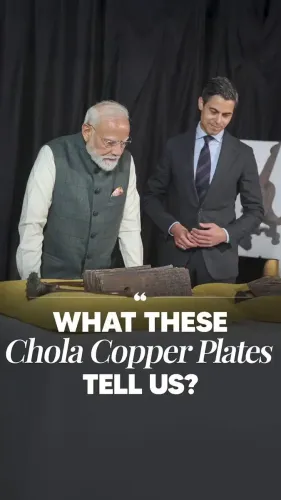
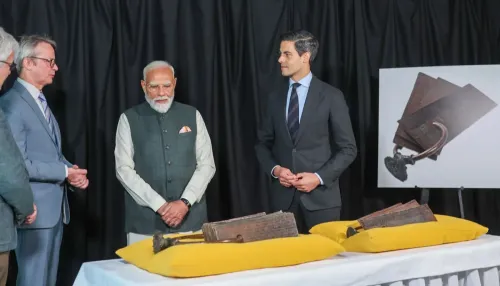
Union Culture and Tourism Minister Gajendra Singh Shekhawat on Sunday, 31 May 2026, shared a video marking the repatriation of rare Chola-era copper plates from the Netherlands, calling the moment one of national pride for every Indian.
Context
In his post, Minister Shekhawat wrote: 'भारत की खोई हुई धरोहर जब स्वदेश लौटी, तो हर भारतीय का हृदय गर्व से भर उठा' ('When India's lost heritage returned home, every Indian's heart swelled with pride'). He invited followers to watch the video documenting the historic handover ceremony in the Netherlands, during which the rare copper tablets — dating to the Chola dynasty period — were formally returned to India.
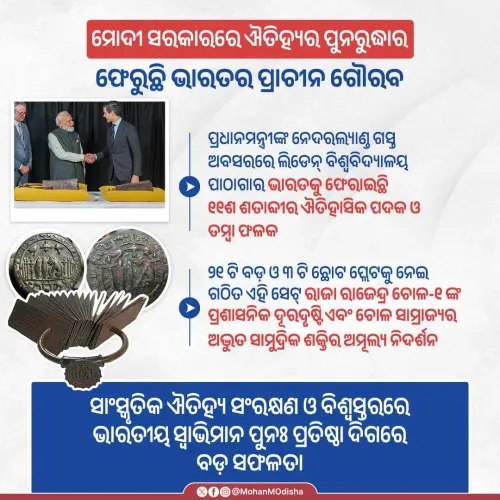
Copper plates from the Chola era are among the most significant categories of medieval Tamil historical records. Inscribed in Tamil and Sanskrit, they typically document land grants, royal edicts, and temple endowments, making them invaluable to scholars of South Indian history.
Policy Backdrop
The return is part of India's broader, systematic effort to reclaim cultural property held abroad. The Antiquities and Art Treasures Act, 1972 provides the domestic legal framework under which the Ministry of Culture pursues such repatriations. India has also engaged with international conventions on illicit trafficking of cultural property to build diplomatic cases for the return of artefacts.
Since the 2010s, India has secured the return of antiquities from multiple Western nations, with cases involving items linked to ancient dynasties — including the Cholas — forming a prominent strand of this effort. The Netherlands handover adds to a growing list of European countries that have responded to India's diplomatic outreach on cultural restitution.
Stakeholders and Impact
Heritage conservationists and the archaeological community have consistently advocated for the return of objects removed from India, often through colonial-era trade or illicit channels. The repatriation of Chola copper plates is of particular significance to Tamil cultural institutions, historians, and epigraphers who study medieval South India.
For the Ministry of Culture, each successful repatriation reinforces the government's stated commitment to recovering India's 'lost heritage' — a phrase Shekhawat used explicitly in his post. These events also carry symbolic weight domestically, projecting diplomatic success on a subject that resonates across regional and linguistic communities.
What's Next
The Ministry of Culture is expected to continue pursuing pending repatriations from foreign museums and private collections. Observers will watch for new bilateral memoranda of understanding on cultural property between India and European nations, which could formalise and accelerate future returns. The Netherlands handover may also prompt renewed dialogue with other countries holding artefacts of Indian origin.
Point of View
In which the recovery of heritage objects from foreign hands is framed as a restoration of civilisational dignity. Minister Shekhawat's decision to amplify the handover video on social media signals that the Ministry of Culture views these moments as politically resonant, not merely administrative achievements. The episode also reflects a maturing of India's cultural diplomacy — bilateral cooperation on antiquities, once rare, is increasingly becoming a structured channel of engagement with European nations. If the momentum holds, more such returns could follow, reshaping how India projects soft power through heritage.
NationPress
15 Oct 2026
Frequently Asked Questions
What are the Chola copper plates returned from the Netherlands?
They are rare copper tablets inscribed during the Chola dynasty period, typically recording land grants, royal edicts, and temple endowments in Tamil and Sanskrit, and are considered invaluable records of medieval South Indian history.
Why did the Netherlands return artefacts to India?
The return followed India's diplomatic engagement under international conventions on illicit cultural property trafficking and bilateral dialogue; the Netherlands formally handed over the Chola-era copper plates as part of this process.
What is India's legal framework for reclaiming heritage artefacts?
India's primary domestic law is the Antiquities and Art Treasures Act, 1972, which the Ministry of Culture uses alongside international conventions to pursue the repatriation of objects held abroad.
What did Culture Minister Shekhawat say about the repatriation?
Minister Shekhawat wrote that when India's lost heritage returned home, every Indian's heart swelled with pride, and shared a video of the handover ceremony in the Netherlands.
How many artefacts has India recovered from abroad?
India has secured the return of numerous antiquities from multiple Western nations since the 2010s, though the exact cumulative count across all bilateral cases has not been specified in this instance.