CM Mohan Yadav: MP Transfers ₹5,500 Cr in Industry Subsidies
Synopsis
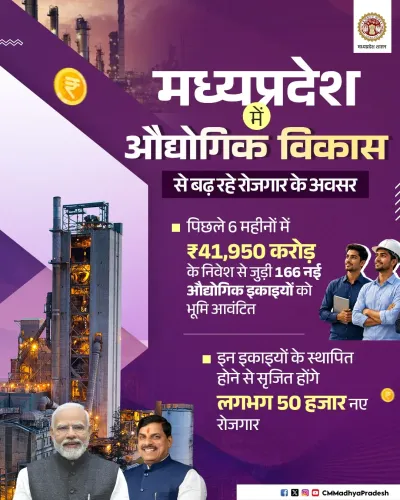
Madhya Pradesh Chief Minister Dr. Mohan Yadav announced on 16 July 2026 that over ₹5,500 crore in industrial subsidies and incentives have been transferred directly to entrepreneurs' bank accounts in the past one-and-a-half years, framing it as timely delivery on policy commitments.
Key Takeaways
₹5,500 crore in industrial subsidies and incentives disbursed in Madhya Pradesh over the past one-and-a-half years .
Funds transferred directly to entrepreneurs' bank accounts , using a Direct Benefit Transfer model.
Mohan Yadav framed the disbursement as fulfilment of prior government commitments, made 'on time'.
Primary beneficiaries are industrial entrepreneurs and MSME units entitled to state incentives under existing policy.
The move aligns with the national Make in India framework and competitive state-level industrial promotion.
Future focus shifts to 2027-28 budget allocations and potential investor summits in Madhya Pradesh .
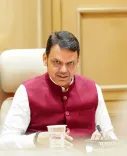
Madhya Pradesh Chief Minister Dr. Mohan Yadav on Thursday, 16 July 2026 declared that his government has fulfilled its industrial policy commitments on schedule, announcing that more than ₹5,500 crore in subsidies and incentive funds have been transferred directly into the bank accounts of entrepreneurs over the past one-and-a-half years.
Context
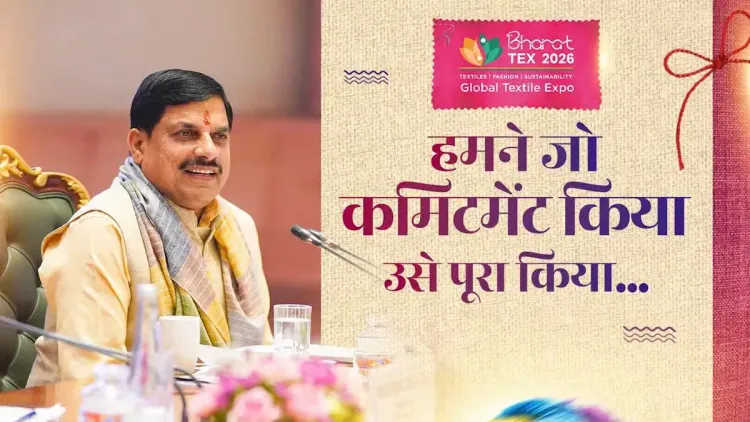
Posting on X, Dr. Yadav stated — 'हमने जो कमिटमेंट किया, उसे समय पर पूरा किया है' ('We fulfilled the commitment we made, on time') — framing the disbursement as a direct delivery on promises made to the industrial community. The announcement positions the Madhya Pradesh government as a reliable partner for investors, emphasising speed and directness of fund transfer rather than bureaucratic intermediation.
The ₹5,500 crore figure covers industrial subsidies and promotional incentives channelled to entrepreneurs across the state. The use of direct bank transfers mirrors the broader Direct Benefit Transfer model that has been expanded across several states to reduce leakage and improve accountability in public spending.
Policy Backdrop
Madhya Pradesh has maintained an active industrial promotion framework under successive BJP governments since the 2010s, offering capital subsidies, interest subventions, and sector-specific incentives to manufacturing and MSME units. These instruments are designed to lower the cost of doing business and accelerate job creation in a state that has historically lagged larger industrial peers.
The current push fits within the national Make in India framework, under which states compete through direct fiscal incentives to attract investment. By routing funds straight to entrepreneurs' accounts, the government reduces the risk of delays and diversion that have historically undermined industrial subsidy schemes.
Stakeholders and Impact
The primary beneficiaries are industrial entrepreneurs and MSME units operating in Madhya Pradesh who had applied for and were entitled to state incentives under existing industrial policy notifications. For these businesses, timely receipt of subsidies directly affects cash flow, expansion decisions, and employment capacity.
Broader stakeholders include prospective investors evaluating Madhya Pradesh as a destination — a government's track record of honouring commitments on schedule is a key criterion in location decisions. The announcement is also politically significant for the BJP administration, which took charge in December 2023 and is keen to demonstrate economic governance credentials within its first full term.
What's Next
Attention will now turn to the state's budget allocations for industrial incentives in 2027-28 and whether the disbursement pace is sustained or accelerated. Any forthcoming investor summit in Madhya Pradesh is likely to feature the ₹5,500 crore transfer as a headline proof-point of the state's commitment to industry.
If the state maintains this disbursement tempo, it could strengthen Madhya Pradesh's positioning in national and global investor rankings — a metric that CM Yadav has signalled as a priority for his administration's economic agenda.
Point of View
500 crore disbursement as 'commitment fulfilled on time' directly addresses a long-standing criticism of Indian industrial subsidy regimes — that entitlements are announced but rarely delivered promptly. This positions Madhya Pradesh within the competitive federalism dynamic where states must demonstrate fiscal reliability to win manufacturing investment away from more established industrial states. The timing, roughly two-and-a-half years into the current BJP government's term, also serves an internal political purpose: establishing an economic governance narrative ahead of future electoral cycles.
NationPress
16 Jul 2026
Frequently Asked Questions
How much subsidy has Madhya Pradesh given to industries in 2025-26?
According to Chief Minister Dr. Mohan Yadav , Madhya Pradesh has transferred more than ₹5,500 crore in industrial subsidies and incentives directly to entrepreneurs' bank accounts over the past one-and-a-half years as of July 2026 .
How does Madhya Pradesh disburse industrial subsidies to entrepreneurs?
The Madhya Pradesh government uses direct bank transfers to credit subsidy and incentive amounts into the accounts of eligible industrial entrepreneurs and MSME units, reducing intermediaries and delays.
What is Mohan Yadav's industrial policy for Madhya Pradesh?
CM Dr. Mohan Yadav has continued and expanded the state's industrial promotion framework, which includes capital subsidies, interest support, and sector-specific incentives aimed at attracting manufacturing investment and generating employment in line with the national Make in India goals.
Which industries benefit from Madhya Pradesh government subsidies?
Manufacturing units and MSME enterprises that qualify under Madhya Pradesh's industrial policy notifications are the primary beneficiaries of the state's subsidy and incentive programmes.
When did Mohan Yadav become Chief Minister of Madhya Pradesh?
Dr. Mohan Yadav became Chief Minister of Madhya Pradesh in December 2023 , leading the BJP government in the state.